
Published by: Élodie Maurel-Lescure — Editor specializing in various
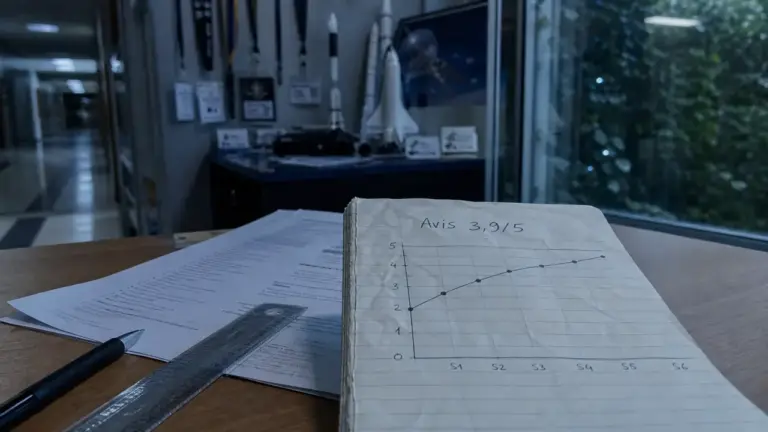
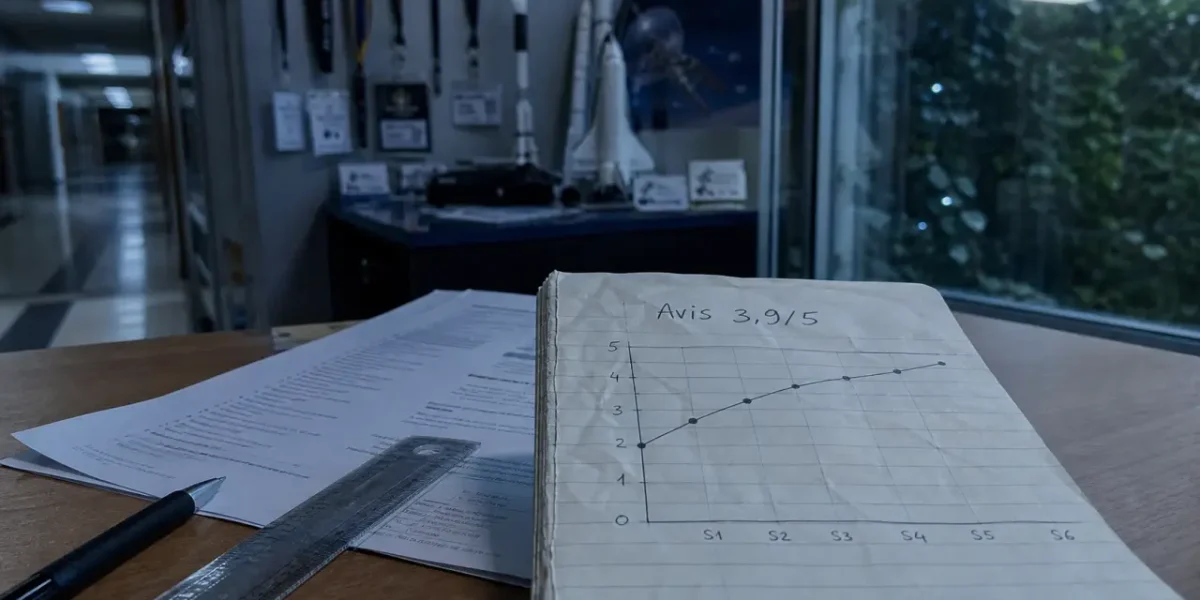
Opinions on IPSA are generally favourable, especially among students who clearly target aeronautics, space or embedded systems. The average score observed on the d 3,9/5, with a note of 3,92/5 on speaknact.fr. This score reflects real satisfaction, but not without reservation: specialization, opportunities and international openness are often welcomed, while cost, workload and differences between campuses return as points of vigilance.
Contents
What the ISPA opinions really say
The Polytechnic Institute of Advanced Sciences attracts a fairly well-identified audience: students who want to join an aeronautical and space-oriented engineering school without waiting until the end of the course to reach these universes. This is one of the most positive elements in feedback: the school gives an early job color to the course, which reassures candidates already passionate about aviation, launchers, drones, satellites or embedded technologies.
Recognition and accreditation of IPSA diplomas | Discover the official certifications and state recognition of engineering training offered by IPSA.
Satisfaction with specialization
Engineering training 5 years is often appreciated for its consistency: students speak not only of a generalist school with some aeronautical options, but of an environment where vocabulary, projects and specializations converge towards the aerospace sector. The existence of 9 major In the engineering cycle, this perception is reinforced by the gradual refinement of its orientation without leaving the technical field concerned.
Positive opinions also stress the motivational effect. When courses, projects and internships correspond to a clear professional objective, the effort required becomes more legible. For a high school student or a reorientation student, this is an important point: IPSA is better suited to a profile that already has a strong appetite for applied sciences and demanding technological sectors.
Useful feedback, but to read with method
The platforms give a trend, not absolute truth. An average score of 3,9/5 It is encouraging, but it must be intertwined with detailed testimonies, official fact sheets, exchanges at trade shows and, if possible, discussions with current students. Some authenticated opinions mention specific dates of experience, such as the 18/04/2023 or 06/09/2022, which helps to situate the return in time.
The right reflex is to distinguish three levels: emotional opinion, often linked to personal experience; Academic opinion, focused on courses and coaching; and professional advice, which mainly judges internships, network and integration. This cross-reading lets you know if the school really fits your project.
Training, recognition and credibility of the diploma
IPSA is first known as a specialized engineering school. Its positioning is based on a balance between scientific foundation, aviation culture and openness to other technological industries. The engineering diploma is part of an important recognition framework for recruiters, notably through the Engineering Securities Commission (ITC)a point to be checked systematically for any engineering school.
An engineering course, but also a bachelor's degree
The main track remains the engineering training in 5 years, but the school also offers a Bachelor in 3 years. This distinction is important in the analysis of opinions: the expectations are not the same between a student seeking the title of engineer and a candidate seeking shorter, professionalizing or further education.
The engineering cycle is generally the most observed in comparisons with other schools, as it involves more time, financial investment and professional projection. Bachelors may also be interested in profiles that want to enter a technical field faster or test their interest in aeronautics before going further.
International and double degrees: a real lever
One of the strengths to remember is academic openness: IPSA highlights 70 double degrees and 120 partner universities. For a student considering a career in a globalized sector, this aspect is not decorative. Aeronautics and space operate with international value chains, multicultural teams and shared technical standards.
These possibilities should be seen as a springboard rather than a simple line on a brochure. A dual degree or a well-chosen mobility can change a student's path: access to a foreign laboratory, rarer specialization, first network outside France, better ease in technical English. So the real question is not just « How many partners? »but « Which partner serves my specific project? ». This is often the difference between pleasant mobility and truly strategic mobility.
Strengths and limitations before applying
Opinions about IPSA become really useful when we agree to look at the benefits and constraints together. School may be very relevant for some profiles, less for others. The choice depends as much on the professional project as on the ratio to supervision, cost and early specialization.
| Analysis | What Is Positive | Point of vigilance |
|---|---|---|
| Specialisation | Very readable aeronautical and space orientation | Less suitable for a student still very indecisive |
| Route | Engineering training in 5 years, Bachelor in 3 years, 9 majors | Need to understand bridges and options |
| International | 70 double degrees, 120 partner universities | Value depends on project and academic level |
| Student life | Campuses in Paris-Ivry, Toulouse and Lyon | Various experiences depending on city and housing |
| Budget | Investment potentially consistent with the target sector | High cost compared to public alternatives |
Most Recurring Strengths
The first asset is the consistency of positioning. For a candidate seeking aeronautics, IPSA offers an identifiable environment, majors aligned with the industry and an image already associated with these professions. Academic partnerships and international openness also reinforce the school's interest in ambitious profiles.
The second asset is the readability of the outlets. Even if not all graduates work exclusively in aeronautics or space, the skills acquired can be used in other industries: complex systems, on-board computing, energy, transport or technological advice.
Criticism not to be minimized
The cost of studying regularly returns in questions. Before choosing IPSA, the total budget must be compared with public schools, post-prepa schools, universities and alternance training. The correct calculation is not limited to tuition fees: accommodation, transportation, equipment, international mobility and cost of living on the chosen campus can change the equation.
The workload is another subject. A specialized engineering school requires a solid scientific foundation and a capacity to sustain. Students attracted to the sector, but less comfortable with mathematics, physics or computer science, must ask themselves the question of their method of work before registration.
Opportunities: where can IPSA lead?
Favourable opinions are partly explained by the perception of good employability. Aeronautics and space remain demanding but structured sectors with engineering, simulation, embedded systems, materials, cybersecurity, advanced maintenance and technical project management needs.
Trades beyond the cockpit and rockets
Many applicants associate IPSA with aircraft and satellites, but opportunities may be wider. A graduate may be employed as a study engineer, systems engineer, test engineer, technical project manager, engineering consultant or on-board software specialist. This versatility is important because it reduces the risk of too close a route.
Specialisation should therefore not be understood as a confinement. It gives a strong entrance angle, while leaving bridges to neighbouring industries. This is an argument to consider if you like aeronautics, but want to keep a professional margin of manoeuvre.
Compare IPSA with other options
In the face of a general school, IPSA scores if your aerospace project is already solid. In the face of a public school, comparison is more about cost, admission procedures, local reputation and opportunities for specialization. In the face of another private specialized school, you have to examine majors, campuses, double degrees and proximity to companies.
| Your profile | IPSA relevant if... | To compare with... |
|---|---|---|
| Passionate about aviation for a long time | You want a visible specialization from the curriculum | Competitive specialized schools |
| Very good generalist scientific profile | You want a clear business project | Post-prepa or university general schools |
| Forced budget | You have a solid financing plan | Public training and alternance |
| International project | You target double degrees and mobility | Schools with comparable academic network |
Student life, campus and final decision
IPSA has campuses at Paris-Ivry, Toulouse and Lyon. This geographical choice counts a lot in the student experience. Paris-Ivry can be seduced by access to a dense economic pool; Toulouse naturally speaks to candidates attracted by the aviation ecosystem; Lyon can offer an interesting compromise between big city, mobility and living environment.
Parity remains a subject to be followed in engineering schools. Data mentions 78% men and 22% womenwith 1,0/2 on this criterion in a ranking. This figure should not discourage female candidates, but it calls on the school to ask about accompaniment, associations, female role models and concrete actions in favour of diversity.
Another institutional element: IPSA adopted the mission company in 2021. For a candidate who is sensitive to CSR, sustainable development or the impact of engineering, this is an interesting signal, provided that he looks at how this mission translates into courses, projects and campus life.
In the end, the IPSA opinions draw a solid school for a student motivated by aeronautics, space and advanced technologies. It seems less suitable for someone who is looking for a very generalist orientation or who is very hesitant about his project. Before applying, the best reflex is to confront three elements: your real scientific level, your ability to finance the course and your desire to engage in a specialized technical universe from the first years.
Updated on 14 July 2026