Published by: Élodie Maurel-Lescure — Writer specializing in training in Event Organization
The event leader transforms a need into a concrete event, whether it be a product launch, a seminar, a show, a festival, a brand evening, a sporting event or an internal event. His job is to define the framework, coordinating stakeholders, maintaining the budget, limiting risks and measuring results after the event is completed.
Contents
A job of coordination, from customer brief to final report
The event project leader intervenes throughout the cycle of an event. He begins by understanding the objective, whether it be to unite teams, generate business contacts, strengthen a brand image, thank partners or create a milestone for a targeted audience. This first step determines the format, location, scenography, budget, providers, communication and indicators of success.
Quiz: Event Project Leader
Define the framework before looking for ideas
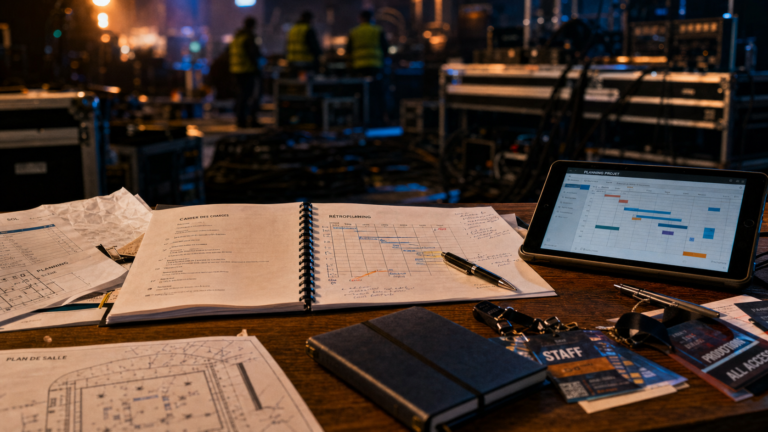
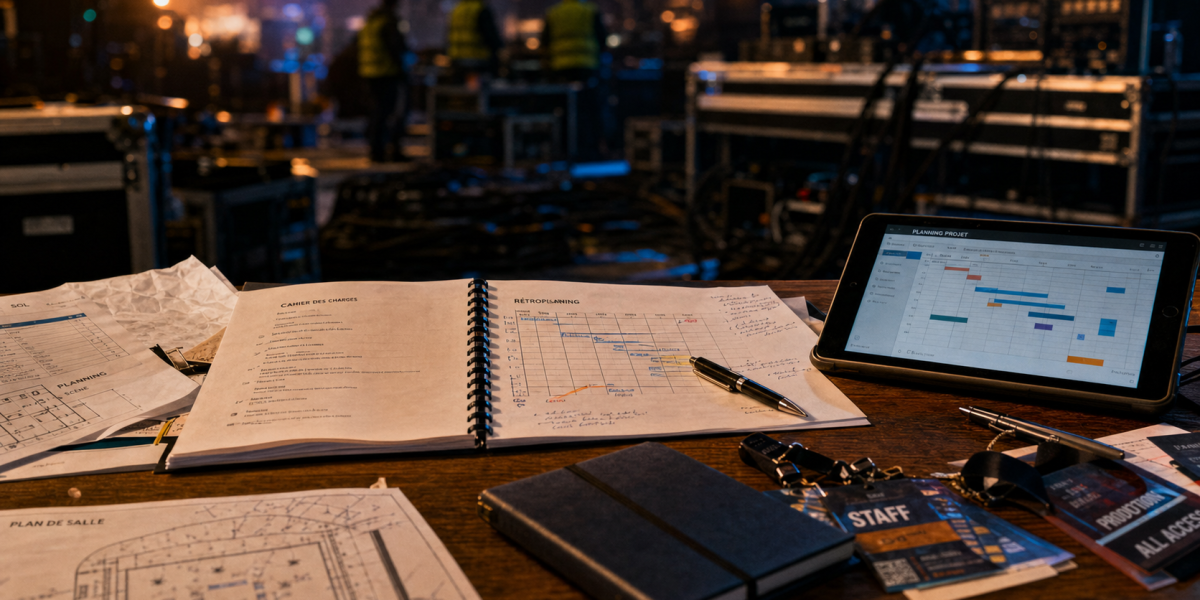
Before talking about decoration, animation or catering, he establishes a specification. This document identifies the target, number of participants, date constraints, expected level of standing, security requirements, deliverables and validations required. It serves as a common reference between customer, agency, suppliers and internal teams.
The project manager then built a backplanning : reservation of the place, requests for quotes, choice of providers, creation of supports, invitations, revivals, repetitions, technical installation, reception, dismantling and administrative closure. Each task depends on another. Delays in site validation can block communication, scenography or logistics. Monitoring must therefore remain legible and accurate.
Supervise without doing everything yourself
This is based on the ability to advance several teams at the same time. The event project manager organizes and hosts meetings, selects providers, negotiates estimates, monitors the production of materials and monitors overall coherence. It can work with a technical board, a set designer, a caterer, a security agency, host hosts, speakers, artists or communication teams.
On D-Day, he checks the schedules, accesses, participant flows, signage, speech statements, sound and light tests, deliveries and emergency plans. After the event, it collects customer returns, analyzes satisfaction, monitors billing and measures impact: participation, press impact, generated contacts, engagement on social networks or event ROI according to the objectives set.
Skills that make a difference in the field
The trade requires a rare combination: management rigor, sense of service, creativity, stress resistance and relationship ease. A good event project manager can imagine, but also arbitrate. It must defend an idea while respecting a budget, a date, safety standards and client expectations. The quality of the result often depends on this ability to stay on course without losing the necessary flexibility.
Full Business Fact Sheet: Event Project Leader | Discover the missions, key skills and job opportunities to become an event project manager with France Travail.
Organization, budget and negotiation
Control of the budget is central. Each choice has a consequence: a more prestigious place can reduce the animation envelope; An ambitious scenography may require more technical governance; a larger gauge changes security, reception and restoration requirements. The project manager compares estimates, negotiates, secures cancellation conditions and maintains a margin for unforeseen events.
It often uses tracking tables, checklists, shared planning and project management tools. The goal is not to accumulate files, but to make the information clear: who does what, for when, with what budget and with what level of priority. This method avoids blind angles and helps to react quickly when a point blocks.
Communication and leadership
The project leader is a point of convergence. He must speak to the customer with clarity, to the providers with precision, to the creative teams with openness and to the technical teams with method. Its credibility comes as much from its listening as from its ability to decide quickly when the situation demands it.
A successful event rests on an invisible structure that holds the whole. Schedules, flows, waiting areas, electrical sockets, badges, breathing times, and B plans are not noticed when everything works. Yet they are the ones who prevent the event from disorganizing under direct pressure. The project manager builds this discrete base from the time of preparation.
Respond to contingencies without losing course
A late responder, adverse weather, delivery problem, microphone failure or poorly configured room can happen. The value of the project leader is then reflected in his ability to prioritize: to protect the experience of the participants, to inform the right people, to activate a realistic solution and to preserve the customer relationship.
This reactivity is being prepared upstream: emergency contacts, technical duplicates, time margins, traffic plans, access validation, team briefs and alternative scenarios. Effective improvisation is often the result of a very structured preparation. The clearer the framework, the faster the decision remains.
Training and profiles: several possible entry doors
There is not a single route to become an event project leader. Recruiters value training in communication, event, marketing, business, project management or public relations. Internships, alternation and first field experiments play a decisive role, as the profession learns a lot from practice.
| Profile | Assets to be valued | Item to be strengthened |
|---|---|---|
| Communication or event student | Culture project, creativity, internships, mastery of briefs | Budget management and negotiation providers |
| Business or Marketing Profile | Customer sense, business objectives, performance monitoring | Field logistics and event production |
| Person undergoing conversion | Professional maturity, organization, relationship | Professional vocabulary, network providers, concrete experiences |
To make progress, it is useful to participate in real, even modest projects: organizing a forum, coordinating a conference, associative evening, student fair, internal event or brand operation. These experiences provide a portfolio with concrete elements: objectives, constraints, budget, managed providers, results and lessons learned. They also provide solid examples to be presented in interviews.
Examples of projects and working environments
The event project manager can work in an agency, at the advertiser's office, in a community, an association, a entertainment hall, a business tourism company or as an independent agent. The contexts vary greatly, but the logic remains the same: turning a demand into an operational device. The daily life changes according to the structures, but the method remains based on organisation, monitoring and adjustment.
Very different events, same method
On a product launch, the challenge will be to create a strong moment for the press, influencers, distributors or customers. At an internal seminar, cohesion will have to be promoted, speaking times will be speeded up and accommodation or transport will be managed. In a festival, coordination will focus more on flows, authorizations, technique, security and public experience.
Missions can also concern major events or very exposed brands: UEFA EURO 2016, JO London 2012, FIFA, Samsung, GROHE, Leboncoin, Nike, Dior, Renault, Moulin Rouge, Marsatac or We Love Green are among the examples of achievements cited in the event world. These references show the possible scope of the profession, from corporate to cultural, from sport to luxury.
What recruiters really look at
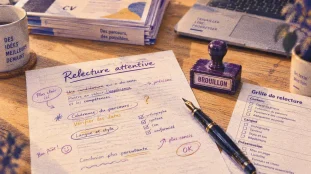
Beyond graduation, employers are looking for proof of reliability. A candidate who can explain how he/she managed a budget, resolved a claimant delay, coordinated a team or improved a communication plan marks points. Recruiters also appreciate profiles that are able to remain calm, write clear reports and link creation to operational constraints.
In one application, it is better to detail two specific projects than list ten general qualifications. Mentioning the gauge, the type of audience, the providers involved, the level of responsibility and the results achieved makes the journey more credible. This precision also helps to show the reality of the terrain, instead of remaining in too vague formulations.
Opportunities, job opportunities and career development
The market offers various opportunities, with close titles: event project manager, event coordinator, production manager, event communication project manager or event manager. France Work displays for example 373 offers for event project manager, with research that can be refined over a 0 to 100 km depending on the area concerned.
To find positions, it is relevant to consult general platforms, agency sites, career pages of large companies, professional networks and offers related to trade shows, festivals or event venues. The periods of high activity vary according to the sectors: return to work, fair seasons, festivals, commercial launches or end-of-year events. The right timing therefore also depends on the nature of the projects.
Evolution can lead to senior project manager, customer manager, event manager, communication manager, event producer or independent consultant. Early earnings depend heavily on the type of employer, location, level of experience, size of events and degree of autonomy.
To succeed sustainably, you must cultivate three reflexes: document your projects, develop your network of reliable providers and analyze each event after the fact. Customer returns, budget gaps, friction points and field successes become a valuable learning base. In this profession, the experience is not limited to the number of events organised, but to the ability to draw a more robust method for each new mission.
Updated on 7 July 2026