

Published by: Élodie Maurel-Lescure — Writer specializing in training in Event Organization
Updated on 23 March 2026
Understanding the entertainment contractor license marks an important step for anyone involved in artistic diffusion. Whether you're a beginner or in the process of reconversion to the organization of events, benefitting from reliable and accessible performances is often crucial: this guide gathers concrete advice to secure your steps and exercise your passion in a calm legal framework – because valuing creation is also protecting artists and public.
Contents
Performing entrepreneur license: essential to be in order, right away
As soon as we program more 6 shows per year With paid artists, this license becomes essential – it lays the foundation for your legal compliance and reassures the public safety. Good news: the request remains free and the answer usually comes in about 30 days. What will follow will help you, if necessary, to check whether you are concerned, on what category you position, and how to quickly get this famous « sesame » to carry your projects calmly.
Are you still afraid of an administrative mountain? Many professionals – a choreographer recently mentioned this point during a webinar – get out very well if you follow the next steps. It is worth mentioning that the penalties in case of oblivion are not anecdotal: the fine can reach 7 500 €, better to anticipate from the first event !
What is the entertainment entrepreneur license? (Definition and legal framework)
Within the cultural sector, this official licence authorizes the organization, production or broadcast of live performances involving the remuneration of artists. The idea: to prove your competence and to show that you are able to guarantee the safety of all. This requirement is enshrined in articles L7122-3 et seq. of the Labour Code and applies everywhere in France, whether you are an association, an independent or an established company.
In practice, without a licence – or « receipt » if you are a punctual actor – it becomes impossible to perform most concerts, plays, festivals or cabarets. Failure to have this document can easily block the holding of an event or, worse still, result in a heavy penalty. We regularly see that it is better to remain vigilant and formalize your activity!
What's the license for? (Background, security, obligations)
This license – sometimes called receipt or « declaration of activity » – goes far beyond a formality. It is your responsibility to provide guarantees for public safety, good social and administrative management of artists. The state thus assesses your ability to comply with all regulatory environments.
- This authorisation confirms your status with the institutions and partners.
- It limits the risk of potential litigation (e.g. taxation, employment, security).
- You will be asked systematically if you organize more than 6 public events per year.
This is also why, even if one dreams above all of bright posters, giving this dossier a moment remains essential... Some project proponents indicate that the task may seem tedious at first. But the stage is not insurmountable!
License or receipt: what practical difference?
The distinction is often confusing: receipt proves that the licence application was received and processed. This document is legally authentic: it must be displayed at the place of performance, as an immediate attestation. Let's talk about « license » or « receipt », the obligations remain the same.
Note: Once the receipt is obtained, the activity can start. If checked, this paper will be required, as will proof of renewal (every five years). It is not uncommon for an organizer to question the delay: many professionals find that this document is often issued faster than expected.
Who is covered by the show entrepreneur license?
Hard to know if you really have to get started? In order to avoid any bad surprise, here are some concrete cases (a festival manager recently shared that each DRAC sees atypical cases pass!).
Structures and profiles concerned (association, society, independent, collective...)
These include: any natural person (individual, self-entrepreneur, independent) or legal person (association, company, community) who programmes or causes to produce more than six live shows in the year with paid artists must obtain a licence.
- Associations (Law 1901 or others), even entirely voluntary, if they employ salaried artists beyond the threshold tolerated annually.
- Commercial companies or cooperatives production or dissemination.
- Public institutions or local authorities active in the programming or exploitation of performances.
- Producers, turners, room operatorsThese profiles are all concerned, whether small or large, with or without experience.
Many discover this point a little late! A project promoter said that she had had to regularize in the emergency, surprised that she had already reached the 7 events the first season.
Who can be dispensed? (Spectacle casual, foreign cases...)
There are specific cases where there is flexibility:
- Occasional events (less than 7/year): a simplified procedure, no conventional licence requested.
- Associations without paid employees or groups exclusively composed of amateur volunteers.
- Foreign structures Timely intervention in France: adapted procedure, less cumbersome than a standard license.
However, these exceptions remain limited. A misappreciation then obliges to regularize quickly to avoid any risk of sanction. Sometimes a festival has to suspend a performance following a simple omission of declaration.
What categories of licences? (1, 2, 3: producer, broadcaster, site operator)
The choice of category is based on the role you actually assume. There are three main categories: think of them as three « Caps » : they are sometimes cumulated according to the nature of your structure.
The three categories explained simply
To make the right choice, look at your dominant activity:
- Category 1 : for managers of venues hosting shows (accommodation, maintenance, on-site organisation...)
- 2nd category : production or tour side (mounting, artistic and financial implementation, management of artists' pay...)
- 3rd category : on the broadcast side, i.e. when you program or host performances designed by others.
We regularly see structures that combine. For example, a theatre that produces its own creations and hosts other shows may file a file for the three categories. This scenario, which is relatively frequent according to several experts, allows you to keep all the latitude to evolve on several fronts.
| Category | Main role | Cumulative? |
|---|---|---|
| 1st | Site operator | Yes |
| 2nd | Producer/tourner | Yes |
| 3rd | Broadcaster | Yes |
A concrete example of cumulation
Last year, an independent concert hall in the city reported on its situation: a dozen concerts, a few associative plays... By combining only categories 1 and 3, it remained fully up to date for its obligations while maintaining a high degree of programming flexibility.
What are the conditions for obtaining a show contractor licence?
Before proceeding, ask yourself the question: do you meet all the criteria? The administration will look at your skills, organizational reliability... and your ability to control security. Small overview of what will be discussed. A trainer recently mentioned that some traps are easily preventable.
Professional competence: diploma or experience?
We demand a « aptitude » : you will have to prove at least 6 months experience in a live entertainment activity, or adapted Bac+2 training (professional license or equivalent). Without justification, the CDRA may suspend the examination or refuse the application.
- Contract, commitment letter or any evidence of actual experience in the field
- Recognized diploma or specific training certificate
- In the case of exploitation of places: sometimes, training « Security » of the 125 hours is requested
It happens regularly to see the file of a validated self-taught. Especially if he can attest to years of investment in an association or experience. Services review all parts and adaptations are possible.
Other criteria: legal capacity, security, compulsory insurance
Beyond the competence, several points have been examined: to be a major, not to have a management ban, to be up to date with its tax and social obligations, to provide a certificate of professional liability insurance. DRAC inspects these items at each application and at each renewal.
- Have the necessary legal capacity (person or legal representative)
- Ensure compliance with social obligations (USSRAF, contributions, etc.)
- Justify insurance « Event » or « live shows » really up-to-date
Certain details considered anodizing sometimes lead to a blocking: as much to save time by being a complete file. The support offered by DRAC experts can reassure in the most specific cases.
Procedures and procedures: how to obtain or renew your licence?
The approaches are now highly digitised, mostly via dedicated platforms such as PLATESV or Simplified approaches. It can be seen that a well-prepared dossier quickly ends, usually under the 30 days. This helps many project promoters who fear administrative delays.
Steps of the first application (step by step method)
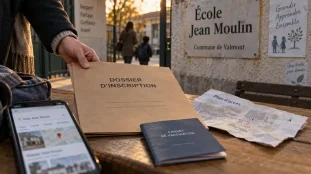
To go to the essentials and not miss anything, here are the main steps to follow:
- Open an account on the deposit platform (prefer a generic address for a collective structure)
- Prepare all supporting documents: diplomas, experiences, statutes, insurance, criminal record, etc.
- Complete the CERFA form, available in digital or paper format according to your region
- Transfer the file to the competent Regional Directorate of Cultural Affairs (DRAC)
- Follow the progress of the request in your dedicated space until receipt of the receipt
Note: an anticipated structured file is often answered in less than three weeks. Accompaniment by third parties (networks, federations, etc.) can facilitate procedures for novices.
Renewal, modification, transfer
Licence remains valid 5 years. Renewal must be requested before the deadline, in some cases. A substantial change (leader, category, structure transfer) involves new parts to join. Sometimes a simple missing document delays the procedure, hence the importance of checking upstream.
- Anticipate renewal application – maximum six months before expiry
- Update by-laws, insurances, competencies of new manager if applicable
A consultant recently reported the case of a file blocked by a somewhat old Kbis extract: every detail counts to avoid an unexpected suspension and ensure the continuity of your activities.
To learn all about the steps, conditions and benefits associated with this authorisation, find out how obtain a show contractor licence: steps, conditions and benefits for professionals.
To complete your administrative procedures, discover also how to become intermittent of the show in 2025: practical guide, a valuable resource for artists and technicians.
To complete your steps and ensure optimal management of your rights, consult our SACEM Declaration: Practical Guide to Protect Your Works and Copyright.
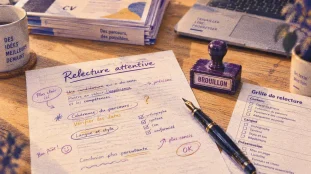
Checklist of essential documents to be provided
Before sending your file, keep these basic pieces in memory:
- Updated status or identity document of the applicant
- Document of experience or diploma
- Current third-party liability insurance rationale
- Criminal record extract (B3) from the legal guardian or president
Some DRACs regularly request regionally specific appendices: do not hesitate to consult the official FAQ or to request the regional service in case of uncertainty. Local structures save many return trips by asking their questions upstream.
Specific cases, exemptions and renewals: concrete benchmarks
Occasional concerts, associations carried only by volunteers, international structures: there are flexibilities provided by the texts, but these do not allow for approximate management. Some senior officials regularly point out the importance of staying on these points.
Exemptions, simplified declaration, foreign cases
Some situations are frequently mentioned in training:
- Special event associationsNo licence requirement for less than seven shows per year (but mandatory declaration to the prefecture).
- Volunteer groups only: no licence required as long as stakeholders are non-professional.
- Foreign structures: reduced procedure, however compulsory file to obtain a temporary receipt recognized in France.
The border between a single event and regular activity can be discussed: the use of the official simulator or the DRAC's opinion remains the best parade during a check. Some organizers sometimes find themselves confronted with new situations... Is that your case?
Renewal and cessation of activity
The renewal takes place all the 5 years. If the activity ceases, the licence must be returned to DRAC. In the event of a change of ownership (e.g. as a result of a death), all supporting documents must be updated. Attention – the slightest omission leads to the immediate suspension: a local association has already had to stop its activities, the time to update its file.
What sanctions should be imposed in the event of a lack of a licence or non-compliance?
To ignore the receipt, or to organize a show without being in order, exposes to real risks (some controls are in some cases ruthless!): heavy fines, prohibitions, or even administrative closures with immediate effect.
Fine amounts and legal risks
In the event of a finding of infringement, the invoice may be salted –
- Until 1 500 € fine for an independent or micro-entrepreneur
- Until 7 500 € fine for an association or company
- Non-display of receipt: penalty for 800 € 2 000 €
- Immediate prohibition or administrative closure by decision of the Prefect
Feedback from the field shows that vigilance is needed, especially when public safety is at stake. A regional structure said that it had seen its event cancelled the day before the opening, for lack of regularisation: scenario to avoid absolutely.
Permanent obligations and renewal
After obtaining the license, consider keeping certain automations: posting the receipt on site, maintaining insurance and making social returns. Some renewals occur without complication provided that all parts are up to date, but the slightest omission leads to an immediate suspension.
Useful resources, contacts, and direct access to approaches
Need to check if you are eligible, talk to DRAC or get an official form? Find below the key points to move forward with confidence.
Official platforms, guides, simulators
- PLATESV & Simplified approaches: repository, tracking, updated guides and practical tutorials
- Ministry of Culture Official Guide
- Service-public.fr Procedure sheet & templates
- ARTCENA Fact sheets, special cases
- Download the checklist documents (adapted to each profile)
Regional DRAC remains your preferred contact: find the local contact here corresponding to your project. A question? Let yourself be guided by the FAQ or make a custom request via the online form. Some thematic workshops also offer individualised support, appreciated by many volunteers.
FAQ Frequently Returning Questions
- How do I choose the right license category according to my project?
- What evidence of professional experience is accepted?
- When can I start my activities after the application?
- Should separate applications be submitted for different sites or projects?
- What are the possible cases of licensing being transferred?
Last point to remember: this guide remains a reliable resource to keep at hand to anticipate your projects. Several local associations recently testified to avoiding unforeseen events through proactive regularization – in this area, it is always better to inform too soon than too late!
Updated on 23 March 2026