
Published by: Guillaume Martin — Editor in Chief
Updated on 23 March 2026
Early detection of breast cancer is not just about statistics: it focuses on each personal path, daily choices and the power to take control of one's health. Many seek to understand why early action and how to better identify signals. Inspired by direct testimonials and creative initiatives, this content books concrete methods, reliable benchmarks, and experience tips to stop delaying action.
Contents
Reconnecting women with their bodies

Understanding your body becomes accessible through original initiatives. For example, exposure « I love my breasts and I take care of them » offers molded busts that transform the usual advice « taking care of yourself » in a lived experience. The art appears as a pretext to reconnect with a part of self often ignored or judged by the outside look. This artistic approach is a space free of social injunctions, conducive to listening and personal feelings.
This type of project goes further than just a reminder: it allows for natural vigilance by transmitting useful information on early signs. Initial symptoms of breast cancer sometimes lack sharpness, hence the importance of being attentive to any change. Art, by its softness, simplifies the approach and creates a well anchored observation reflex.
Signs to pay attention to
- Unusual lump or mass in a breast or under the breast
- Changing the size or shape of a breast
- Abnormal discharge, even discreet, at nipple level
- Irritation, redness or change of appearance of the skin or nipple
- Tightening or moving the nipple
Re-adjusting weight to self-observation is also a legitimate way to consult at any time. Campaigns that combine creative approach and prevention permanently install this reflex: every intimate discovery becomes an argument to organize a consultation or program a control.
Art as Ambassador of Medicine
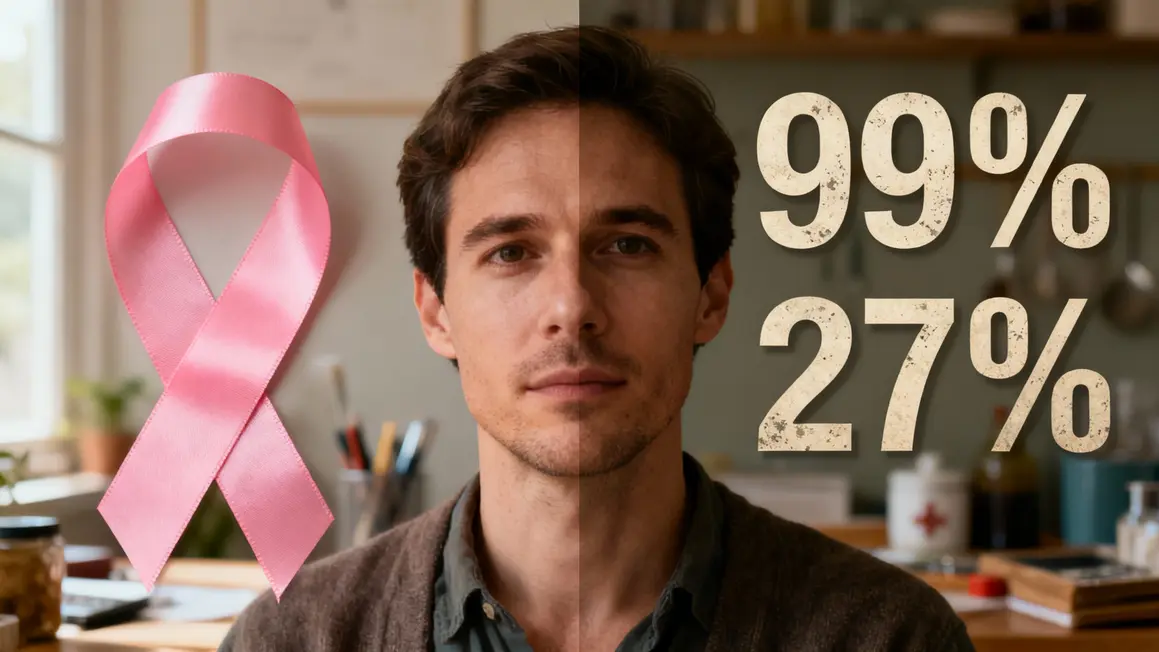
Better than a cold argument, artistic expression makes prevention messages accessible and powerful. Whether it is an exhibition, a film or an installation: the impact on memory and motivation to act is multiplied. According to data from the National Cancer Institute, detecting breast cancer at the initial stage gives 99% chance of survival, compared to 27% if the announcement occurs late. Presenting these data via art makes it possible to better mark minds, far from alarmist discourse.
Age groups and risk levels guide the selection of screening tools. The table below summarizes the main steps:
| Age group | Estimated risk | Recommended method |
|---|---|---|
| 20 - 39 years | Low (except for special inheritance) | Annual clinical review, increased vigilance based on history |
| 40 - 49 years | Moderate | Targeted mammography for risk factors |
| 50 - 74 years | Higher | Control mammography every two years |
| 75 years and over | Variable, follow-up adapted to general condition | Specific assessment according to medical opinion |
For people with mutations BRCA1 or BRCA2, the strategy often includes early breast MRI. The integration of art helps to explain these paths better: a work can facilitate the acceptance of sometimes distressing technical examinations, at any age.
Primary and secondary prevention programmes
Primary prevention targets lifestyle habits: physically activate (150 moderate minutes/week), balance menus, and limit alcohol smoking are solid foundations. Moving regularly, cooking home or choosing natural foods reduces the risk in a concrete way. Several studies supported by the Curie Institute show that treating these dimensions helps to limit relapses and to act positively, even in people on family grounds.
Secondary prevention, on the other hand, is based on structured surveillance: mammography every two years between the ages of 50 and 74, personalized checks according to history. For a risk profile, surveillance may include annual MRI as early as 30-35 years if a genetic factor is found.
| Prevention | Key actions | Objective |
|---|---|---|
| Primary | Physical activity, diet, tobacco/alcohol reduction | Limit disease onset |
| Secondary | Regular mammograms, MRI for specific profiles | Identify early for effective treatment |
Putting both approaches in place is a real safety net: prevention is not reserved for an expert profile, it can simply integrate into an already busy daily life.
Frequently Asked Questions on Screening
Why start mammography at 50? This threshold is based on the benefit-risk ratio. But in case of family history or BRCA mutation, surveillance starts from 30 to 35 years on medical advice. The exam itself is fast and the discomfort, at most, brief: for sensitive people, planning the exam after the rules can improve comfort.
- Family history: If a first degree relative has been affected, take increased vigilance and discuss the subject with a professional.
- Aggravating factors: Overweight, alcohol consumption, tobacco, lack of physical activity are the other levers to monitor.
- Rendezvous: First interview, imaging examination and then interpretation, with ultrasound or rapid biopsy if necessary. The organization aims to be effective for a reliable diagnosis.
| Frequently asked question | Summary response |
|---|---|
| How old? | Standard: 50-74 years, earlier if personal risk high |
| Pain? | Brief discomfort, bearable by the majority |
| Major risk? | Background, lifestyle, age |
| How's it going? | Quality images, quick analysis, additional examinations if needed |
Evidence and concrete cases
Severine explains its transformation: after postponing its mammography, an anomaly detected allowed immediate management. She warns about the importance of not waiting. Marie, for her part, discovered her BRCA1 mutation and benefited from strengthened monitoring. This early attention allowed him to avoid heavy treatment by identifying a injury in time. Élise, 38, thought that her age protected her until her generalist received a discreet signal: a diagnosis quickly made limited the burden of care needed. Each experience highlights one common point: to act early is to maximize your chances of living normally.
Data from European studies (INCa, Institut Curie, Ligue contre le cancer) show a decrease in mortality from 21 to 25% through screening for women aged 50 to 74, with less aggressive interventions.
Adopt healthy habits and learn about tools such as weight scale and its impact on health can play a key role in preventing and early detection of breast cancer.
Like a independent artist how to combine creative freedom and professional management, taking control of your health requires a balance between listening to yourself and concrete actions.
Simply take action
The transition from information to practice begins with a simple and quick appointment: online reservation, centralized platform, or direct request from the attending physician. To participate in free campaigns during October Rose, to seek the advice of his health professional to any question, or even to talk to his relatives allows to act without delay.
- Register on reliable medical platforms dedicated to screening
- Partnering with annual campaigns to benefit from balance sheets without advance charge
- Engage others to spread the right reflexes and support mutual aid
Each person then becomes an actor in his or her health, or even a motivator for the family or collective circle. Taking care of oneself is to unite a movement where information, art, experience, and technique join together to simplify access to prevention.
What obstacles or questions remain? Your experience or advice deserves to be shared as a comment to inspire the community. If this article has answered your questions or allowed you to unlock an action, pass it around you to strengthen the prevention chain! Your feedback on other health topics, or your awareness priorities, can also guide our future educational content.
To support information and practice, you can consult the National Cancer Institute, the Cancer League or the specialized pages of university hospitals. Each feedback or local initiative enriches the topic and helps advance prevention: Then it's up to you to complete!
Article written by Guillaume Martin, creator of GuyomCorp, trainer and author specialized in field approaches for creative and multidisciplinary audiences.
Last updated : June 2024
Updated on 23 March 2026