

Published by: Guillaume Martin — Editor in Chief
Updated on 23 March 2026
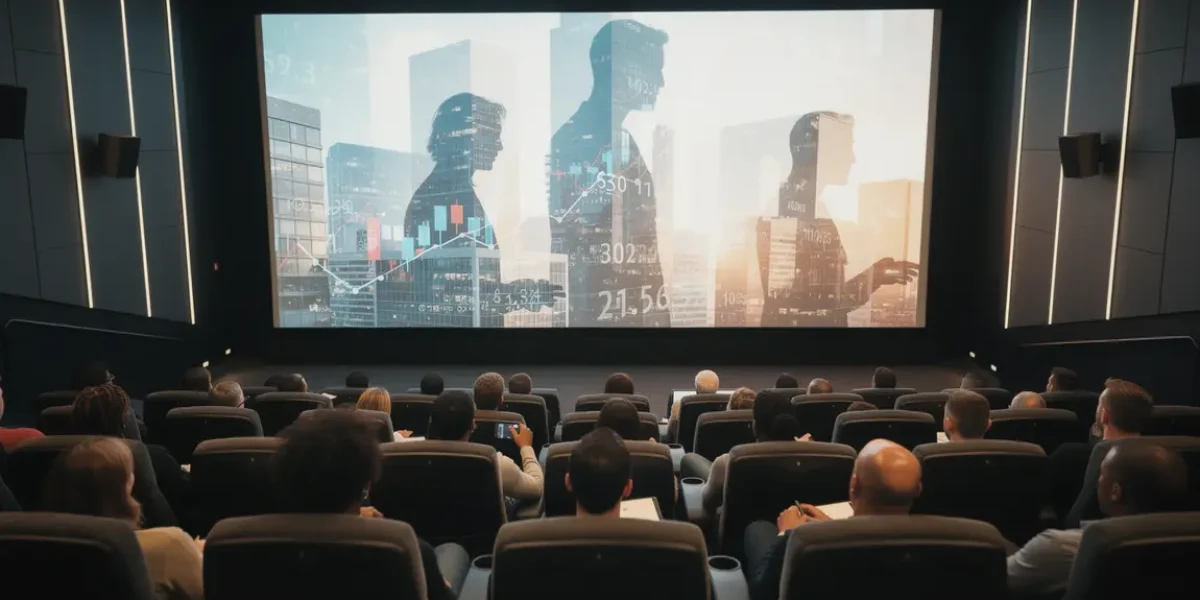
Discovering finance through films on the stock exchange can turn a theoretical approach into a concrete, living and more easily comparable experience. Whether you're trying to understand the fundamentals of markets, or better understand the mechanisms of crisis and trading, these works mark by their ability to connect financial concepts with human stories and real choices.
Contents
Why step up finance with films on the stock market?

Watching films dedicated to the stock exchange, it's offering an accessible and rich entry. Far from complex textbooks and jargon, cinema brings a human and emotional dimension often absent from technical works. The experience of spectators, including economics students or young people working in conversion, confirms: nothing like seeing concrete situations to better integrate notions and reflexes to adopt or avoid. The stakes, such as the systemic risk, make sense when they impact the fate of real or fictional characters, confronted with strategic choices.
The Wall Street Wolf: understanding the drifts and lure of gain
The Wall Street Wolf, directed by Martin Scorsese, is based on Jordan Belfort's journey. If the film is shocking by its exuberance, it illustrates the ethical drifts: overflight broker, Belfort applies aggressive methods such as the pump and dump (inflating then liquidating shares), and manipulating investors and colleagues to maximize immediate profit. Above all, the strength of the narrative is used to warn against dubious techniques and personal, legal and collective collapse that can be caused by the absence of financial limits.
- Pump and dump: artificial inflation and then massive sale of shares.
- IPO : introduction to the stock exchange, used here as a pretext for manipulation.
The Big Short: Immersion in the 2008 Crisis

The Big Short traces behind the scenes of the subprime crash in 2008. Characters like Michael Burry or Mark Baum wager against the banks while deconstructing the financial mounts, CDO and MBS, which precipitated the disaster. The film builds on real anecdotes (e.g. Michael Burry playing drums to manage stress) and offers pedagogical explanations that help visualize opaque mechanisms. The human impact of the crisis, the mechanics of risky bets, as well as regulatory flaws are highlighted.
- Teaching example: CDO explanations with a Jenga game to simplify the concept.
Margin Call: the ethical tension at the heart of the crisis
Margin Call takes place in one night at a bank caught in the fury of an imminent crisis. The protagonists, carried by Kevin Spacey, Jeremy Irons and Zachary Quinto, embody moral dilemmas and the brutality of strategic choices: selling massively, sacrificing reputation to survive. This thriller, sober and tense, questions the boundary between loyalty, pragmatism and collective responsibility – an issue that speaks to all project promoters and creators, even outside of finance.
Inside Job: Documentary Radiography of Systemic Corruption
Inside Job, directed by Charles Ferguson, takes a documentary perspective on the 2008 crisis. Expert interviews (Christine Lagarde, George Soros), analysis of the drifts of financial products such as the CDOs, portraits of leaders: everything is factual and soured. This film is recommended for those who want to understand how a logic of short-term profit can gangrene the whole system, from Wall Street to the political sphere, and who want to shed light on the notion of Financial regulation and its documented limits.
Wall Street: ambition, information and morals
The classic of Oliver Stone, Wall Street, clearly exposes the conflict between ambition and ethics. Mantra « Greed is good » carried by Gordon Gekko synthesizes the power of information and its drift towards insider dealing. Bud Fox, a young broker, illustrates the psychological and moral price to pay to climb the ranks. This film is a reference if one wishes to understand the role of information and tensions within the sector.
Further recommendations to explore
- Boiler Room : brutal diving into the stock market scams and the fakes of financial marketing.
- Too Big to Fail : behind-the-scenes television story of the 2008 bailout of institutions; analysis of the concept "too big to fail".
- Dumb Money : account of the GameStop phenomenon, amateur traders facing giants and the importance of social networks in modern finance.
- The Apprentice : fiction about Donald Trump's journey, link between public image and economic decisions.
What cinema finance teaches every creator
These films serve as a school case for understanding the risks, ethics and overall impact of decisions on markets. Learn to decipher a trend, to detect an excess, to structure your watch: so many useful assets in both finance and creative project management. Cinema allows us to remember: prudence in the face of overly attractive promises, importance of decryption before acting, and reflection on the collective scope of each initiative.
Frequently asked questions: realities and limitations of films on the stock exchange
- Are the films realistic? Not entirely, but the financial mechanisms are often well explained: The Big Short for example popularizes subprime without turning each spectator into a trader.
- What movie to start with? For an educational approach, Inside Job or The Big Short are entry points. Wall Street Wolf shows mostly human excesses.
- Can we invest after seeing these movies? They provide a critical look but do not replace training and specialized resources. A demo mode or a guide is the safest way forward.
- Is dramatization a problem? The films amplify the stakes, which makes it easier to memorize, but one must distinguish spectacle and reality to avoid any methodological confusion.
If you want to deepen, don't hesitate to look for additional resources or to consult analyses of economic crises via specialized sites such as Le Monde or Les Echos.
Some of these financial masterpieces bear the signature of influential directors: 7 filmmakers who have transformed the history of cinemastrengthening their educational and emotional impact.
Which film hit you the most to understand finance? Share your selection or feedback from experience as a comment: the exchange of examples, questions or points of view helps to advance, regardless of your level! And if you like the article, spread it on your networks to enrich the debate and circulate information about pedagogy through the narrative.
What other major topics related to finance or creative culture do you want to explore here? Suggestion of case study, film, or project: suggest them below to feed the GuyomCorp community.
Article written by Guillaume Martin.
Expert in creative pedagogy and support for hybrid projects.
Updated on 23 March 2026