
Published by: Guillaume Martin — Editor in Chief
Updated on 23 March 2026
Are you exploring the basics of cinema or looking to develop a creative project? To master the influence of great directors is to understand the levers that transform a simple idea into universal language. This article offers a concise and concrete analysis: how to identify the striking styles, what technical concepts to remember, and how these figures actually inspire your own achievements. Expect clear markers and examples that link method and singular adventure.
Contents
The criteria that define the influence of a director
Defining the influence of a director is not just about financial rewards or successes. This is due to the style, to narrative choices, to the ability to leave a perceptible imprint in each plane.
Alfred Hitchcock embodies this art of directing: his framing and the management of suspense in Psychosis or Vertigo make its signature instantly recognizable. Technique also plays a role: Kubrick, by his special effects unpublished in 2001, Space Odysseyhas created new standards. Steadicam operated in Shining or the natural light of Barry Lyndon do school and serve as a technical reference.
The influence also survives by Cultural impact. Some films become emblems: Pulp Fiction Incarnates a narrative rupture that has influenced an entire generation. Finally, the scope can be commercial but some, like Bergman, have had an inspirational area despite modest figures.
- Original narrative and visual style
- Critical technical innovations
- Cultural impact and artistic cross-cuttingity
- Critical success or sustainable popularity
It is the lasting combination of these criteria that forges real influence, well beyond a record or profitability.
Cinema pioneers and early heritage
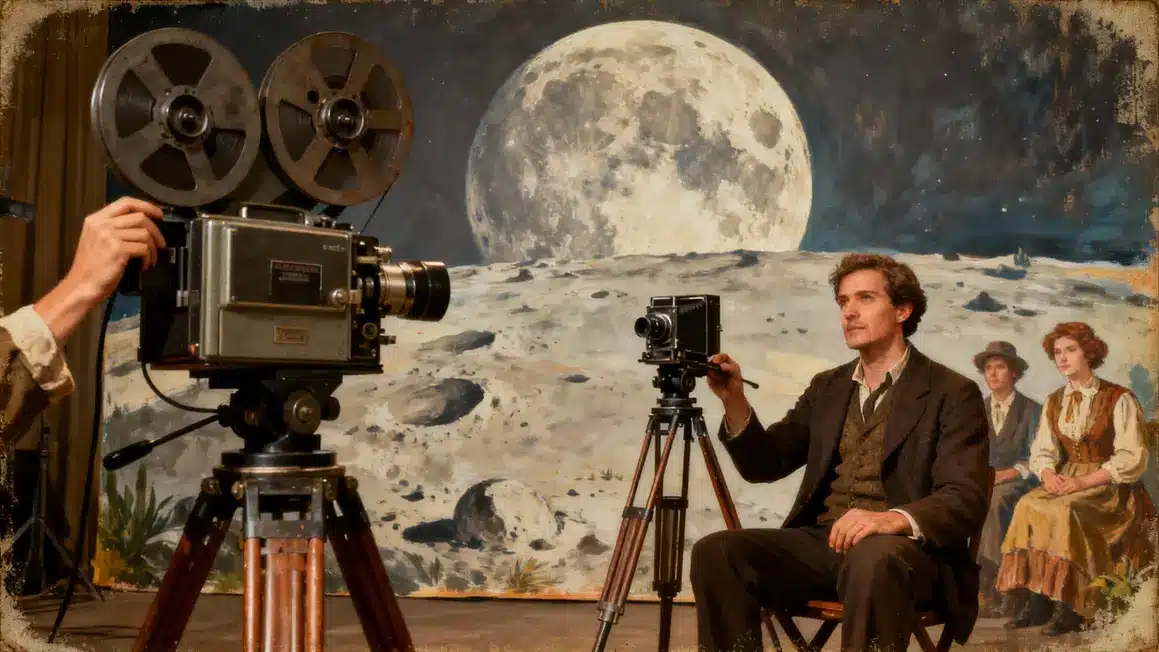
The first filmmakers: George Méliès, an illusionist who became a director, moved the cinema from technical experimentation to visual narration (The Moon Travel). Although caught up in industrialisation, its melted processes and camera stops still influence the creators of special effects.
On the narrative side, D.W. Griffith, despite controversy, poses with Birth of a nation the bases of parallel assembly and close-up. It gives the cinematic language its first modern tools, allowing to tell complex stories.
These pioneers faced major material constraints: the heaviness of cameras, the fragility of film, the lack of artistic recognition. Their ambition: to explore beyond technical limitations to push forward expressive potential. The result: the narrative structure and the editing codes continue to form the basis of all film learning today.
Masters of suspense and psychological narration
Among the references, Alfred Hitchcock the art of suspense: manipulation of expectations, precise assembly, concept of « MacGuffin ». His shower sequence in Psychosis or games of glances in Window on courtyard are regularly husked in scenarization workshops.
Ingmar Bergman, conversely, embodies the cinema of interiority: existential questioning, minimalism of staging, dialogues that reveal doubts more than certainty. Persona or The Seventh Seal are models of psychological exploration.
| Director | Dominating Style | Symbolic films |
|---|---|---|
| Alfred Hitchcock | Dramatic tension, narrative manipulation | Psychosis, Window on courtyard, Birds |
| Ingmar Bergman | Psychological exploration, existential dilemmas | Persona, The Seventh Seal |
Visionaries of science fiction and futuristic worlds
Stanley Kubrick, Ridley Scott and James Cameron are distinguished by their ability to explore new worlds without neglecting narrative rigour and technical credibility.
Kubrick proposes an existential exploration with 2001, combining reflection and radical spatialization. Ridley Scott mixes fear, cyberpunk aesthetics and philosophical questioning in Blade Runner. James Cameron concentrates innovation on immersion (Avatar) while paying special attention to the narrative.
Their influence is visible in expanding the potential of the sci-fi: deeper than the gadget, anchored in universal human themes.
| Director | Film | Impact |
|---|---|---|
| Stanley Kubrick | 2001: Space Odyssey | Existential science fiction model. |
| Ridley Scott | Alien, Blade Runner | Dystopia, identity questioning. |
| James Cameron | Avatar, Terminator | Technology/Emotion: Narrative immersion. |
The role of filmmakers in cultural movements
Truffaut, Godard (New Wave), Fellini (Neorealism): three major examples of the cultural dimension of cinema. Truffaut renews the image of adolescence, Godard breaks down the traditional frameworks and opens up the narrative, while Fellini transforms everyday life into a dream experience.
Their visual language and their modes of production open to improvisation today inspire independent cinema, in France and elsewhere, to authors like Wong Kar-wai or Greta Gerwig. They show that a personal narrative can interact with entire generations.
Modern icons that upset codes
Tarantino, Nolan, Bong Joon-ho reinvent contemporary narrative: broken structure for Tarantino, Time manipulation for Nolan, fusion of genera Bong Joon-ho's. Each shows that deconstructing conventions makes it possible to obtain important films, both critically and commercially.
| Director | Key Films | Narrative signature |
|---|---|---|
| Quentin Tarantino | Pulp Fiction, Kill Bill, Reservoir Dogs | Deconstructed narrative, confusing dialogues |
| Christopher Nolan | Inception, Mento, Interstellar | Breaking time, strong visuals |
| Bong Joon-ho | Parasite, Snowpiercer, The Host | Mixing registers, social satire |
Ranking of influential directors by overall impact
To see more clearly, here are the big names assessed according to three criteria: cultural influence, box office power, and critical recognition.
| Rank | Director | Cultural influence | Box office revenue ($) | Critical Reception |
|---|---|---|---|---|
| 1 | Steven Spielberg | Blockbuster/cultural footprint – Jaws, E.T., Jurassic Park | 10.7 billion | Respected by Criticism |
| 2 | Alfred Hitchcock | Modern Suspense – Psychosis, Vertigo | Estimates (~500M) | Innovation reference |
| 3 | Stanley Kubrick | Perfection and requirement – 2001, Shining | ~1.5 billion | Revealed by critics |
| 4 | Quentin Tarantino | Contemporary Narration – Pulp Fiction | ~2.5 billion | Recognized narrative audace |
| 5 | Ingmar Bergman | Exploration of the human soul – Persona | Strong symbolic value | Respected for its depth |
Still active influences: transmissions and developments
The influence is no longer limited to obvious tributes. From attention to detail (Kubrick, Villeneuve) to editing or writing techniques (Hitchcock, Tarantino), the legacy spreads in all formats: independent, blockbusters, new series.
To fully understand the impact of iconic directors, it is essential to explore the role of composers of film music: sound architects of cinema, which sublimate their works by unforgettable original tapes.
Just like the painting: evolution, styles and techniques essential to progresscinema draws its strength from the mastery of styles and techniques to express universal emotions.
The film revolution carried by these filmmakers is often accompanied by major sound innovations, as illustrated in The evolution of original film tapes: from orchestras to synthesizers.
| Director | Powerful technology | Filmmakers inspired |
|---|---|---|
| Stanley Kubrick | Natural light, detail rigour | Yorgos Lanthimos, Denis Villeneuve |
| Alfred Hitchcock | Mounting, suspense management | Quentin Tarantino, Brian De Palma |
| François Truffaut | Voice off, poetic realism | Greta Gerwig, Richard Linklater |
| Ingmar Bergman | Existential analysis | Joachim Trier, Ari Aster |
| Akira Kurosawa | Choreographies, mythological structures | Denis Villeneuve, George Lucas |
FAQ about film directors
- Most influential movie? 2001: Space Odyssey for technical progress, Citizen Kane for narrative audacity.
- Why is Kubrick considered visionary? Obsession of detail, genre renewal at each project.
- Biggest success at the box office? Spielberg, for its blockbusters combining emotion and innovation.
- Powerful directors outside Hollywood? Kurosawa and Bergman: global influence, poetic or introspective narrative.
- Does influence depend on budgets? No: Hitchcock and Cassavetes illustrate that creative strength often prevails over financial means.
Through this panorama, it is distinguished that marking the history of cinema does not necessarily require huge means or a perfect alignment with trends: it is above all a matter of method, creative daring and ability to change the narrative.
What choices or tools will you retain in your own journey? Share your inspirations or methods in the comments to enrich the experience of the entire community!
If this topic has inspired or helped you to see more clearly, think about sharing it with your groups: it is also by disseminating these analyses that creative culture progresses.
What other currents or signatures would you like to deepen soon? The GuyomCorp team regularly organizes new files based on your returns, don't hesitate to protest.
To ensure reliable content, this article is based on the analysis of the French Cinematheque and studies British Film Institutetwo international reference institutions.
Article written by Guillaume Martin, author and film trainer, updated in June 2024.
Updated on 23 March 2026