Published by: Guillaume Martin — Editor in Chief
Updated on 23 March 2026
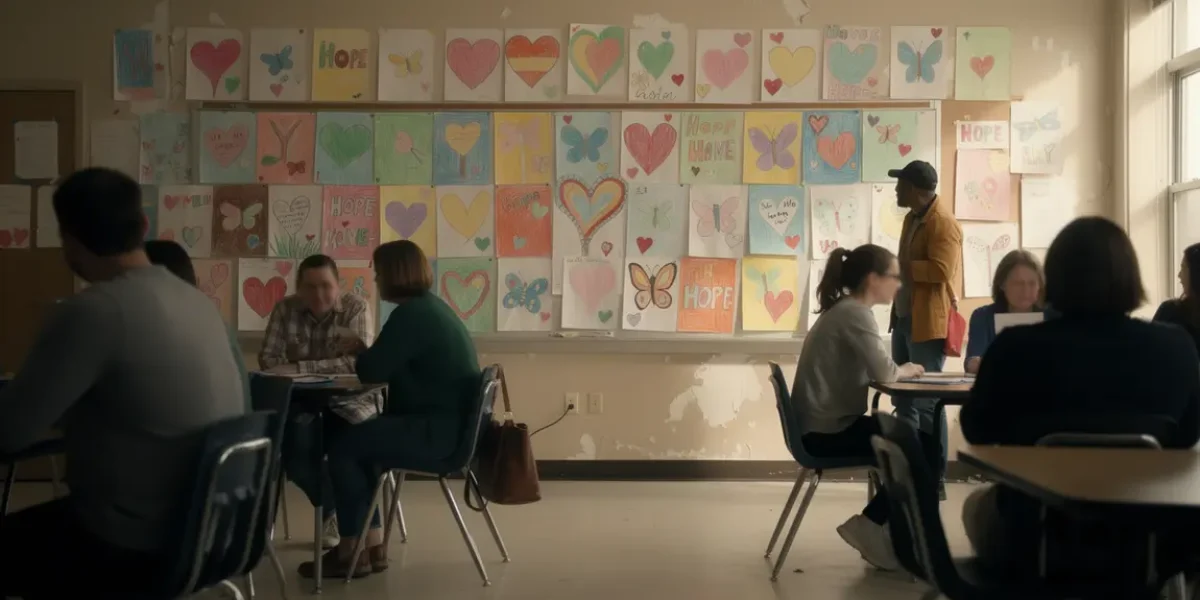
After a tragedy, when we seek to rebuild the collective, the need for a simple, accessible but meaningful gesture emerges across Canada. The support drawings have become a strong reference for translating what is not said, gathering around a creative gesture and providing a benchmark when everything is flickering. Whether an amateur artist, teacher, student or parent, this type of creation plays a concrete role in overcoming the shock and initiating a new momentum. This article analyses their educational, therapeutic and symbolic impact, detailing how each can make it a personal and collective support point.
Contents
The importance of support drawings in collective mourning
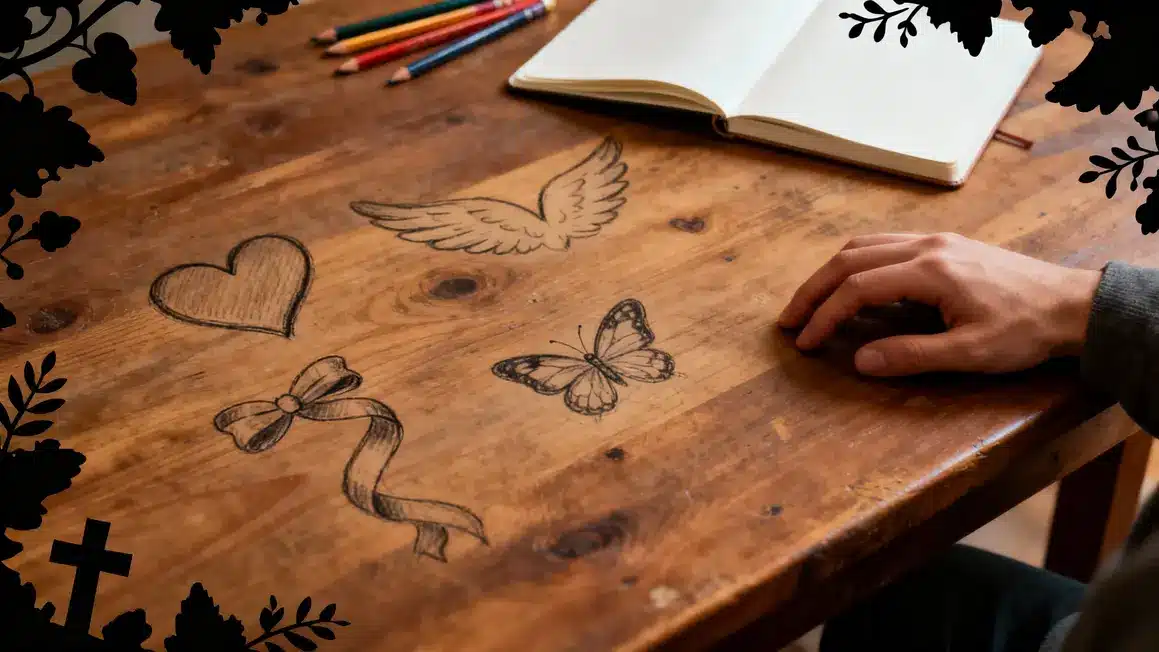
Support drawings unite people after difficult events by offering a form of immediate expression, much more accessible than words. When the community goes through grief, visual art becomes a powerful lever to transform grief, rebuild cohesion and allow everyone to act at their level. Studies in art therapy confirm the soothing effects of creation, especially on grief-related anxiety. This concerns everyone, not just experienced artists: drawing together or sharing their own images strengthens the ties damaged by the tragedy.
A strong example is that of the Humboldt Broncos: after the dramatic accident, drawings and illustrations circulated, becoming symbols of resilience widely relayed and generating exchanges that go beyond mere sharing. The works thus allow turning silent pain into open and supportive dialogue.
Marking tragedies and the artistic response in Canada
In Canada, several dramas generated powerful citizen movements where art was used as a collective response. The Humboldt Broncos accident and the death of Jonathan Pitre,« child butterfly », illustrate how the drawings become memorial and solidary landmarks. These works do not seek perfection, but promote human connection.
| 25 October | Tragedy | Highlights produced | Impact |
|---|---|---|---|
| Humboldt Broncos accident | 16 deaths in a bus accident | Drawing Kerry Macgregor (players with wings), portraits of deceased players | Massive virality on social networks, exhibition during public tributes |
| Death of Jonathan Pitre | Child butterfly ceded to illness | Illustration butterfly light surrounded by hope, paintings in school | Inspiration for support groups and fundraising for research |
How artists express resilience through their drawings
Canadian creators use cultural references and symbolic elements (flag, hockey jersey, butterfly, reassuring colours) to amplify the message of resilience. Kerry Macgregor, with illustrations dedicated to Jonathan Pitre or the Broncos, demonstrates that drawing can carry courage and solidarity, beyond technical prowess. It is about making visible the momentum of hope and unity in times when words are lacking.
Artists do not act alone: each shared drawing becomes a point of collective dialogue. Community gathers around images that make emotion tangible and encourage progress together, each contributing according to its means.
The role of social networks in spreading support drawings
Social media, such as Facebook or Instagram, play a fundamental role in the dissemination of these works. The illustrations produced after a tragedy, such as that of the Broncos or Jonathan Pitre, often share thousands of shares and generate both local and national mobilization. Hashtags like #BroncosStrong or #DrawForHope serve as interactive platforms where everyone can present their images or graphical testimonials.
This digital virtuality has opened the door to concrete actions: donation campaigns, commemorative events, collaborative workshops. Digital works become posters or objects of memory displayed in places of assembly, travel far beyond their original space.
Emotional and therapeutic effects of support drawings
On the individual level, drawing or observing a support drawing makes it possible to externalize pain, structure a complex feeling and activate a healing process. Studies confirm that these artistic practices reduce stress (cortisol) and facilitate the management of grief-related emotional shocks.
For the collective, drawing acts as a beacon: it unites, warms up, gives an image to solidarity. Workshopsart therapy and participatory exhibitions are increasingly used to channel emotions and bring participants together around a collaborative, even very simple, approach.
- Everyone can participate in their own way: sketches, colours, accessible symbols.
- The collaborative approach is recommended to strengthen collective resilience.
- A shared drawing, even clumsy, always has a scope.
Art as an educational and cultural tool to address collective mourning
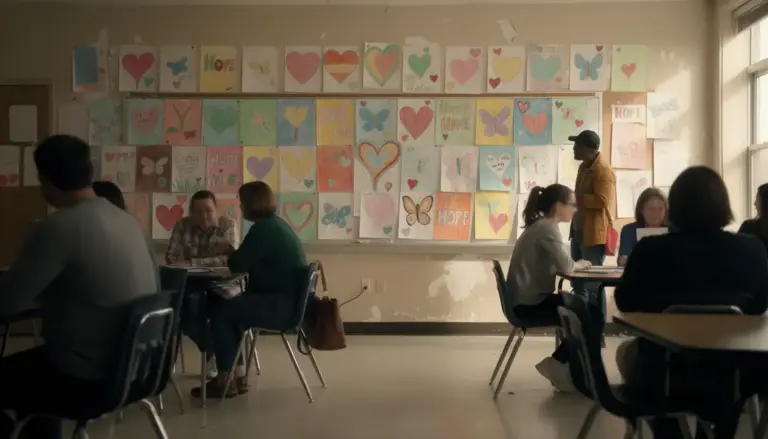
Art projects in schools or communities facilitate understanding of emotions, encourage dialogue and transform individual memory into a collective gesture. These initiatives are relevant to raising awareness among youth, helping families to express grief and building a common culture of support.
- Guided workshops on memory and support
- Exhibitions open to public participation
- Accessible creative cycles intergenerational (drawing, painting, collage)
Most importantly: the approach takes precedence over the final result. Each contribution expands the project and strengthens the group's cohesion.
Creating support drawings: practical tips for starting
You want to participate and create a support drawing? No need for sophisticated tools or pressure on the result. To start with, just:
Like support drawings, how cartoons shape modern popular culture illustrates the power of art to connect individuals through universal emotions.
- Squeeze what sounds like: strong symbol, representative object, simple gesture (hand, heart, flame).
- Work on colors and emotion, testing their effect before finalizing.
- Doing the amount of details: a minimalist drawing can be very talking.
- Share your work, online or locally, and collect opinions: the sincerity of the gesture takes precedence over technicality.
- Validate, through the reception of others, that this gesture has meaning and can help someone move forward.
This type of creation is not reserved for insiders: everyone can contribute, the essential is to start and allow themselves to do differently than expected.
Frequently asked questions about support drawings
- Why does art so appease just after a tragedy? Because it makes it possible to express feeling without going through speech, and promotes the circulation of emotion in the group.
- How to share your own drawings? Uses specialized networks (Instagram, Pinterest), participates in local exhibitions or offers creations for commemorative events.
- Where to exhibit these works? In public places, cultural centres, schools, galleries, and online platforms dedicated to committed art.
- How do I know if my drawing will help? Returns (comments, sharing, public ownership) are good indicators. But the impact is not necessarily measured in the short term: even a modest gesture counts.
- Should we be experienced to contribute? No, all levels are accepted: emotion and intent take precedence over technical mastery.
The practice of support drawing, in Canada as elsewhere, shows that creation is a formidable vehicle for reconstruction after trauma. For bereaved people, communities and artists, this symbolic gesture, even very simple, can initiate collective healing.
Key points: the power to act after a tragedy is not reserved for a few, everyone can initiate or join a project, the important being sincere commitment and transmission of emotions. Share your experience in the comments: Have you already made or shared a support drawing? What impacts have you observed in your surroundings?
Broadcast this article, inspire someone to dare to try an artistic approach after a test. What collective initiative would you like to see emerging in your neighbourhood or school?
This text is based on concrete cases widely documented in the media, community feedback and recognized studies on art therapy (see CBC/Radio-Canada, The Canadian Art Therapy Association).
Article written by Guillaume Martin (guyomcorp.com, experience: field pedagogy, creative accompaniment, community art). Release date: June 2024.
Updated on 23 March 2026