
Published by: Guillaume Martin — Editor in Chief
Updated on 23 March 2026
Faced with the imposing choice of cartoons available today, each parent wonders how to avoid the content too violent, too fast or just unsuitable for the child's age. Selecting the right program is not just a matter of taste: it is a real educational and emotional issue. Here are the concrete elements to be monitored to ensure healthy and stimulating viewing.
Contents
Understanding the issues behind the choice of a cartoon
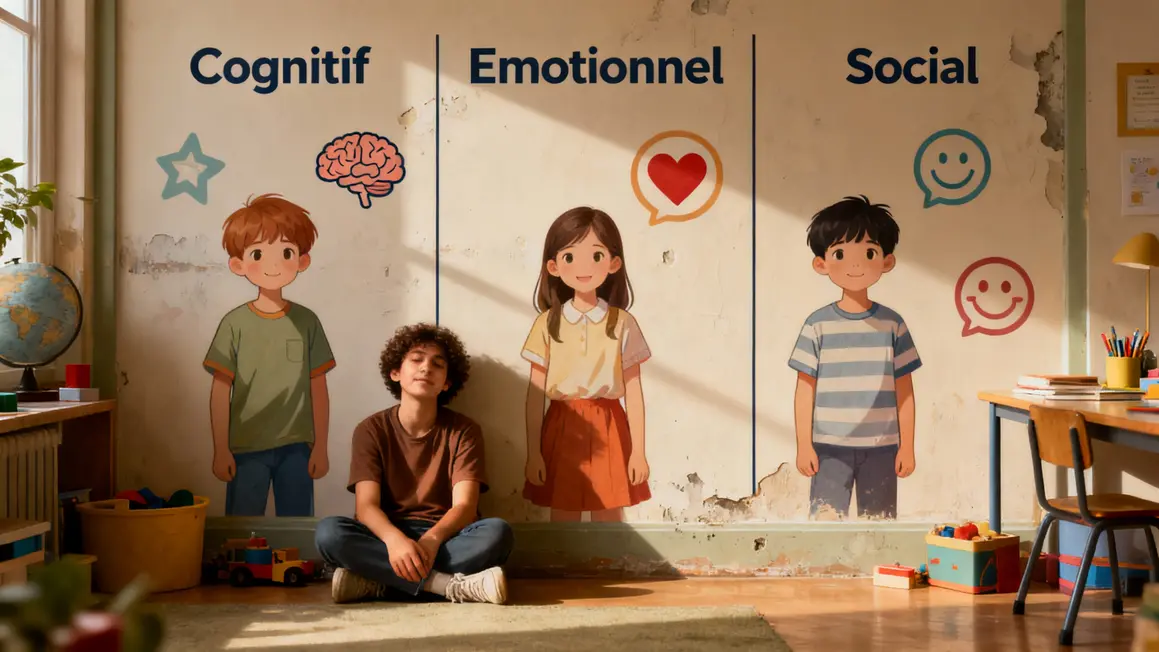
The choice of a cartoon goes far beyond mere entertainment. What your child looks at directly influences his development cognitiveemotional and social. It is therefore essential to analyse the proposed content. Even the programmes appearing « innocent » leave subtle traces on how a child reads social relationships and understands his or her emotions.
On the cognitive side, focus on content Structured, slow and repetitive, adapted to age. Programmes such as « Little Bear Brown » are recommended for their clarity and ability to help the child organize his ideas. Content that is too complex or fast can disorient the smallest.
Emotionally, violent or over-anxiety cartoons should be avoided. Studies at the American Academy of Pediatrics show that repeated exposure to conflict reduces sensitivity to aggressive behaviour. On the other hand, securities such as « Dora the Explorer » or « Mini-Justiciers » promote the positive resolution of small daily hassles.
On the social side, cartoons convey values and stereotypes. WHO experts recommend selecting works that promote tolerance and diversity, such as « Once upon a time... life », which shows the interdependence between the different systems of the human body.
A ritual of parental supervision allows us to open dialogue on the themes or situations seen, and anchor the role of parents as a reliable benchmark in the viewing experience.
| Aspect | Positive impact | Risks |
|---|---|---|
| Cognitive | Logical development, structure of thought | Confusion, mental overload |
| Emotional | Emotion Management Learning | Anxiety, fear |
| Social | Strengthening positive values (cooperation, tolerance) | Assimilation of negative stereotypes |
Assess the importance of age for appropriate content
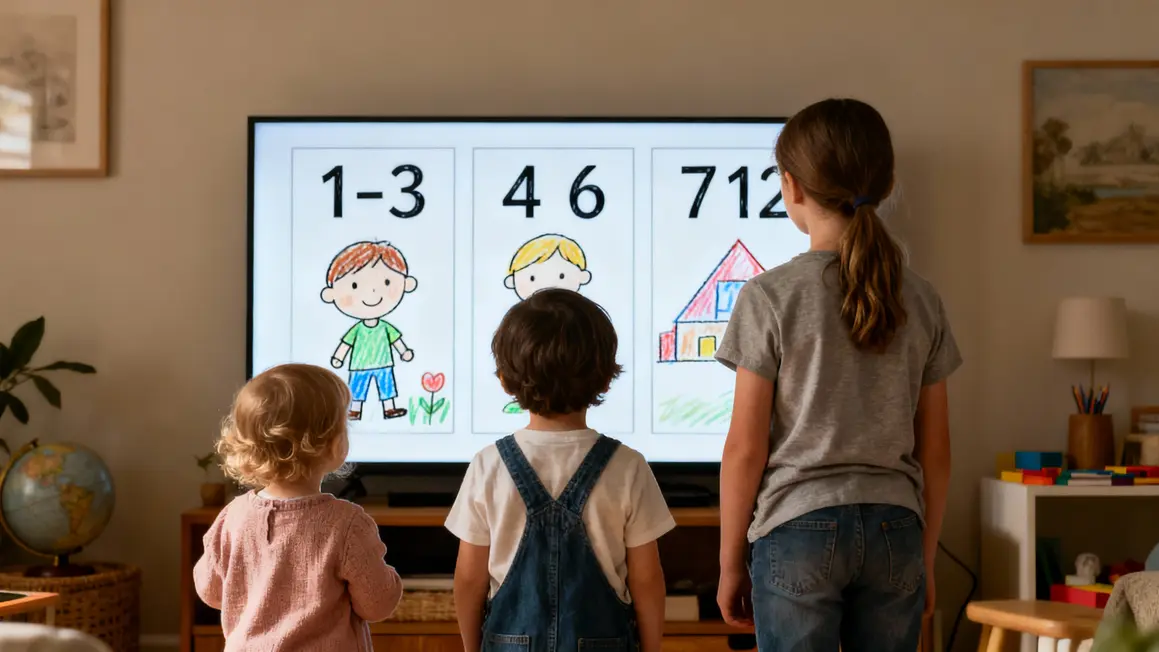
The educational content a cartoon must keep pace with the child's development. Between 1 and 3 years, focus on short, simple, and reassuring episodes. At this stage, titles such as T.A. Trotro or Little Bear Brown accompany the child in his familiar routines. For ages 4-6, introduce software, colours and educational themes, for example « Dora Explorer » or « Mouk », to awaken discovery and cooperation. The 7-12 year olds are ready for worlds richer in history and science, like « Once upon a time... Life » or « The Mysterious Cities of Gold ». Adapting choice over the years avoids fatigue and frustration.
Adapt choice to the child's sensitivity and taste
Each child shows unique preferences. Some enjoy sweet stories, others do not stand in front of an adventure full of action. Test different styles, observe reactions and discuss together the feelings felt in front of each program will help you target the most stimulating and secure. Ask him open questions after each session: « What do you like about this episode? », « Did you get scared or laugh? ». His answer will guide your selections as he grows.
Analyze the quality of the content of a cartoon
A good choice is based on three criteria: scenariovalues and aesthetics. The stories must remain understandable and structured, such as those of « Sid the Little Scientist ». The values transmitted encourage mutual aid and tolerance, as in « Mini-Justiciers ». Finally, focus on sober graphics, without visual overload, and a soundtrack adapted to age, points noted in « Little Bear Brown » and « Maya ».
Limiting screen time and offering alternatives
Regulating exposure goes through the adapted duration. The main recommendations: zero screen before 2 years, 1 hour per day between 2 and 5 years, up to 2 hours for the largest, according to the American Academy of Pediatrics. Focusing on a fixed routine, alternating with readings, creative games or outdoor activities, enriches the imagination and reduces the passive repetition effect.
Encourage parent-child interaction around cartoons
Watching with your child brings a framework to exchange and analyze stories together. Using this moment to ask questions or extend the experience through creative activities strengthens his critical mind, while transforming entertainment into a real learning medium.
Concrete recommendations of cartoons by age group
The following is a useful summary table for targeting the age and child needs programs:
| Age group | Recommended programme | Highlights | Availability |
|---|---|---|---|
| 1-3 years | Little Bear Brown | Soothing, reassuring, suitable for toddlers. | Platforms type YouTube, streaming. |
| 1-3 years | Trotro donkey | Very short episodes, easy identification. | Amazon Prime, streaming. |
| 4-6 years | Peppa Pig | Relationship, sweet humor. | Netflix, DVD. |
| 4-6 years | Mouk | Discovery of the world, cultural aspects. | France Television, digital platforms. |
| 7-12 years | Once upon a time... Life | Great pedagogical value, scientific approach. | DVD, VOD. |
| 7-12 years | The Mysterious Cities of Gold | Moral adventure, curiosity. | Streaming, boxes. |
Think about adapting the content to your child's sensitivity and interests, prefer cartoons with a clear narrative and always check the message sent.
For the youngest, choose reassuring and educational programs like Chupi and Doudou: 5 educational episodes to share with the family, which combine learning and sweetness.
Answering Frequently Asked Questions from Parents
- How old are the screens? Zero before 2 years, then in short and supervised sessions with parental supervision.
- How to spot violence? Monitor conflict resolution and child emotional reactions; Avoid content centered on force or humiliation.
- What tools to limit and filter? Platforms like Netflix and Disney+ with child profiles, Family Link/ Qustodio apps for tracking.
- How to manage cartoon obsession? Alternate with books, creative games and outdoor activities to diversify attention.
A good cartoon, well chosen and well framed, accompanies the child in his development. The essential thing remains to stay tuned, alter pleasures and stimulate curiosity without turning screens into a dominant routine.
Adopting a clear and dynamic framework in the choice of cartoons gives your child a solid benchmark for growing up. Have you tested methods to select programs? Share your criteria or tips for comment and help other parents move more calmly on this topic.
If the content has spoken to you, think about recommending it to your people or relaying it to your networks, this is the best way to improve the educational selection around us.
What other aspects of family life would you like to see detailed resources on? Launch your suggestions in the comments to enrich the discussion around creative and positive parenting.
Reliable sources to go further: American Academy of Pediatrics, WHO, professional selection on France Télévisions.
Article written by Guillaume Martin specialist in digital and creative pedagogies, author for guyomcorp.com (field experience in youth animation and parental counselling).
Updated on 23 March 2026