Published by: Élodie Maurel-Lescure — Editor specializing in various
Choosing a child's school is an important step for families. The establishments named Simone Veil, present throughout the country, share common values of openness, modernity and inclusion. This guide details the registration procedures, the operation of extracurricular services and the specific pedagogical features of these schools to help you better understand their environment.
Contents
Presentation and philosophy of Simone Veil School
The Simone Veil School is based on an educational approach centred on the citizenship and individual development. Inspired by Simone Veil's journey, these school groups value respect for others, equality of opportunity and intellectual curiosity. Most of the schools are organized into two complementary units: the kindergarten, which caters for the youngest, and the elementary school, which accompanies the pupils of the CP to the CM2.
The educational structure facilitates a smooth transition between cycles. Teachers work together to ensure continuity in learning, enabling students to gain access to autonomy Over the years. The rooms, often modern and bright, are designed to provide a secure and stimulating environment for learning.
Practical information: registration and contact
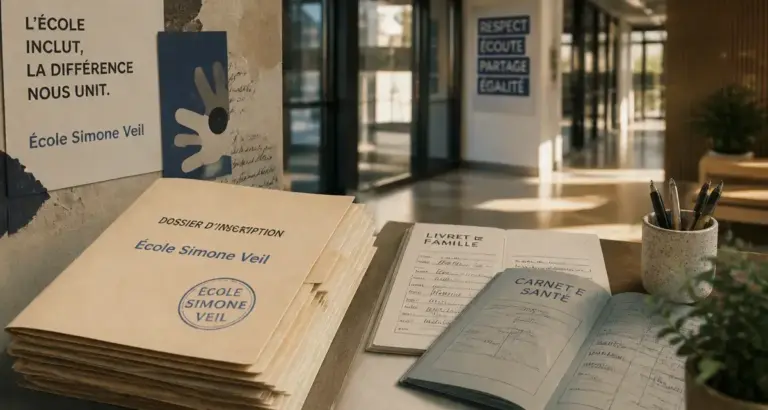
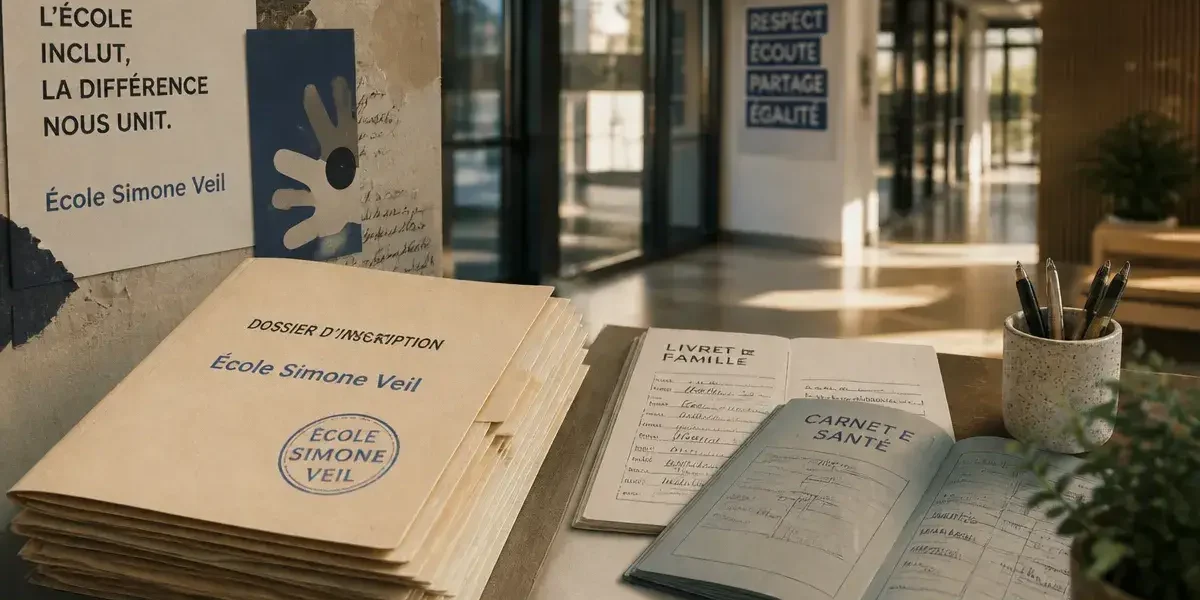
The Simone Veil school is registered with the school affairs department of your town hall. It is advisable to anticipate this from the beginning of the calendar year before the start of the school year. In order to make up your file, you will need to provide proof of residence, the family record and the child's health record attesting to the compulsory vaccines.
After administrative validation by the municipality, a meeting with the management is usually organised. This meeting allows you to visit the premises, ask questions about the organisation of the classes and discuss with the teaching team. For direct contact details of the school in your area, visit the website of your town hall or the National Education Directory.
Extracurricular services and catering
The reconciliation of work and school life is a major concern. Simone Veil schools offer comprehensive extracurricular services to meet the needs of families. The reception is usually possible in the morning from 7.50 am and in the evening until 6.30 pm, with supervised activities. These transition times allow children to relax after class.
The school catering is a pillar of life in these institutions. The refectories offer balanced meals, prepared with particular attention to the quality of the products and, in many cases, promoting short circuits. The lunchtime is a socializing moment where students learn the rules of community life and discover new flavours.
School inclusion as a priority
The commitment to inclusion is a strong feature of Simone Veil schools. The reception of pupils with disabilities, including through devices such asULIS (Local school inclusion unit) allows each child to attend school adapted to their needs. This approach promotes goodwill and mutual understanding within the school community.
By adjusting the perception of each student's abilities, the school transforms differences into opportunities for collective progression. This process allows every child, whether or not they have specific needs, to feel valued. The school thus forges a common identity where diversity is seen as an enrichment.
Equipment and learning environment
The quality of the material environment influences the motivation of students. Simone Veil schools often benefit from recent infrastructure, sometimes expanded to meet local needs, as was the case for some schools in 2020. In classes, use of interactive tables makes lessons more dynamic and participatory, facilitating the understanding of complex concepts through digital.
In addition to classrooms, these schools regularly have specialised spaces to enrich the course of students:
The EPS room is dedicated to motor development and physical activity. The science room allows experimentation and discovery of the world. The plastic arts room promotes creative and manual expression, while the library or BCD offers a quiet place to cultivate reading and documentary research. Access to these facilities guarantees children the resources to explore their talents, whether they are sports, artistic or scientific, throughout their primary education.
Updated on 15 September 2026