
Published by: Guillaume Martin — Editor in Chief
Updated on 23 March 2026
The jazz, born in Black American communities At the end of the 19th century, is the result of a unique musical blend. With his syncopated rhythms and its African and European influences, it has evolved by integrating elements of rock, pop and hip-hop. Today, contemporary jazz continues to innovate thanks to theimprovisation, the use of electronic instruments and harmonic and rhythmic experimentation. Artists like Robert Glasper, Kamasi Washington and Christian Scott illustrate this richness and diversity. Jazz remains an influential genre, reflecting its cultural impact and its role in the evolution of modern music.
Contents
The origins of jazz: a unique musical mix
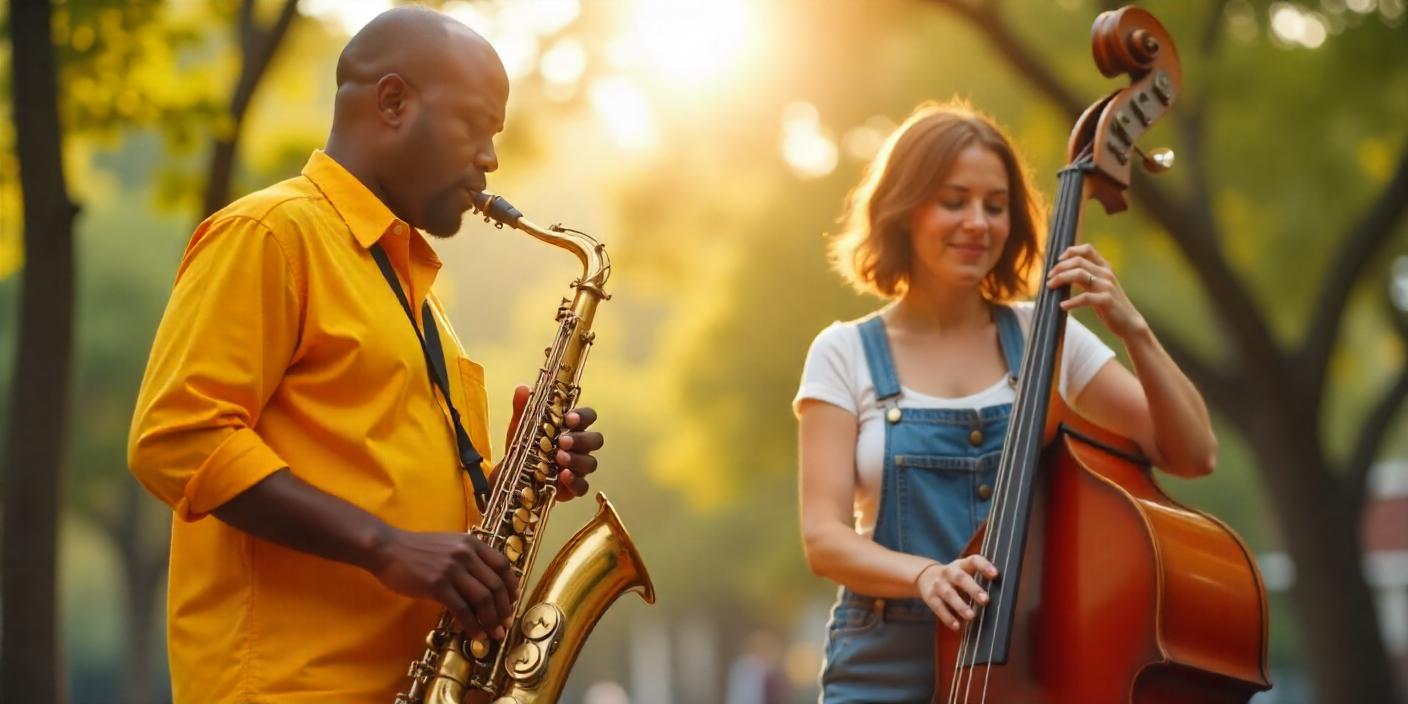
Jazz, this musical genre deeply rooted in the cultural history of the United States, finds its origins in a context of mixedness and innovation. This musical style, known for its richness and diversity, was born in the late 19th and early 20th centuries, thanks to the fusion of various musical traditions.
The beginnings of jazz
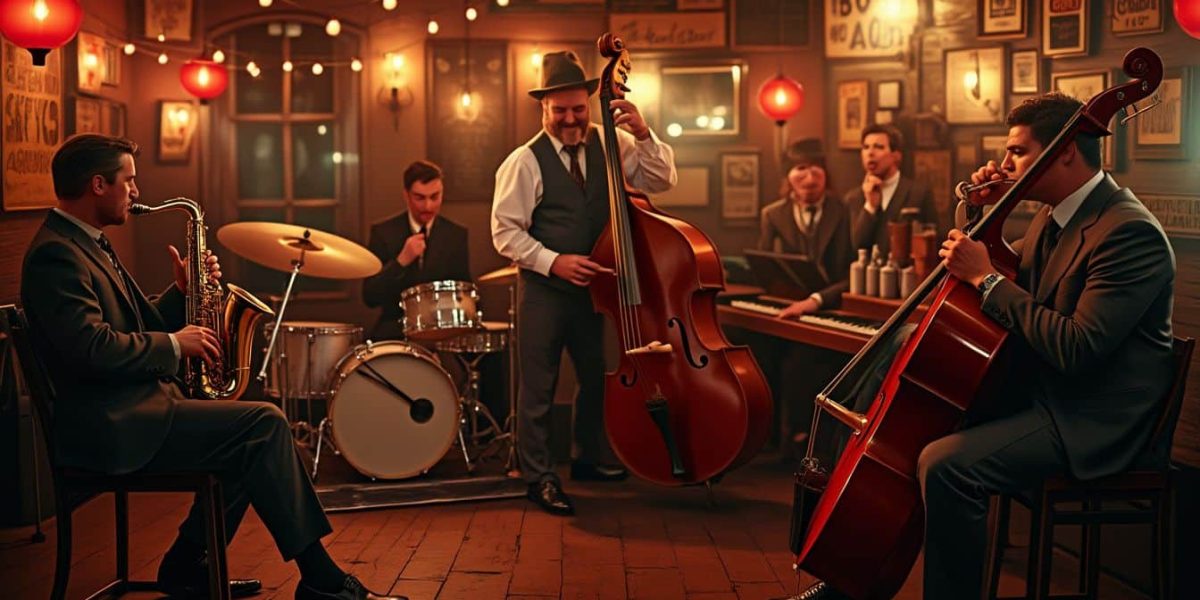
The first forms of jazz appeared in the southern United States, mainly in New Orleans. This port city, rich in cultural exchanges, was the cradle of this new music. Jazz was born from the encounter between the African rhythmsEuropean harmonies and African-American melodies. The syncopated rhythms, inherited from African and Caribbean music, were married to Western harmonic structures, giving birth to a unique and innovative sound. Basic jazz instruments include piano, trumpet, trombone and clarinet, but also percussions such as drum and banjo.
These instruments were used creatively to produce new and captivating sounds. The musicians of the time often gathered in the streets, salons and clubs to improvise and experiment, creating the first drafts of jazz.
Jazz born in African-American communities
Jazz has developed mainly in African-American communities, which have played a crucial role in its emergence. African slaves, forcibly brought to America, had brought with them their rich musical heritage, composed of work songs, spirituals and traditional rhythms. These elements blended with European music to form a new artistic expression. The first jazz musicians were often self-taught, who learned to play in the ear and inspired religious songs and popular music from their surroundings. Jazz has thus become a form of expression of their experiences, hopes and resilience. This is also why improvisation is a fundamental characteristic of jazz, allowing musicians to express freely and communicate their emotions spontaneously.
– Syncopated rhythms: inherited from African and Caribbean music.
– European harmonics: integration of Western melodic and harmonic structures.
– Improvisation: central element allowing free and personal expression.
The evolution of jazz testifies to its ability to integrate and transform diverse influences, creating a musical genre that is always in motion. Currents such as Free Jazz, Funk Jazz, Jazz Fusion and Acid Jazz show the richness and diversity of this music, which continues to influence many contemporary artists.
The evolution of jazz: from currents to modernity
Jazz, a musical art in perpetual transformation, finds its origins in the African-American communities of the early twentieth century. By merging African and Caribbean rhythms with European melodies, jazz has created a unique alchemy. This musical genre, from its beginnings, has been marked by a great diversity and constant evolution. Let us explore together the major currents that have shaped jazz, from classics to contemporary trends.
Classical and modern jazz
To understand the evolution of jazz, it is crucial to distinguish between classical and modern times. Classical jazz, dominated by iconic figures such as Louis Armstrong and Duke Ellington, is often characterized by relatively simple but expressive melodic and harmonic structures. There are elements such as swing and improvisation, which are distinctive features of the genre.
On the other hand, modern jazz, which emerged after World War II, began to push the boundaries of tradition. Artists like Miles Davis and John Coltrane introduce more abstract and complex concepts, paving the way for new musical expressions. Modern jazz also incorporates various influences, ranging from rock to hip hop, and uses electronic instruments, creating a more eclectic sound.
The swing and the big band
Swing, born in the 1930s, is an iconic era for jazz. It is characterized by its lively rhythms and its ability to make the crowds dance. Big band orchestras, composed of copper, wood and rhythm sections, dominate this period. Orchestra conductors such as Benny Goodman and Count Basie become key figures in swing, bringing new energy to jazz.
Big bands play a crucial role in jazz broadcasting, notably through recordings and radio broadcasts. They popularize jazz with a wider audience and contribute to its evolution by experimenting with more sophisticated arrangements and improvised solos. Swing remains a time cherished by jazz lovers, marking a time when music and dance were just one.
The Bebop and the Modern Revolution
In the 1940s, bebop emerged as a response to the growing sophistication of big bands. Musicians like Charlie Parker and Dizzy Gillespie revolutionize jazz with fast tempos, complex harmonies and virtuoso improvisation. The bebop marks a clear break with swing, with more emphasis on individuality and personal expression.
This period is often seen as the beginning of modern jazz, where experimentation becomes the norm. The bebop opens the way to currents such as cool jazz, hard bop, and later, free jazz. Each of these styles continues to push the boundaries of what jazz can be, integrating elements of various musical genres and using electronic instruments to create new sound textures.
To sum up, the evolution of jazz is a story of constant transformation and adaptation. From its African-American roots to contemporary influences, each current has brought its stone to the building, enriching this musical genre with an unparalleled diversity and richness. Whether we talk about swing, bebop or modern jazz, jazz remains an inexhaustible source of inspiration and creativity.
The influence of jazz on modern music
Jazz, born in the Black American communities, has left an indelible mark on the entire musical landscape. This genre has been able to reinvent itself continuously, influencing many contemporary styles. In this section, we will explore how jazz has integrated into modern music, focusing on some key genres.
Jazz and contemporary music
The richness of jazz lies in its ability to merge with other musical styles. Since the 1960s, jazz has diversified with currents such as Free Jazz, Funk Jazz, and Jazz Fusion. These variations have enabled jazz to modernize and adapt to different times and audiences.
Contemporary jazz today incorporates elements of rock, pop and even electronic music. Musicians use synthesizers, rhythm machines, and other electronic instruments to create innovative sounds. For example, Robert Glasper and Kamasi Washington are emblematic figures of this evolution, mixing traditional jazz and modernity to produce unique and inspiring works. They show that jazz is not frozen, but that it continues to evolve and enrich by drawing on other musical genres.
Improvisation remains a fundamental characteristic of contemporary jazz. Jazz musicians exploit this creative freedom to push the limits of music, integrating elements of various genres. This approach allows to create original and dynamic compositions, combining tradition and innovation.
Jazz and hip-hop/R&B
The link between jazz and hip-hop/R&B is particularly strong. Hip-hop, born in the 1970s, has often drawn on jazz for its samples and rhythms. This symbiotic relationship has given rise to significant works that have captured public attention.
Artists like A Tribe Called Quest or Kendrick Lamar have widely used jazz samples to enrich their productions. Jazz brings a depth and rich sound that perfectly complements the rhythms and lyrics of hip hop. Album « To Pimp a Butterfly » Kendrick Lamar is an emblematic example, where jazz merges with hip-hop to create a revolutionary and committed sound.
R&B, for its part, was also influenced by jazz, notably through the use of complex harmonies and sophisticated melodies. Artists like Erykah Badu and D的Angelo have incorporated jazz elements into their music, creating a unique and recognizable style.
Here are some key elements of jazz influence on hip hop and R&B:
Many contemporary jazz currents owe their wealth to the legacy of a American composer at the crossroads of major influences.
Jazz, with its musical blending, shares common roots with Manouche music, as explored in this article on Gypsy musician: discover the secrets of Manouche music and its legendary artists.
- Using jazz samples to create beats.
- Incorporation of jazz instruments into productions.
- Harmonies and complex melodies inspired by jazz.
- Development of improvisation and experimentation.
In short, jazz continues to play a crucial role in modern music, enriching and diversifying contemporary genres. Its influence is manifested in the sounds, techniques and creative approaches of current musicians.
technological innovations and contemporary jazz
Contemporary jazz is a musical genre in constant evolution, influenced by technological advances and new artistic trends. This fusion between tradition and modernity allows jazz to remain relevant and captivating for new generations. Let's explore how technological innovations have transformed contemporary jazz.
neoclassical and contemporary jazz
Neoclassical and contemporary jazz is a modern reinterpretation of classical jazz styles. This musical stream combines the traditional elements of jazz with contemporary influences, creating a unique and dynamic sound.
Neoclassical jazz artists, such as Wynton Marsalis, respect classical structures and harmonies while incorporating modern techniques. This helps preserve the authenticity of jazz while making it accessible to a wider audience.
experimentation and new technologies
Experimentation is at the heart of contemporary jazz. The musicians use the New technologies to push the limits of music and explore new sounds. Synthesizers, rhythm machines and music production software offer an infinite range of creative possibilities.
With these tools, artists can integrate elements of rock, pop and hip hop into their compositions, creating innovative musical fusions. For example:
- Synthesizers create complex and unique sound textures.
- Rhythm machines offer various grooves and battery patterns.
- Music production software facilitates harmonic and rhythmic experimentation.
This experimental approach allows contemporary jazz musicians to stand out and bring a new dimension to music.
Notable musicians of contemporary jazz
Contemporary jazz is carried by talented and innovative musicians who push the boundaries of the genre. Among them, some are distinguished by their ability to integrate new technologies into their music.
Robert Glasper, for example, is known for its use of synthesizers and electronic effects. His music merges jazz with hip-hop and R&B, creating a modern and captivating sound.
Kamasi Washington, for his part, is a saxophonist whose stunning compositions incorporate elements of psychedelic rock and funk. Her album « The Epic » is a perfect example of how contemporary jazz can be grand and ambitious.
Christian Scott, trumpeter, uses state-of-the-art technologies to create new sound effects. His style, which he calls « Stretch Music », is a fusion of jazz, rock, hip-hop and electronic music.
These musicians show that contemporary jazz is a genre in constant evolution, capable of integrating technological innovations to create new forms of artistic expression.
Updated on 23 March 2026