
Published by: Guillaume Martin — Editor in Chief
Updated on 23 March 2026
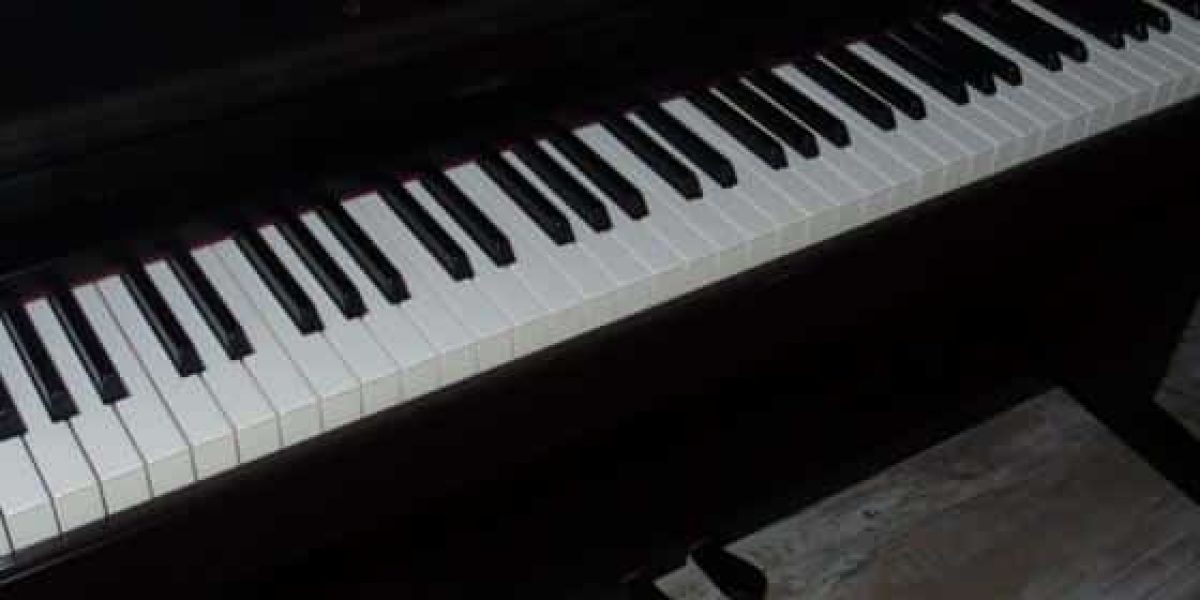
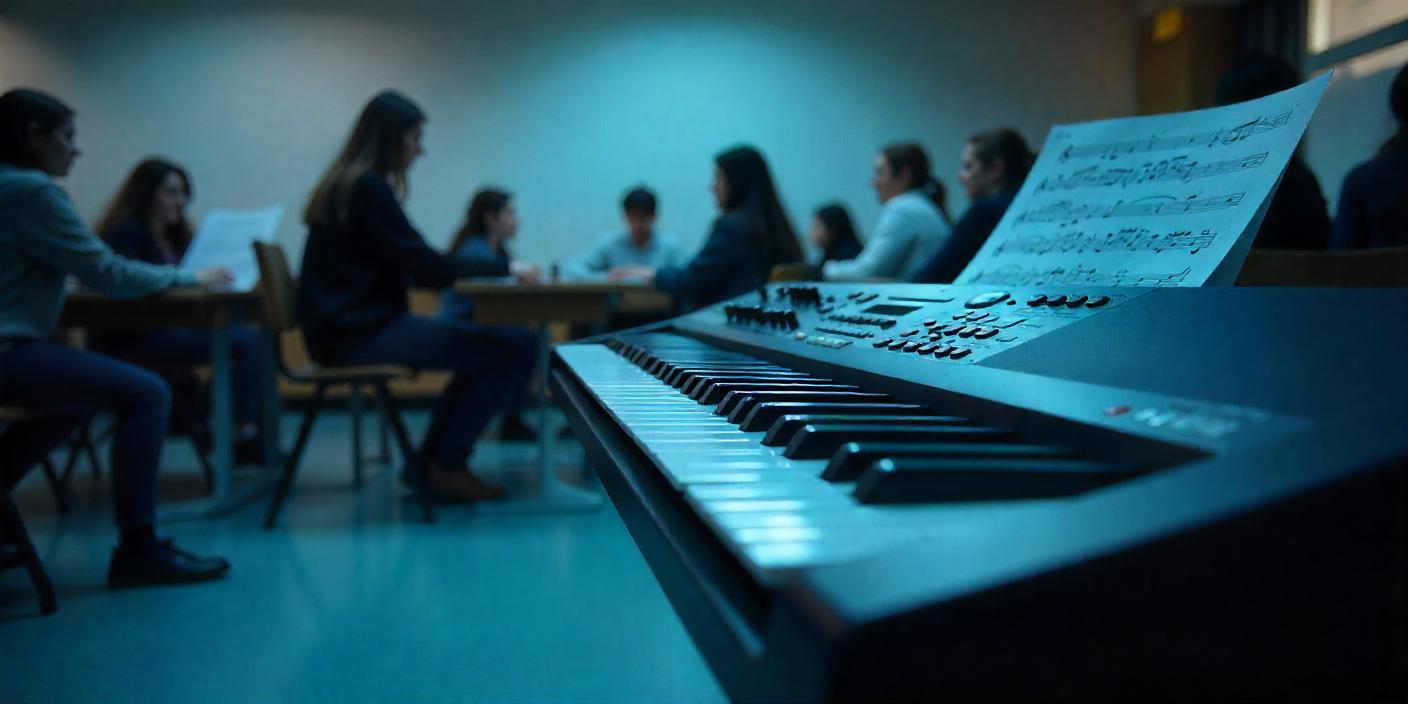
Why do so many current songs and electro projects still rely on digital keyboards? While this kind of instrument has transformed the way of creating, it is mainly due to significant advances and a philosophy that makes music technology accessible – carried by Ikutaro Kakehashi and Roland. This article traces the technical, historical and creative steps that explain this legacy and provides benchmarks for choosing, understanding and fully exploiting a digital keyboard today.
Contents
Historical background of electronic music before the arrival of Kakehashi
The 1970s-80s marked an essential turning point for music, with the exploration of unprecedented sound textures. At that time, analog synthesizers dominate: imposing, expensive, complex to handle, they limit access to an insider bubble. Studios are then congested laboratories where each setting takes time, because of memoryless devices – the slightest modification that can ruin hours of sound research. Faced with these constraints, musicians and amateurs struggle to appropriate these promising technologies.
In a context of creative effervescence (ascent of funk, psychedelic rock, birth of electro), the demand explodes for tools capable of transgressing classical limits... But there is a missing link to expand this land to less wealthy or less experienced creators. The pioneers of musical democratization feel the importance of opening up creation on a wider scale. The synths then fascinate but remain the business of specialists; This is where the door is opened for innovation, accessibility and versatility.
The major innovations of Ikutaro Kakehashi at Roland
The arrival of Kakehashi Roland will upset everything – not only from a technical point of view, but also practical. Exit the machines reserved for an elite: place to master for all, via robust instruments, portable and simple to master. Two emblematic models summarize this revolution:
- TR-808 : When it was released, this rhythm box did not reach the general public unanimously. Some visionary artists have discovered the potential of his very marked sounds. As a result, the TR-808 will become the backbone of whole styles, from hip-hop to trap and world pop.
- TB-303 : Disturbed from its initial use (bass simulator), it will be the cornerstone of the acid house and club culture of the 80s-90s, thanks to its hypnotic and filtered sequences.
Beyond these icons, Kakehashi's approach is the democratization tools. Price-accessible instruments, simple in the interface, able to move from the dodo room to the world stage: Roland truly opens a new page. Each technological innovation is used for creativity rather than gadget. This philosophy shapes the world's sound diversity still today.
The importance of MIDI in linking instruments
No one could predict the impact of MIDI at its creation in 1983. With Dave Smith, Kakehashi thinks MIDI as a language common to all musical machines. Result, where each instrument « spoke » its own language, a digital keyboard equipped with MIDI can now drive, sync, sample or record any compatible device type. This intercommunication facilitates the work of musicians, from home studio to stage, and collective production. MIDI does not carry the sound itself, but transmits in real time the game information, making it possible to orchestrate hybrid and multi-instrumental configurations infinity.
Its simplicity and robustness explain why it imposed itself on a long-term basis: a single MIDI or USB cable, and the ecosystem is ready. Musicians, both live performance and computer-assisted composition, can now control and synchronize multiple keyboards, sequencers, rhythm boxes or software. It is an essential basis for those who wish to progress in the game or electronic creation.
Understanding the technical basis of the digital keyboard
To know how to choose or use a digital keyboard, it is crucial to understand the technical logic – because it is it that conditions the expressivity and fun of playing. The following are the fundamentals to be incorporated:
- Food : sector or batteries, variable according to the desired mobility. Always provide a set of spare batteries, especially while on the move.
- Touch and mechanics : synthic action (ultra reactive), semi-lethal (polyvalent) or hammer action (piano simulation). This setting strongly alters the feeling of play.
- Sound engine : sampling (realistic sound from recordings) or physical modeling (absorbing by algorithms), each solution having its advantages for realism or flexibility.
- Sensors The velocity (intensity/rapidity of support) and the aftertouch (pressure held on the key) are two essential elements to enrich the dynamics of the game.
- Connectivity : MIDI/USB for chatting with other MAO devices or software, headphones or amp outputs, sometimes Bluetooth MIDI on recent models.
Why so much insist on these aspects? Because it is the combination of these choices that transforms the instrument into a living interface, capable of marrying all current musical styles and production methods.
Features of a digital keyboard compared to the acoustic piano
One of the main interests of the digital keyboard is the practical and sound freedom it offers. First, on the transport side, even a complete model 88 keys remains much easier to move than a traditional piano (finished the galleys in the apartment or the delusional moves). Financial investment is also lower and maintenance is much less restrictive. These instruments offer large banks of sounds (tail piano, synth voice, strings, percussion), an evolutionary polyphony, and often the possibility to play the helmet at any time – an ideal solution to progress without hindering the environment.
Digital models are therefore adapted as well :
- beginners looking to learn without complex;
- intermediate musicians who want to progress or produce at home;
- amateur groups wishing a flexible and transportable stage solution.
It is these aspects that explain why so many creators switch to this type of instrument, including those who appreciate the authenticity of a classical piano.
Comparison of three popular digital keyboards
To help you make your choice, here is a clear view of three models widely endorsed by musicians according to their needs:
- Roland FP-30 : 88 lit keys, SuperNATURAL motor, excellent for intermediates/demanders, stage or studio, approx. 700 €.
- Yamaha P-45 : good initiation, 88 keys, AWM sampling, easy to take in hand, approx. 450 €.
- Casio PX-160 : 88 semi-premium keys, AIR sound diversity, good compromise for self-teaching, approx. 500 €.
| Model | Sensation of keys | Sound engine | Indicative price | For who? |
|---|---|---|---|---|
| Roland FP-30 | Graduation, piano style | SuperNATURAL | ~700 € | Intermediate/advanced |
| Yamaha P-45 | Graded Hammer Standard | AWM Sampling | ~450 € | Débutant |
| Casio PX-160 | Semipremium | AIR | ~500 € | Self-taught, creative |
Your decision must first be based on your use (composition, learning, stage) and your feeling at the game: testing multiple keyboards remains the best way to avoid disappointment.
Impact of digital keyboards on music creation
Kakehashi's invention and the rise in the range of digital keyboards have multiplied the possibilities to invent, repeat and share his music. From « Planet Rock » In Billie Eilish, the revolution is not only sound – it is also a history of accessibility. Now, a full home studio can hold on a table, and every project benefits from pro sounds without excessive budget. These instruments promote the diversity of productions, allow it to be carried out, reprogrammed, registered independently, whether it starts or is intended for a semi-pro benefit.
To find an instrument combining innovation and versatility, explore our guide to Yamaha 88 keys digital piano choose the model that really fits you.
To better understand how digital keyboards adapt to design standards, this article on the number of keys on a piano: the standard explained simply offers essential keys.
Materials and technologies that make a difference
Progress is not based solely on electronics. The choice of materials (ABS anti-shock plastic, ivory imitation finishes, metal structure on some models) influences both durability and gaming comfort. New generation DSP or SuperNATURAL/AiR/AMW processors provide extended sound palettes, sign stability (no live bugs), and immediate responsiveness. Some models offer MIDI Bluetooth connectivity, ideal for mobility and miniaturized studios. It is these details that ensure that a digital keyboard follows your evolution, without limiting your creativity for years to come.
Essential criteria for choosing your first digital keyboard
- Touch : to learn the piano, prefer the keys ; for electronic production, a synth touch and pads may suffice.
- Polyphony : target at least 64 voices, ideally 128 to compose comfortably.
- Connectivity MIDI, USB and audio outputs, or even Bluetooth for mobile devices.
- Additional features : sound banks, metronome, internal recorder, anything that can directly serve your practice.
Before any purchase, take the time to try different models, compare their ergonomics and their real possibilities. Trust your feeling, not just the characteristics « on paper ».
Tribute to Ikutaro Kakehashi: Building More Than a Brand
Key figure, Kakehashi did not simply introduce digital into the daily lives of musicians; He opened the way for a new creative autonomy. Its collaboration around MIDI and its Roland range remain today the pillars of modern music production, accessible to all. This philosophy – opening up the creative field instead of restricting it – allowed generations to cross steps, from the first try to the completed project.
We find the trace of this vision in every beat programmed, every sound bank downloaded, every home studio improvised. Basically, if digital keyboards have become the norm, it is because they combine freedom, versatility and reliability without compromise.
Hard to imagine the future of music without this legacy. And you, on what instrument or innovation do you rely on to structure your musical creations? Share your experiences and tools that help advance the comments below.
To go further, you can explore official resources such as Roland's site or consult the NAMM archives to learn how some of these major innovations came about.
If this article has been useful, don't hesitate to share it around you: your return can pave the way for other creators seeking inspiration and technical accessibility. What are the next steps in your musical journey? Leave us your desires or questions, they can feed our next articles!
Updated on 23 March 2026