

Published by: Guillaume Martin — Editor in Chief
Updated on 23 March 2026
The musical production infilm industry is a fascinating universe where collaboration between composer and director is essential. As a composer, I need to understand the director's artistic vision to create new musical themes Distinctive features that enrich history. Music plays a crucial role in strengthening the atmosphere, enhancing emotions and guiding the audience's attention. From studio recordings to film music analysis techniques, each stage of the process aims to create an immersive and emotional experience for the public. It is an art that mixes tradition and innovation, using both classical instruments and modern technologies to compose the soundtracks unforgettable.
Contents
What is music production in cinema?
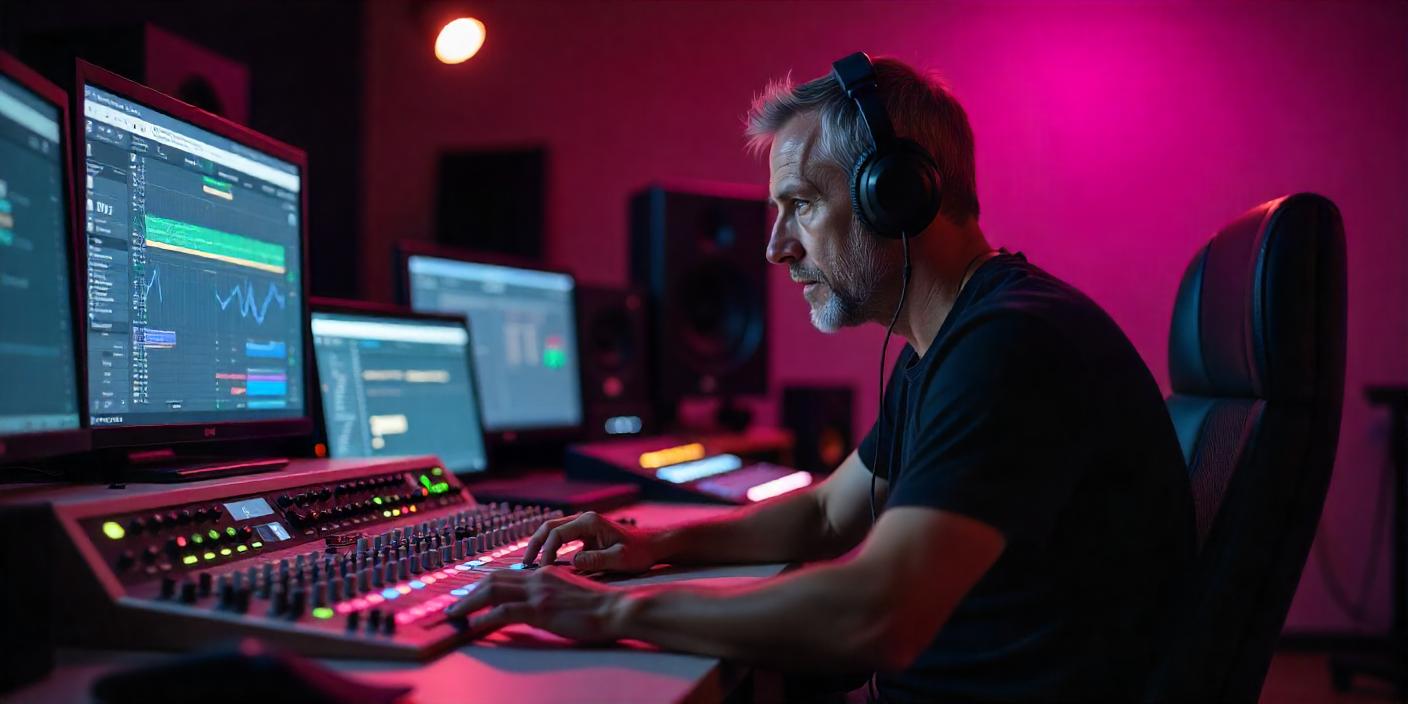
Music production in cinema is an essential component that enriches the visual and emotional experience of a film. It embraces a set of creative and technical processes aimed at integrating music in a coherent and meaningful way within the film narrative.
Definition and history
Music production for cinema dates back to the era of silent cinema where music played a crucial role. It was then used mainly to mask the noise of the projectors and to add an emotional atmosphere to the scenes. With the advent of sound cinema in the 1930s, composers such as Max Steiner revolutionized the use of musical scores, introducing music leitmotivs to link music to narrative.
These leitmotivs are recurring musical themes associated with specific characters, places or events. They create emotional and narrative continuity throughout the film. Today, musical production includes the creation of themes, collaboration with the director, and recording compositions with professional musicians.
Types of music
Film music can be classified into several types, each having a distinct role in film narrative:
- Original music : Made specifically for the film, it reinforces the uniqueness of the work and adapts perfectly to the scenes.
- Pre-existing music : Use of already existing songs, such as popular songs or classical compositions.
- Sound design : Integration of sounds and sound effects that contribute to the atmosphere of the film.
- Diegetic music : Music which is part of the world of the film and which the characters can hear.
- Non-diegetic music : Music added for the spectator, which is not perceived by the characters of the film.
Each type of music plays a specific role in the construction of the atmosphere, the accentuation of emotions, and the fluidity of narrative transitions.
Who chooses the music of a movie?
The selection of music for a film is a crucial process that contributes to the atmosphere and emotions of the story. This choice is not the result of chance, but is the result of careful collaboration between several film professionals.
The music supervisor
The musical supervisor plays a key role in the selection and integration of music into a film. This professional is responsible for finding existing songs or ordering original compositions that match the director's vision. He also works to secure the rights of selected pieces, a key task to avoid future legal problems.
The responsibilities of the music supervisor include:
- Identify the musical needs of the film in collaboration with the director and composer.
- Choose pre-existing music that fits perfectly into the scenes.
- Order and supervise the creation of original compositions.
- Manage legal and contractual aspects related to the use of pieces.
Collaboration with teams
The success of a soundtrack is based on a close collaboration between the music supervisor, the director, the composer and other members of the production team. Together, they define the artistic direction and atmosphere desired for the film. This synergy is essential for music to strengthen the emotions and themes of the film.
The stages of this collaboration include:
- Initial discussions to understand the director's artistic vision.
- Proposals and selections of songs in line with the tone of the film.
- Joint work sessions to adjust and refine compositions.
- Tests and adjustments of the pieces on the mounted scenes to ensure perfect consistency.
Each team member brings their expertise to ensure that music is not just an addition, but an integrated and essential component of the film experience.
How is a personalized soundtrack created?
Creating a personalized soundtrack is a fascinating process that requires a combination of creativity, technique and collaboration. Let's dive into the different steps and tools needed to create a unique soundtrack, adapted to a specific project.
Creation tools
To create a personalized soundtrack, several essential tools Come into play. Here are some of the most used:
- Composition software : Software such as Ableton Live, Logic Pro, and FL Studio are commonly used to compose and arrange music. These tools create complex compositions with great flexibility.
- Virtual instruments : The VST (Virtual Studio Technology) offers a variety of virtual instruments, from pianos to synthesizers, to string sections and percussions, creating a rich sound palette.
- Sound samplers and libraries : Libraries such as Spitfire Audio or Native Instruments provide high quality samples that can be integrated into compositions to add a realistic dimension.
- Studio recording : For optimal quality, composers often record instrumental parts in studio with professional musicians. This adds depth and authenticity that virtual instruments cannot always reproduce.
- Digital audio workstations (DAW) : These platforms, such as Pro Tools or Cubase, are essential for editing, mixing and mastering soundtracks. They allow to fine-tune every detail to achieve a professional final result.
Establishment process
The process of creating a personalized soundtrack takes place in several stages, each of which is crucial for the final result.
1. Project understanding : It all starts with an in-depth discussion with the project director or creator to understand the artistic vision, the emotions to transmit and the key moments to highlight with the music.
2. Creation of musical themes : Then, the composer develops distinctive musical motifs for the various elements of the project. This may include specific themes for particular characters, places or events.
3. Packaging : After defining the themes, a first version (or model) is created. This step allows you to test musical ideas and adjust them according to the director's feedback.
4. Registration : Once the model has been approved, the composer moves to recording the instrumental parts. This can be done in a studio with musicians or using high quality virtual instruments.
5. Mixing and Mastering : The recordings are then mixed to balance the different tracks and add sound effects. The mastering finalizes the whole, ensuring that the soundtrack is ready to be integrated into the project with optimal sound quality.
6. Integration into the project : The final step is to integrate the soundtrack into the project, perfectly synchronizing the music with the images or narrative elements to create an immersive and coherent experience.
To discover how creators shape emotion on the screen, explore our guide on composers of essential film music.
The role of the film music composer
The film music composer is a key figure in film production. His work is not limited to the mere creation of melodies, but involves a profound understanding of narrative and emotion. It is the bridge between image and sound, adding an additional dimension to the stories told on the screen.
Objectives of the composer
The objectives of the film music composer are multiple and varied. First of all, he has to creating musical themes distinct resonating with the characters and situations of the film. These themes serve as a thread throughout the work, allowing the public to immerse themselves more in history.
Then the composer must adapt his music to strengthen the emotions and atmosphere of each scene. Whether to highlight a moment of tension, love or sadness, music must be in perfect harmony with images to maximize emotional impact.
Finally, music must also supporting transitions between different scenes, helping to maintain the rhythm and fluidity of the story. A well thought-out musical transition can make the whole difference between a scene perceived as natural and one that seems forced or disjointed.
Collaboration with teams
The process of musical creation for a film is intrinsically collaborative. The composer must work closely with the director to understand his/her artistic vision and determine how music can enrich. This collaboration is crucial to ensure that music aligns perfectly with the director's narrative intent.
In addition to the director, the composer also interacts with other members of the production team, such as editors and sound engineers. This collaboration ensures that music integrates harmoniously with other sound elements of the film, such as dialogues and sound effects.
- Understanding the director's artistic vision
- Creating Distinctive Musical Patterns
- Supervise recording of compositions
- Collaborate with sound editors and engineers
Together, these professionals work to create a coherent and immersive cinematic experience, where music plays an essential role in narrative.
Cultural and technological impact
The role of the film music composer is not only artistic, but also technological and cultural. With technological advances, composers have access to increasingly sophisticated tools to create complex and innovative musical scores. Composition software, sound banks and virtual instruments offer endless creative possibilities.
Culturally, film music has a profound impact. It can reflect and influence cultural trends, bringing new sounds and popularizing musical genres. Film music composers play a key role in the evolution of contemporary music, merging traditional styles with modern innovations.
In conclusion, the film music composer is a versatile and collaborative artist whose work is essential to the success of a film. It must juggle artistic, technological and cultural requirements to create compositions that enrich the film experience and captivate the public.
Updated on 23 March 2026