Published by: Guillaume Martin — Editor in Chief
Why the Book « Mein Kampf » Does it remain so taboo in Israel, despite the end of its copyright? This question is very relevant when we look at the specific Israeli context, marked by a singular collective memory and a very framed management of access to the text. The article proposes a structured analysis to understand the origin of the taboo, its legal, social and academic consequences, and the delicate balance between memory and freedom of expression.
Contents
What Mein Kampf is and its historical impact
Written by Adolf Hitler during his incarceration following the failed Munich coup, Mein Kampf imposed itself as the programmatic foundation of Nazi ideology. Between autobiography, political writing and anti-Semitic pamphlet, the book sets out the lines of force for a society project based on exclusion, racial purity and territorial expansion. Its mass circulation before 1945, nearly 12 million copies in Germany, makes it a key text to understand the rise of the Third Reich and the systematization of the persecution of Jews.
Much more than a text of the time, it is a matrix: the ideas presented in it will be applied concretely, through racist laws, policies of persecution, and then the Shoah. The book also circulates outside Germany, participates in the dissemination of the concepts of hatred and anti-Semitism, and nourishes, by means of ricochets, all the Europe of the 1930s.
A text that is always controversial and monitored
After World War II, the Land of Bavaria acquired the rights of the book in order to prevent publication. The end of this protection in 2016 revives the debates on the possibility of publishing Mein Kampf, but each country adopts its own strategy: critical and annotated edition in Germany, debates and specific contexts elsewhere.
The legal status and availability of Mein Kampf in Israel
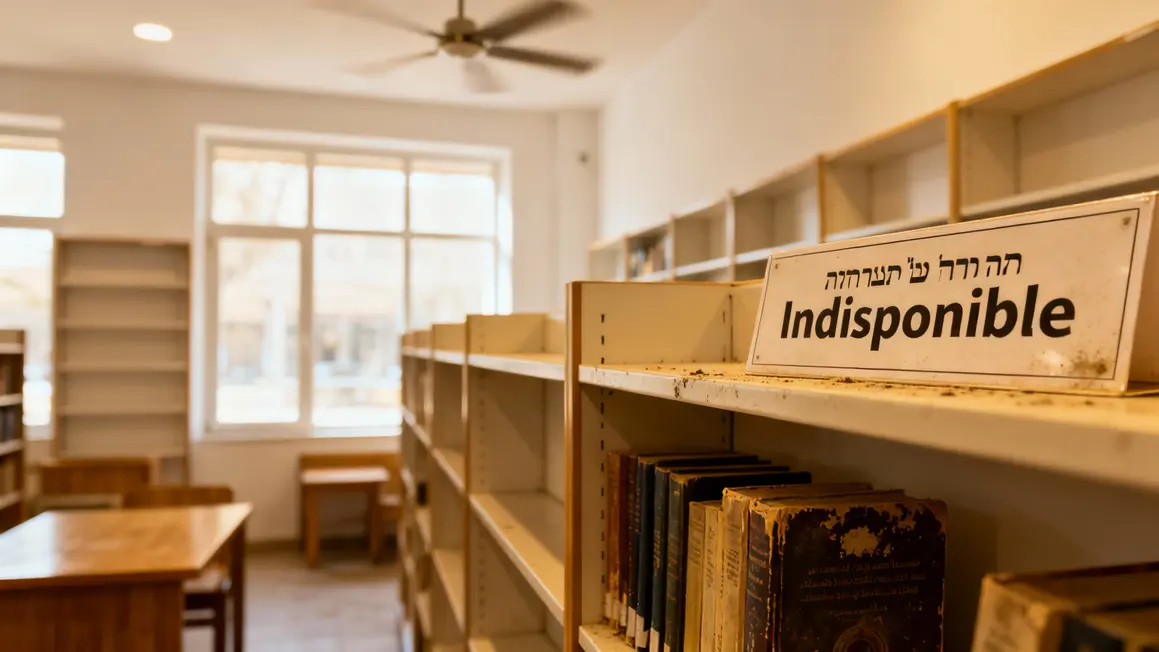
Israel does not practice the outright prohibition of the book, but prevents its massive marketing by indirect methods: social pressure, administrative deterrence, and the willingness of publishers not to feed a sensitive demand. If the text is neither banned nor promoted, its presence in the public space is almost non-existent, except via the web where monitoring of the proposed versions further complicates public debate.
Unlike Germany, where each published sentence is accompanied by critical notes, Israel favours restraint out of respect for its collective memory. Between the Shoah, which structures the national identity, and the survivors still alive, the course of action remains cautious: none « Standardization » of the book, neither on the stalls, nor by an official edition.
The question of critical publishing
Most Israeli publishers refuse to consider publishing even for historical study. Their commitment has nothing to do with dogma, but an ethical position discussed, often rooted in family stories marked by extermination. Gilles Rozier, a French-speaking publisher who has worked on similar books, confirms that the impact of the book transcends the debate on freedom of expression, as the national injury remains alive.
A taboo built by memory and society
Some 180,000 Shoah survivors still live in Israel. Their testimony makes it impossible to banalize the text: any commercial publication is perceived as a symbolic aggression. The red lines of publishers are therefore part of a logic of respect, but also of prevention against the trivialization of anti-Semitism via the free circulation of the manifesto.
- Respect for victims: honour to survivors and their families, who would suffer further violence by seeing this text again accessible.
- Combating contemporary anti-Semitism: prevent Mein Kampf from serving as an ideological matrix for new extremists, especially in movements hostile to Israel or Jews.
Access reserved to the academic world
Mein Kampf is studied only in university and in an abbreviated format, sometimes translated into Hebrew, with strict critical supervision. The Hebrew University of Jerusalem supported in the 1980s the translation of excerpts, a work launched by Dan Yaron, a survivor of the Shoah who wanted to understand and expose the dangerous mechanisms of such an ideology.
For Israeli researchers, it is necessary to be able to investigate the text of Hitler in order to avoid falling into myth or letting ideological recovery settle out of frame. Dan Michman, expert at the Yad Vashem centre, insists on the need to accompany the reading of historical comments and analyses, a precautionary principle widely shared in specialized circles.
International approaches and Israeli choice
| Better position | Book status | Particularity |
|---|---|---|
| Germany | Edited with a massive critical device | Text interpretation, notes on each page |
| Diamond Disc | Legal with caution | Debates on sales profits, variable annotations |
| Netherlands | Prohibited public sale | Tolerance, prevention of dissemination |
| Israel | No formal ban, but real trade block | Still alive memory, access reserved to the academic framework |
The Israeli approach is prudence: no critical publishing in bookstores, no public annotations or massively publicized debates. Here, the heart of choice is played on the management of Memorial issues as well as on prevention of recovery by radical groups.
Memory, freedom of expression and ethical issues
The Israeli experience implies a constant trade-off between the need to study this work in order to better understand modern forms of hatred and the absolute refusal to give Mein Kampf a legitimate place in public debate. This choice does not amount to an oblivion, or to an occultation, but to a permanent vigilance: to give access to the text in a controlled space, for the benefit of knowledge, without ever becoming a mere object of publication.
The ethical self-censorship of publishers, the prudence of institutions and the sensitivity of civil society offer another way of defending collective memory without sacrificing the ability to question, analyse and understand the roots of evil. This balance can inspire other educational approaches to controversial works, keeping in mind the consequences experienced and felt by those who survived the Shoah.
What future for Mein Kampf's accessibility in Israel?
The debate is changing: should access to the text be opened, in a framework, to better arm younger generations against toxic ideologies? Or should we keep this hard line that protects the sensitivity of survivors and their families, at the risk of fuelling the myth of a censored text that would fascinate by its rarity?
- Some researchers and teachers argue for the framed and critical analysis, the only way not to leave the ground for devious recovery.
- The majority of civil society favours restriction, respecting the sacred and traumatic dimension of remembrance.
This debate is not closed and questions any relationship between memory, ethics and the transmission of knowledge beyond the Israeli case alone.
In short, the taboo surrounding Mein Kampf in Israel is an active management of memory and respect due to the victims. The book crystallises issues that go beyond the simple question of freedom of expression: it refers to the central history of Israeli society, to the management of collective trauma, and to the need to maintain educational vigilance without ever trivializing the text. This case raises a strong question: how far should access to history be opened to effectively combat the resurgence of hate speech?
What limits do you think should be set when you decide to study or broadcast such a historical work? Share your thoughts on how to teach history while respecting the memory and sensitivity of victims.
If this topic seems important to you, don't hesitate to share the article in your networks to enrich the discussion. Do you want to explore other topics about memorial issues or ethical debates in creation and publishing? Indicate them in comment. Your opinion will help guide future collaborative analyses on guyomcorp.com.
To deepen this complex subject, Yad Vashem's reports and German scientific editions after 2016 are reliable and essential resources.
Guillaume Martin, author specializing in critical pedagogy and analysis of cultural practices, graduated in contemporary history. Article updated on 27 June 2024 for guyomcorp.com.
Updated on 10 January 2026