
Published by: Élodie Maurel-Lescure — Editor specializing in music training
Updated on 23 March 2026
Over the course of my accompaniment, I noticed how much chamber music can inspire even those who hesitate about their place in the artistic field: with its spirit of listening, conviviality and exploration, it invites everyone to open up to a more accessible creative experience, far from the elitist stereotypes that one sometimes imagines. That one seeks to understand his musical training or to immerse yourself in the collective energy of festivals or clubs, chamber music all opens up a living way to express itself, to establish bonds and to enrich unexpected meetings of passionate or curious music lovers.
Contents
What is chamber music?

As soon as one evokes the « chamber music », a question frequently emerges: what is it so special, and how can it explain that it intrigues so much artists and listeners? We notice that chamber music is a musical genre imagined for a small group of musicians – usually between two and nine – where each instrument develops its own voice while talking with others. This format is based on sharing and promotes an atmosphere that is often warmer than expected.
In contrast to the solemnity of a symphonic orchestra, chamber music developed at a time when music lived in private spaces (these famous « Chambers ») and sometimes in aristocratic courses. The key point? Proximity: first between musicians themselves, but also towards the public. It is common to confuse her this misunderstanding comes back regularly! With the orchestra, while their structural difference is clear: here, each musician plays his own part and must constantly listen, react, maintain an attentive musical conversation.
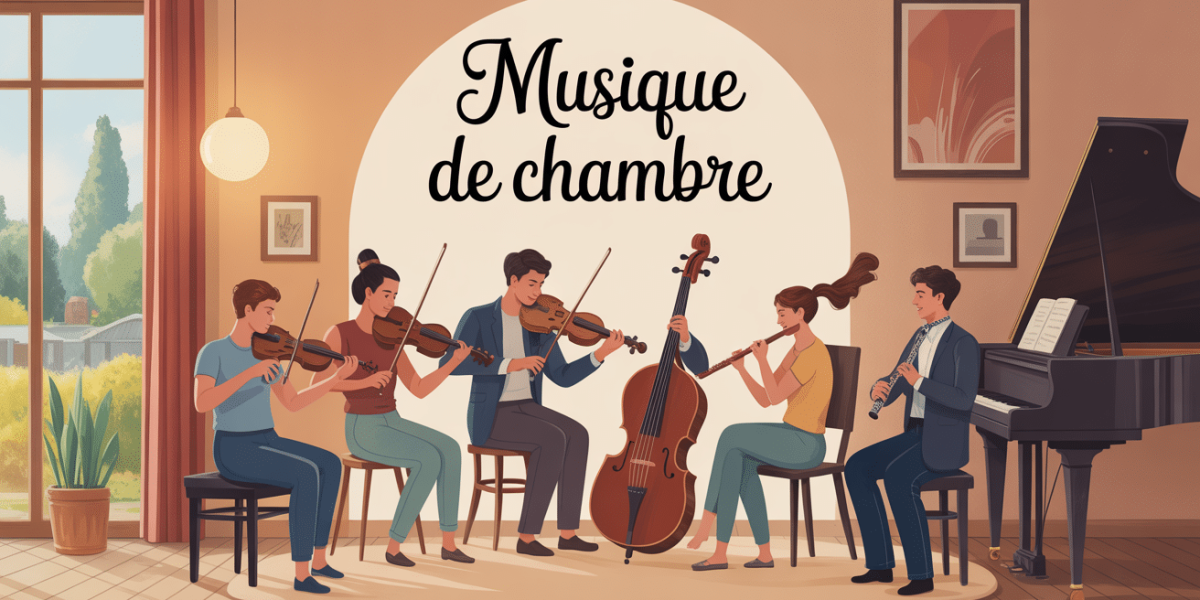
This human-sized format is not limited to an elite. Today, he travels to the four corners of the world: festivals, clubs, small neighbourhood halls, or heritage places, as at the Festival Entre Vents et Marais where more than 20 musicians and hundreds of spectators share this experience every year. A typical concert combines, for example, a violinist, an altist, a cellist and a pianist around a work, and it is the magic of listening together that creates alchemy.
Another sometimes unknown point: many famous composers Haydn, Mozart, Beethoven, Brahms, Debussy, Dutilleux... have written unforgettable pieces for chamber music. You never heard a quartet? It is worth trying: these concerts are prepared to break the distance, make the musical encounter as alive as authentic!
Summary of key points
- ✅ Chamber music is an intimate genre for small ensembles (2 to 9 musicians) promoting musical dialogue.
- ✅ It is distinguished from the orchestra by the autonomy of each musician and a close atmosphere between artists and the public.
- ✅ This format is still alive and accessible in various venues and festivals around the world.
The main training and instruments

You start to get intrigued, perhaps you want to go further: but what are these sets that make chamber music bloom? Here is an overview of the formations, from the duo to the mythical string quartet, and an overview of the sound colours that each configuration makes possible.
Duos, trios, quartets: unsuspected wealth
The diversity of formations is truly one of the great strengths of chamber music. The duo (e.g., violin-piano or flute-guitar), the trio (piano-violon-violon-cello, or string trio), the string quartet (two violins, an alto, a cello), and the quintet where piano, clarinet or double bass sometimes come together.
One point to emphasize: each training develops a particular sound and poses its own challenges. The string quartet, for example, often presents itself as the privileged laboratory of musical creation: no conductor or director, but a demanding collective concentration and constant exchanges. At the Festival Entre Vents et Marais, you can see more 20 musicians succeed each other, alternating these formations to offer each concert a new sound adventure. Some festivalgoers tell how surprising the palette of emotions and nuances perceived during the same evening can be.
Cords, winds, modern hybridizations
The instrumental palette of chamber music gives the beautiful part to the rubbing strings (violon, viola, cello), to the piano, but also, according to the works, to the woods (flute, oboe, clarinet, bassoon) and to the brass. In addition, in recent times, the boundaries are blurring: we now encounter original ensembles, such as the tentuors (ten musicians), and bands that combine percussion, voice, accordion or guitar. This modern porosity broadens the repertoire and attracts various audiences, often curious to experience chamber music differently.
Little scene lived: during a workshop, it was given to see a trio guitar-clarinette-trombone performing a current work, to the surprise of a public convinced that chamber music was reserved for piano and strings proof that boldness and openness always find their place there! According to a cross trainer during this festival, these hybridizations are regularly a source of enthusiasm, even for well-informed musicians.
Good to know
I recommend you stay open to hybrid formations that combine traditional and original instruments: they bring an interesting freshness and even seduce the regulars.
Event heritage and its community
Immersing myself in chamber music is also about joining a stimulating collective dynamic, carried by living festivals, local cultural actions and open communities. Taking part in these events is an opportunity to feel « real » This unique human link to gender. Some professionals talk about how this spirit of sharing feeds both musicians and the public.
Festivals, brunch music and clubs: an experience to live
In France, chamber music benefits from a real network of festivals and events accessible to all. The Festival Entre Vents et Marais, including the 7th edition to be held in July 2025, proposes each year to live this repertoire in sometimes atypical places, bringing together about twenty musicians and mixing generations and musical styles.
Musical brunch (such as the Bach and Breakfast of 22 June 2025 at the Théâtre de la Tour Eiffel, 11:00 to start the day in beauty !), or the music clubs, invite to discover the music in a friendly tone, with, sometimes, times of live exchange with the artists. Some participants report how these exchange moments can change the vision of a classical concert. It is better to start without fear: no matter the level or age, the essential remains the curiosity and the ability to marvel.
Clubs and engagement: supporting the community
Involved in a chamber music club or giving a little time to a festival goes beyond just attending concerts: it's helping to make the creation live and promote access to culture. For those who wish to actively support, concrete information: 1000 € a musical structure actually returns to 340 € after tax deduction This is also why patronage plays a growing role in the musical landscape in France.
Accessible membership formulas, listening clubs, not to mention many resources: newsletters, cultural agendas, online ticketing, score media libraries... everyone can easily find their entry point. Moreover, the variety of amateur profiles that are occasional to the professional musician enriches and energizes these communities: it is sometimes enough to dare walk through the door during a local event to feel this conviviality.
For lovers of chamber music, the Confédération musicale de France: the pillar of the amateur musical network offers valuable support and resources to encourage collective musical practice.
For those who wish to extend the musical experience in a collaborative and inspiring setting, the jam sessions in Montpellier: the best local scenes to improvise or listen to offer a unique opportunity to experience moments of improvisation and artistic sharing.
In the world of chamber music, the influence of composers of the 21st century opens up new creative perspectives for artists seeking authenticity.
FAQ for curious and neophytes
Not quite familiar with this universe yet? Here are a few questions that come back very usually, proof that artistic discovery at the outset arouses exchanges and shared curiosities. Let us look at the differences and dispel some common hesitations!
What's the difference with the orchestra? Why are we talking about « Chamber » ?
The main distinction – in the orchestra, each console (violons, altos, flutes, etc.) brings together several musicians playing in unison, while in the chamber music each instrumentalist assumes his own part. The term « Chamber » refers to the private salons where it happened, far from the public scene. Here we find this intimate climate and heat so specific to chamber music. Some musicologists recall that this origin still influences listening today.
How many musicians, what instruments?
The number of staff is relatively often around 2 to 9 musicians, with sometimes expanded formats like the tentuor. It mainly crosses strings, piano, winds, and sometimes unexpected instruments according to the work. A festival season can bring together more than 20 instrumentalists different for a lively and varied programming. It is common for the same audience to discover several types of ensembles on a weekend!
How do I prepare my first listening/concert?
There is little point in having a sophisticated musical training: let yourself be carried, dwell on the exchanges between the instruments, and think about taking a look at the program when entering the room! Some festivals or venues even offer moments of presentation to help enjoy music better. A question that usually comes back: apprehension disappears to what it seems from the first minutes, because the audience is frequently composed of curious listeners (all ages combined).
Tip from festivalgoers: Listening to a few excerpts upstream (via YouTube or the local media library) can help you enjoy the concert from a more new angle. This advice, shared by many people, comes back as a constant to gain self-confidence.
Where can I listen to chamber music?
The venues are surprisingly varied: municipal halls, churches, heritage sites, or even café-concerts regularly host this type of training. Consider reading the festival calendar (e.g. between Vents and Marais in July 2025, or Bach and Breakfast on 22 June 2025), registering for a musical institution's newsletter, or attending the neighbourhood's media library – it's enough to take a step (sometimes in the proper sense!) to get started.
Do you want to invest a little more? It is better to join a music club, support a festival (recall: a gift of 1000 € actually costs 340 € After tax), or to volunteer: the human aspect always emerges for those who cross this course.
Updated on 23 March 2026