

Published by: Guillaume Martin — Editor in Chief
Updated on 23 March 2026
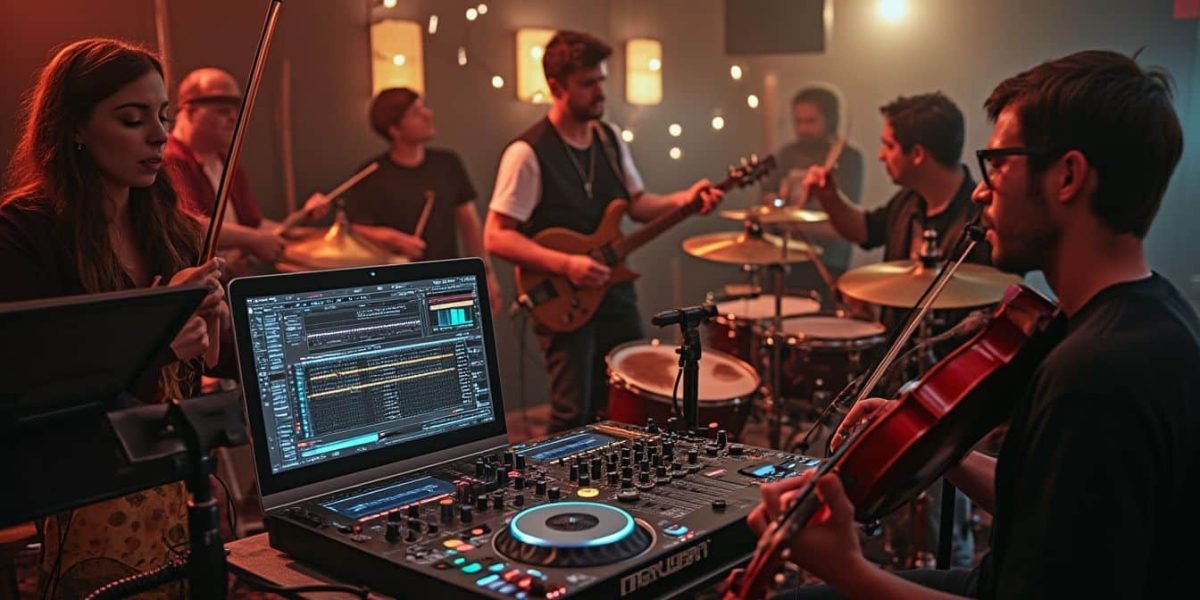
When I discover the fusion between electronic music and acoustic instruments, I am immediately captivated by the wealth of soundscapes the result. This ingenious combination uses techniques like layering, sound design and synchronization, creating compositions at once innovative and coherent. By exploring this universe, I plunge into a world where recorded sounds and acoustic elements harmoniously mingle, offering infinite possibilities for music creators. It is a real sound adventure that reinvents our musical perceptions and opens new horizons for artists and listeners.
Contents
Merger techniques

The fusion of electronic music and acoustic instruments is a fascinating practice that gives rise to unique soundscapes. This approach combines the richness of traditional instruments with the modernity of digital technologies, creating innovative and captivating works.
Basic principles
Understanding the basics of electronic-acoustic fusion is essential to master this technique. Key elements include:
- Layering : Overlay different sound layers to create a rich and complex texture.
- Sound design Manipulate and transform sounds to achieve specific and original effects.
- Synchronization : Coordinate acoustic and electronic elements for perfect harmony.
Acoustic music goes even further by incorporating sounds recorded and reproduced by computer or magnetic tape. These sounds can be acoustic, synthetic, or computer produced, opening up endless possibilities in terms of musical creation.
Examples of music
To illustrate these techniques, some emblematic examples of electroacoustic music are particularly inspiring:
- « Untitled music » (1950) by Pierre Henry
- « High voltage » (1956) by Pierre Henry
- « Gesang der Jünglinge » by Karlheinz Stockhausen
These compositions show how powerful and expressive the fusion of electronics and acoustics can be. They have influenced many contemporary electronica artists such as Amon Tobin, Autechre, Aphex Twin, Gescom and Squarepusher, which continue to explore and extend the boundaries of electroacoustic music.
Combination methods
The fusion between electronic music and acoustic instruments opens up a wide range of creative possibilities. For artists, producers and sound engineers, it is essential to master the various combination methods to create innovative and captivating works.
Layering and texturing
The layering is a technique which consists of superimposing several sound layers to enrich the texture of a composition. Each layer can be a recording of an acoustic instrument, an electronic sample or a combination of both. This creates effects of depth and sound density.
The TexturingFor its part, it focuses on handling stamps and sound textures to produce unique atmospheres. By playing with filters, reverberations and modulations, ordinary sounds can be transformed into expressive and evocative elements. The joint use of layering and texturing is particularly effective in creating immersive and dynamic compositions.
Sampling and sound design
The sampling takes extracts from existing sounds or music and integrates them into a new composition. This technique is commonly used in electronic music to bring a touch of authenticity and sound diversity. Acoustic instruments can be sampled and manipulated to create loops, beats or sound effects.
The sound design goes further by sculpting and transforming sounds in a creative way. This includes sound synthesis, sample manipulation and the use of specialized software. The sound design allows you to create new and personalized sounds, thus offering an infinite range of possibilities for artists.
- Sampling acoustic sounds to transform them into electronic textures.
- Using synthetic software to create unique sounds.
- Handling samples to generate sound rhythms and patterns.
- Integration of sound effects to enrich compositions.
MIDI integration and hybrid instruments
Integration of MIDI (Musical Instrument Digital Interface) is a crucial step in combining acoustic and electronic instruments. MIDI devices enable virtual instruments and synthesizers to be controlled from keyboards or other physical controllers. This offers great flexibility and precision in musical production.
The hybrid instruments are instruments that combine acoustic and electronic elements. For example, an electric guitar equipped with MIDI sensors can trigger synthesizer sounds in addition to its own acoustic sound. This type of instrument allows musicians to explore new sounds and push the boundaries of traditional composition.
Using these combination methods makes it possible to create rich and innovative musical works, where the boundary between acoustics and electronics becomes blurred. By mastering these techniques, artists can bring to life unique and inspiring sound creations.
Notable examples
Music that combines acoustic and electronic
The fusion between acoustic instruments and electronic elements has given rise to absolutely fascinating musical compositions. These works harmoniously mix the warmth of natural sounds and the innovation of modern technologies. Here are some emblematic examples:
- Radiohead – Album « Kid A » is a perfect example of this merger. The band uses traditional instruments such as guitar and piano, but adds synthesizers and digital effects to create a unique sound atmosphere.
- Good Iver – With his album « 22, In Million »Bon Iver incorporates electronic samples and vocal effects on acoustic folk arrangements, creating a distinctive and experimental sound.
- Four Tet – Album « Rounds » Four Tet mixes acoustic samples (such as guitars and pianos) with electronic rhythms and textures, providing a rich and complex hearing experience.
These examples show how the combination of acoustics and electronics can enrich and diversify the musical landscape. Artists constantly explore new ways of marrying these two worlds to push the limits of creativity.
Pioneer artists in fusion
Some artists have really paved the way for fusion between acoustic and electronic music. These pioneers not only innovated, but also inspired generations of future musicians. Brian Eno is often cited as one of the precursors of this merger. His work on albums such as « Ambient 1: Music for Airports » introduced subtle electronic elements into minimalist and atmospheric compositions.
Eno used advanced production techniques to create immersive and textured soundscapes. Aphex Twin, by his real name Richard D. James, is another must-see name. He revolutionized electronic music with albums like « Selected Ambient Works 85-92 », where it integrates organic sounds and acoustic samples into complex electronic compositions. His ability to merge these elements has made him an emblematic figure of electronica. Björk is also a major artist in this field. She has always sought to push musical boundaries by combining traditional instruments with avant-garde electronic productions.
This innovative approach recalls how The impact of nature on musical composition: an exploration can enrich modern sound creations.
Albums like « Homogenic » and « Vespertin » They are perfect examples, where classical strings blend with electronic beats and innovative sound textures. These artists, through their bold and creative approach, have not only marked the history of music, but continue to influence current and future trends. They show that fusion between acoustics and electronics is not only possible, but can also open doors to unexplored musical horizons.
Impact and outlook
The merger of electronic music and instruments acoustics has not only transformed the way we create and consume music, but it has also opened up new perspectives for the future. Let us examine in more detail these impacts and the possibilities they offer.
Impact on contemporary music
Contemporary music has been deeply influenced by the integration of digital technology and acoustic instruments. This fusion has created unique and innovative sounds, enriching the current soundscape.
Modern artists use techniques such as layering and sound design to create compositions that push back the traditional limits of music. This has led to a renewal of interest in genres such as electroacoustic music, where computer recorded and reproduced sounds blend harmoniously with acoustic sounds.
Production tools and software
For sound producers and engineers, a multitude of tools and software are now available to facilitate fusion music creation. These technologies allow great flexibility and creativity in musical production.
- Production software : Software such as Ableton Live, Logic Pro, and FL Studio offer advanced features for mixing and editing tracks.
- Plugins and VST : Plugins such as Kontakt, Serum, and Omnisphere create complex and varied sounds, combining acoustic samples and electronic synthesis.
- Audio interfaces : Modern audio interfaces, such as Focusrite and Universal Audio, offer outstanding sound quality and real-time processing capabilities.
These tools have democratized musical production, allowing more creators to explore and develop their musical ideas without requiring heavy material investment.
Encouragement to creators
For creators, the fusion of electronic music and acoustic instruments is an inexhaustible source of inspiration. It invites us to push the boundaries of creativity and experiment with new forms of expression.
I encourage you to explore these techniques and tools to enrich your compositions. Whether you are a traditional musician or an electronic producer, the integration of these two worlds can give rise to innovative and captivating works.
By embracing these possibilities, you will not only contribute to the evolution of contemporary music, but you can also stand out in a constantly changing artistic landscape.
Updated on 23 March 2026