Published by: Guillaume Martin — Editor in Chief
Updated on 23 March 2026
Investing in sacred art raises real interest among those who are looking for an alternative to traditional investments. Beyond the aesthetic aspect, this type of investment affects heritage as much as profitability and safety, even for an amateur profile or at the beginning of the journey. This content provides an update on the concrete arguments for evaluating this option, including methods, examples from the field and points of vigilance.
Contents
The foundations of sacred art
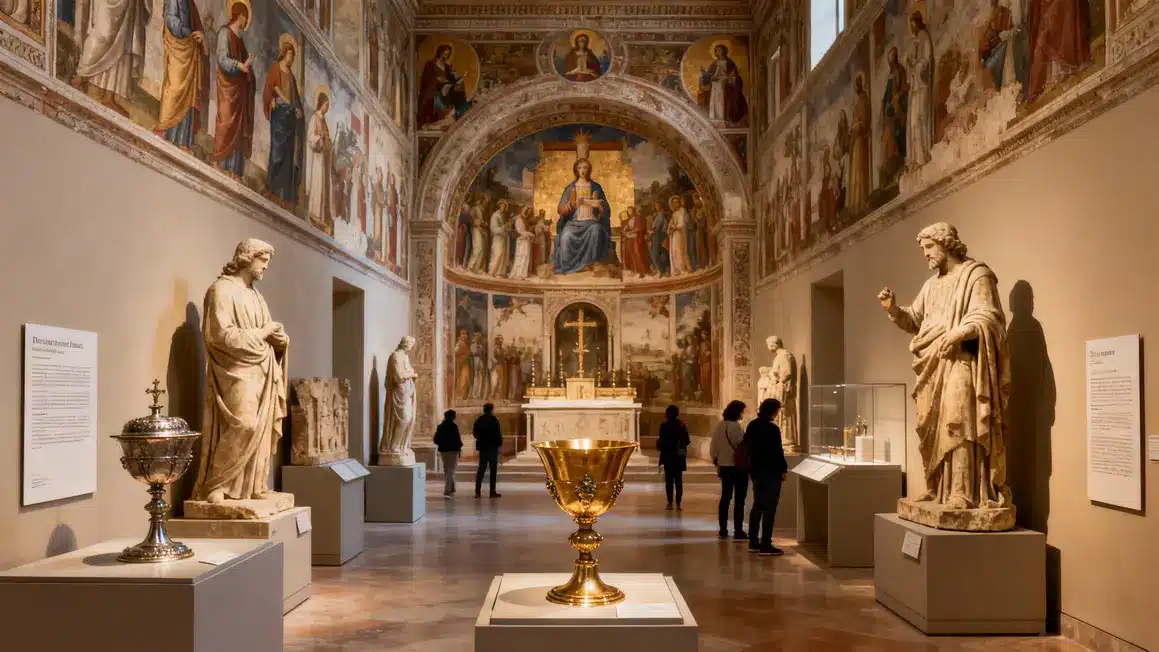
Sacred art includes works whose creation is intended to religious or spiritual. This type of art is rooted in ancient traditions, where each piece was not intended simply for decoration, but for a function: to connect with the divine, to convey a belief or to mark the highlights of spiritual life.
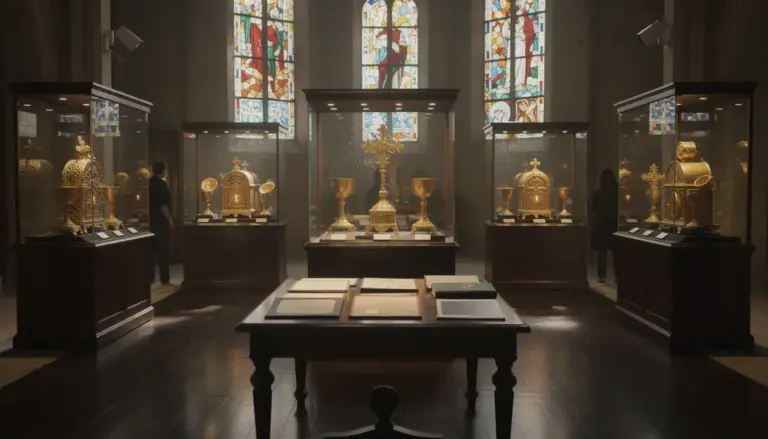
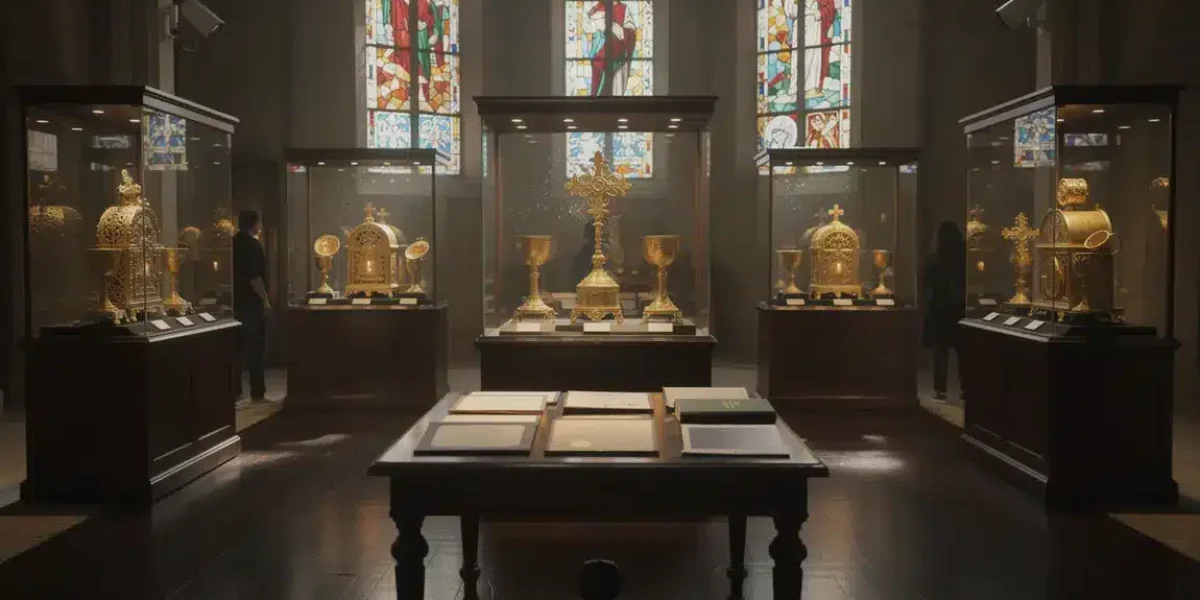
Diversity is at the heart of this discipline: religious paintings (icons, frescoes), monumental sculptures, deposits for sacred objects, calyx used in rites and luminides particularly complex. Each work fits into a context and requires a goldsmith's work, especially on the precision and choice of precious materials.
Major historical periods such as the Middle Ages or Renaissance are essential to understand the technical and symbolic development of this market. The Byzantine icon of Saint Catherine, the chalices of the XVIe or Book of Kells illustrate the level of requirement, conservation and prestige associated with these elements. The individual story of a play often has as much value as its artistic qualities.
This panorama highlights each work as a witness to an era, know-how and heritage. For the collector or investor, it is often a double capital: to transmit and preserve a fragment of memory, while keeping the investment in a solid heritage logic.
Why sacred art attracts investors
Investing in sacred art is linked financial value, scarcity and cultural heritage. These pieces go through the centuries, with a limited supply and demand that focuses as much on passion as on profitability. To own an object of this type is to hold a fragment of heritage whose rarity and traceability fuel the increase in value. For example, a gold reliquary of the 19th century saw its rating rise by 13% due to its documented origin and conservation status.
On the market, rarity conditions prices: few parts survive in good condition with all the required provenance documents. Their authenticity, almost impossible to falsify, ensures the stability sought in times of market uncertainty. For example, a Russian icon purchased 400,000 € was resold to 698 000 € in six years, illustrating the potential for long-term gain.
Among new investors, this stability seduces the volatility of traditional financial assets. Sacred art also attracts for its symbolic prestige and the possibility of being part of a cultural transmission approach, unlike art more objects « trend ».
Unique advantages of investing in sacred art
Sacred art offers a unique combination of heritage stability and long-term economic recovery. It is an asset class not closely related to financial markets, which is resistant to time and crises. These objects do not follow the economy according to fashion: they retain a value for use and a memorial role within private or public collections.
Beyond yield, investing in this universe is also committed to preserving cultural memory. A restored or well-exposed piece can gain much value and legitimacy in the market. This combination of security, heritage and personal pride explains the renewed interest in profiles that favour concrete and tangible.
How to evaluate a sacred art work
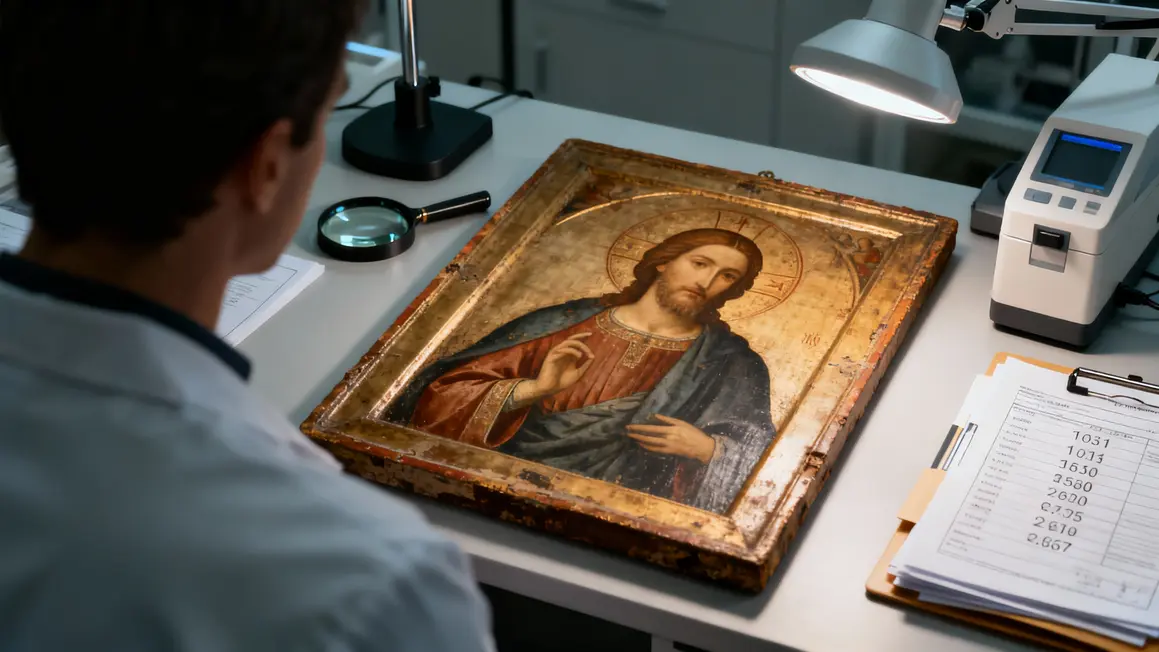
The assessment requires method and vigilance. Cannot stop at aesthetic or ancient aspect. Key steps include:
- Source: Strict analysis of successive owners, storage sites, original documents (certificates, invoices, historical correspondence).
- Authenticity: Use of modern techniques (spectroscopy, material dating), consultation of specialized databases, expertise of a recognized professional.
- State of conservation: Identification of successive restorations, attention to fragile materials (wood, textiles, gilding), quality of restoration if it took place.
- Historical or artistic significance: Creation period, workshop or author, rarity of style or technique used.
- Common traps: Never buy without certified history or documentation, plan the conservation budget, do not rely on generic sales platforms.
A thoughtful purchase always combines expert consultation and careful verification of each criterion.
The risks of investing in sacred art
The sector has hazards: price volatility in times of low demand, sometimes very high conservation costs and the real risk counterfeiting. A low-liquid market may require a room to be kept longer than expected. To limit these risks:
- Cooperates systematically with selling houses or reference galleries.
- Trusts authentication to specialists, especially for valuable or valuable objects.
- Always evaluate the associated costs: conservation, restoration, insurance.
- Considers this investment over the long term (no immediate resale guarantee).
| Risks | Impact | Solutions |
|---|---|---|
| Price volatility | Fall or stagnation of value | Market monitoring, rigorous selection |
| Conservation costs | Maintenance and security costs | Priority stable or well preserved pieces |
| Fraud and counterfeiting | Capital loss risks | Systematic expertise |
| Liquidity | Difficulty of rapid resale | Long-term horizon, documentary quality |
Platforms and channels to buy sacred art works
The choice of acquisition depends on your experience and your objective:
- Specialized galleries: Offer of expertise and guarantees, but high fees, tailor-made advice.
- Auctions: Possibility to acquire rare parts, but be careful about the additional costs and the need to prepare its auction well.
- Digital/fractional platforms: Innovative models to invest with a reduced entry ticket, but loss of direct control. Practical to start or diversify your portfolio.
Whatever the channel, favours dialogue with open experts and never launch you without complete documentation.
Legal and tax considerations for investors
The legal framework requires rigour:
- Capital gains scheme: 36.2 % tax, 5 % reduction per year after two years, exemption after 22 years of detention.
- Export: Legislation on works prior to the XIX must be checkede century.
- Corporate philanthropy: Companies may deduct up to 60% of the purchase price, subject to public access for 10 years.
- Documentation: Each acquisition requires a detailed record: origin, certificates, expert reports.
| Aspect | Detail | Criteria |
|---|---|---|
| Taxation | Taxation at 36.2%, reductions from 2 years | Total exemption after 22 years |
| Export | Administrative authorisation for sensitive parts | Origin control |
| Artistic philanthropy | 60% business tax deduction | Advertising, storage 10 years |
How to conserve and restore sacred art works
Conservation and restoration are essential to preserve the value of the works. The ambient conditions should be monitored: maintain a humidity of 40 to 60%, stable temperature (18 to 21 °C). Bannir direct light and modern materials (acidic paper, industrial glues).
To better understand where to buy sacred art works online, consult this online art galleries comparison : Kazoart in front of the main market players.
To better understand the opportunities that sacred art offers, consult Metiersdart-handicrafts.com: guide to discover and succeed in crafts.
The motive S p i r a l : the universal motif that links science, nature and art perfectly illustrates the deep connection between spirituality and aesthetics in sacred art.
In restoration, the ideal remains a pro: it establishes the state report, diagnoses in detail, documents each intervention (scans, tests, sheets). Documenting, cataloging, archiving makes the difference at resale and proves authenticity. The amateur who neglects these aspects takes a real risk.
| Element | Requirement | Reason |
|---|---|---|
| Humidity | 40% to 60% | Preservation of materials |
| Temperature | 18 to 21 °C | Slow ageing |
| Documentation | Full folder | Evidence, valuation |
| Materials | Neutral (acid free) | No chemical hazard |
Examples of successful investments in sacred art
Concrete cases show that thoughtful investment can bear fruit:
- One Russian icon of the seventeenth restored with expertise, passed through a major sale, exceeded 700,000 €, a considerable gain from its initial estimate thanks to irreproachable documentation.
- One vermeil chalice of the eighteenth bought in a secondary market, revealed by a confidential expert of the royal workshop, has seen its value multiplied by 5 in a few years.
- One gold bronze ostensor purchased collectively on a split platform generated +15% profitability in three years following restoration and exposure.
- The luminides Armenians forgotten, well restored, reached a price five times higher than the initial estimate once restored and documented.
Every success is based on solid documentation, professional restoration and valuing the historical context.
Building a strategy for investing in sacred art
Taking position on sacred art requires method:
- Define Budget and stick to it. Take into account ancillary costs (brokers, insurance, catering).
- Diversify (periods, materials, provenances) to smooth the risks.
- Information on trends through experts, training, monitoring the results of auctions, exchanging with other investors.
- Thinking long term : stability, wealth gain, exposure or transmission take precedence over quick poker.
- Document each acquisition (photos, certificates, history): This documentation will be decisive in the event of a possible resale or in order to obtain expert advice.
Setting up a structured strategy quickly turns a one-off desire into a coherent approach, with controllable milestones and a clear vision.
For those who seek to advance in their approach to investment or to diversify their heritage, sacred art offers both economic return and cultural thickness. Investing in this market means accepting to learn, through concrete examples, sometimes long journeys... but rich in meaning as financial opportunities.
The opinions of experts such as those of Christie, Sotheby, or the Custodia Foundation, but also the reading of the reports of the Ministry of Culture or OECD, confirm these issues: security, documentation and longevity. What are, in your opinion, the qualities that differentiate the most a sacred artistic asset from a classical investment? What experience would you want to share or ask about this topic? Share your questions or testimonials as a comment, and spread this article if you think it can enlighten other novice or seasoned investors. What next part (renovation, organization of sales, assembly of tax files) do you want to deepen on guyomcorp.com?
Written by Guillaume Martin, specialist in creative pedagogy and project optimization. Last update: June 2024. Main sources: Christies Paris, Custodia Foundation, OECD, Ministry of Culture.
Updated on 23 March 2026