Published by: Guillaume Martin — Editor in Chief
Updated on 23 March 2026
Developing your musical ear does not depend on an innate gift: it is a set of experiences, exercises and practical tools, accessible to all. If you are looking for progress in identifying notes, intervals or harmonies in music, this guide provides practical methods, recommended applications and advice from actual practice. The objective? Allow everyone to move step by step and turn their listening into a mobilizable skill in their creative projects, whether you just started or wanted to structure your achievements.
Contents
Understanding what the musical ear really is
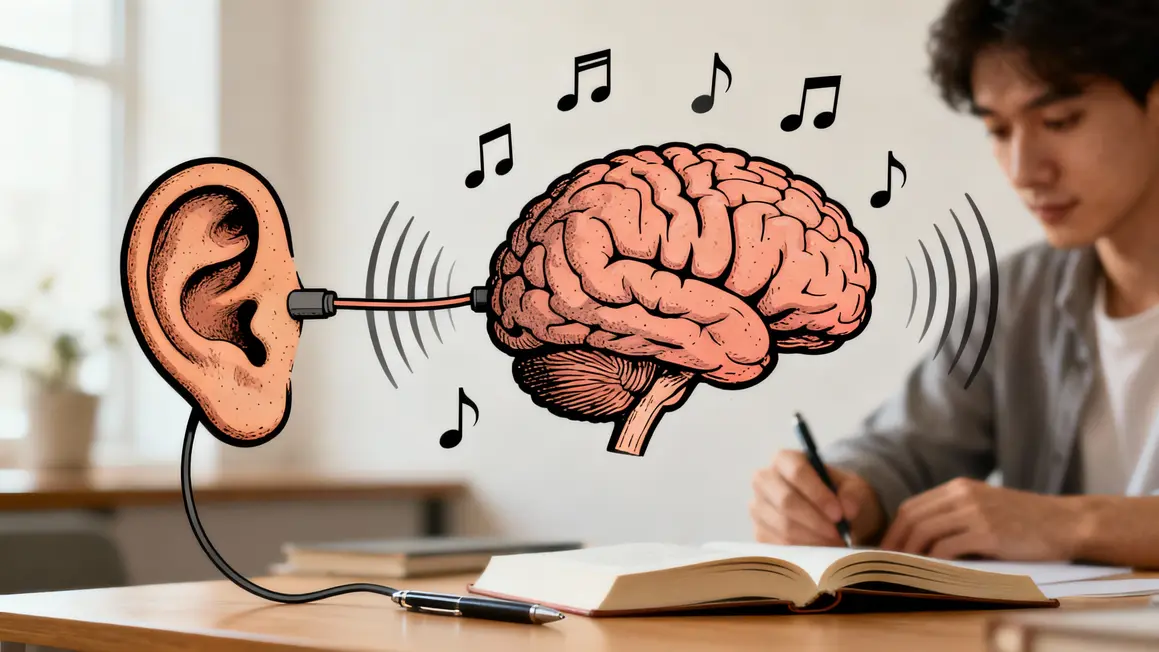
Musical ear means the ability to identify, differentiate and memorize sounds, nuances and relationships between notes. This ability is far from being reserved for a minority: improvement is possible by practice, in different forms (absolute and relative). The absolute ear, which consists of recognizing an isolated note without reference, remains rare and is essential only for certain professional contexts. The relative ear, on the other hand, learns by repeating targeted exercises, useful in composition, in set play or in a home recording.
Hearing training studies confirm that brain plasticity remains active even in adulthood. An example: in many amateur musicians, a regular practice of conscious listening and adapted exercises produces real progress in a few weeks. This path is neither linear nor reserved for an elite: it advances especially thanks to the coherence of methods and perseverance, much more than an initial potential.
Forget the myth of « all or nothing » The main thing is to build a path adapted to its rhythm, to test, correct and adjust its techniques. Overstepping mental blockages also encourages people to step out of passive posture to adopt an approach based on concrete progression.
The basics to differentiate sounds and notes
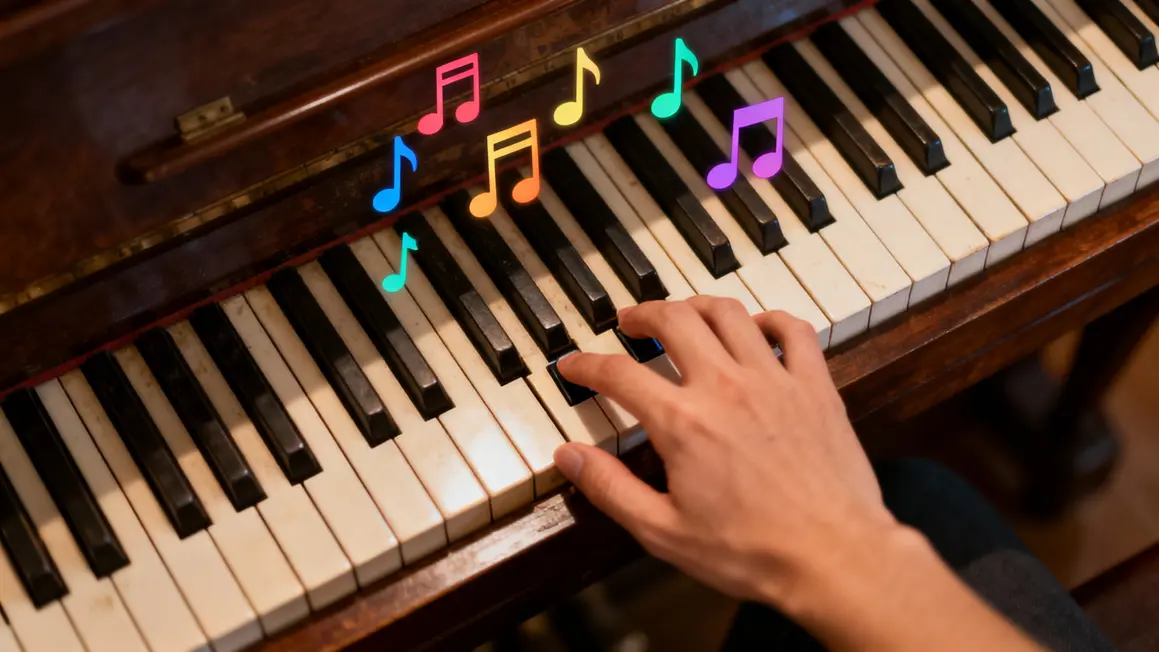
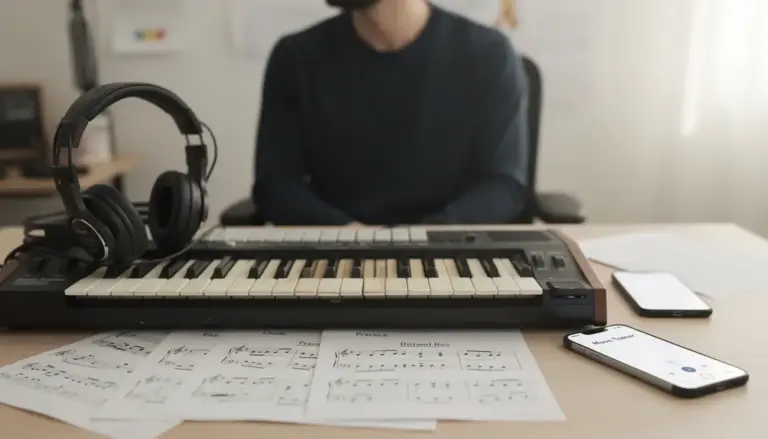
Before aiming for auditory virtuosity, anchoring in the bases remains fundamental. Singing the Do major range, for example, or playing notes on a piano (virtual or real), makes it possible to connect hearing and physical sensations.
Some examples of accessible exercises:
- Sing the range (Do, Re, Mi, Fa...) trying to perceive the anchor of each note.
- Use an instrument to name each sound aloud.
- Try to reproduce small simplified melodic patterns in the ear.
Applications like Meludia or Perfect Ear transform these memorization exercises into playful sequences, gradually increasing the difficulty to avoid fatigue. If you own an instrument, integrate these exercises directly into your game routines.
| Activity | Recommended equipment | Objective |
|---|---|---|
| Singing the ranges | Virtual keyboard, tune | Associate each note with a hearing sensation |
| Reproducing Simple Melodies | Instrument, headphones | Developing sound accuracy |
| Exercises with an application | Smartphone, tools like Meludia | Strengthen hearing memory |
Techniques to strengthen its perception of intervals
Identifying and distinguishing intervals, whether a third party, a Quinte or an octave, is part of the structuring skills. Use concrete references (known songs, melodies to memorize) to anchor each interval. For example, the beginning of « Brother Jacques » as a benchmark for the major third party, or applications like EarMaster, which offer customized interactive exercises.
Think of singing intervals after hearing the first note, to strengthen body memory. Visual or emotional tricks (representation on stairs or association with a typical sound atmosphere) also facilitate this learning. The main thing is to move forward gradually, starting with the nearest intervals and then extending the deviations.
To go further, the musical dictations of intervals accessible on dedicated sites (such as Teoria) allow to further sharpen recognition.
The importance of active listening in musical practice
Active listening transforms the hearing of a simple sound background into an observation workshop. Take the habit of decorating the pieces: locate the instruments, identify repetitive patterns, try to guess the harmonies. This process develops the ability to dissociate musical lines and identify hidden structures.
Adapted active listening exercises
- Identify melodic patterns: Pick up a repeated passage, isolate it and try to sing it.
- Analyze harmonies: mentally separate the notes of an agreement, without concern to name everything at the beginning.
- Compare stamps: Focus on the color differences between the instruments.
| Level | Pieces |
|---|---|
| Débutant | Let It Be (Beatles), Imagine (Lennon) |
| Advanced special effects | Billie Jean (Michael Jackson), Blackbird (Beatles) |
| Advanced video editing | Take Five (Dave Brubeck), Autumn Leaves (jazz version) |
Repeated active listening refines the concentration and reveals new details unsuspected during the first listening.
Practice ear training with modern tools
Many specialized applications make regular training more accessible and less monotonous. Meludia EarMaster is well behind the very first steps, targeting more advanced exercises and offering interactive feedback, while Perfect Ear directs practice on intonation and agreement recognition. The essential remains the regularity, even 15 minutes a day enough to progress.
For those who prefer free resources, Teoria and Hooktheory offer interactive routes adapted to different levels.
The advantage of varying musical instruments and styles
Training on different instruments develops the adaptability of the ear. The same Do played on piano, guitar or sung has neither the same stamp nor the same resonance.
To progress, explore covers: listen to a single song on several instruments or in various genres. Diversity stimulates attention to sound details and broadens the range of hearing markers usable in new contexts.
| Year | Objective | Instructions |
|---|---|---|
| Comparative listening | Identify notes on various instruments | Choose a note, identify it on several sound media, and analyze the variants in the sound color. |
| Stylistic exploration | Identifying instruments in musical styles | Test a song in an unfamiliar genre, isolate and name the main instruments (bass, violin...). |
| Cross instrumental dictation | Strengthen active listening | Play one sentence on one instrument and try to imitate another. |
To be corrected to progress faster
External returns optimize individual work. A music teacher, a coach or online communities (specialised forums, Discord, Reddit) allow you to obtain objective criticism and concrete indications to improve your listening reflexes. Are you asking the question of alignment: are the context, objectives and level of the mentor or group really in line with your expectations? Be sure to integrate the reviews into your exercises, setting short goals for each session. Gradually, you will develop an internal and more autonomous critical sense.
Games to develop the ear while having fun
Practice can remain fun. Applications now include mini-games based on the recognition of intervals, chords or melodic patterns. A few regular minutes are enough to anchor the reflexes, while keeping the motivation. Test different formats to find the one that stimulates you: difficulty customization, friendly competition, instrumental variants... Regularity and pleasure make the difference over time.
To progress quickly in musical ear, discover resources and techniques in this guide dedicated to learn guitar more easily with concrete methods.
To accompany your auditory exercises, discover essential tools in this practical guide accessible to all to create musicwhich will help you to better understand the basics of musical composition.
To discover effective methods and stay motivated, explore our Practical guide to learning music at all ages.
Develop a realistic progress plan
To avoid dispersion or demotivation, structure your progression in clear steps: identification of some notes, recognition of simple intervals, reproduction of a melody... Sessions of 10 to 15 minutes, five times a week are sufficient for most profiles. Consider alternating application-guided exercises, dictations, transpositions and listening to songs according to levels.
Set milestones to one month (reproduce a simple melody), three months (identify the basic intervals), and then six months (repeal harmonies). The point of a progressive plan is to avoid the accumulation of information without real consolidation.
Refine your musical ear over time
Recognize complex chords, decipher harmonic progressions, or identify the tone of a piece acquired with patience. Daily training, even short, allows to enshrine knowledge and strengthen the relative ear, a real pillar of the self-taught musician or in conversion.
Experiment with new chords (7th, 9th, diminished...), analyze real progressions in your favorite songs, and don't hesitate to improvise without aiming for the perfect result: auditory plasticity also arises from exploration and constructive error.
Improving his musical ear amounts to methodically assembling a personal puzzle, adapted to his desires and practices. Modern tools, the possibility of varying media and the complementarity between external returns and self-assessment make it a regular playground. On this foundation, progress becomes a question of active patience and continued pleasure.
What listening exercises or tools have you tested and helped you move forward? Your feedback or sharing tips will be valuable to the community in the comments! Don't hesitate to broadcast this article to your beginner musician or designer friends, and comment on the specific topics you want to explore during your next sessions. To go further, the consultation of works published on the IRIS (Institut de Recherche sur l'Improvisation et la Sensitivity) and on France Musique will offer you many complementary insights. To progress in musicality is also to know how to choose, adapt and adjust your course, as you test and discover.
Article written by Guillaume Martin, teacher and musician, founder of GuyomCorp. Last update: June 2024.
Updated on 23 March 2026