Published by: Guillaume Martin — Editor in Chief
Updated on 23 March 2026
Want to take a course in your practice and learn guitar more easily? This guide gathers operational advice, tested in the field, that directly targets the needs of self-taught: structure your progress, avoid common traps, choose the right material and organize your sessions effectively. Discover the most reliable step-by-step approach to evolve, regardless of your starting level.
Contents
The resources needed to learn more effectively
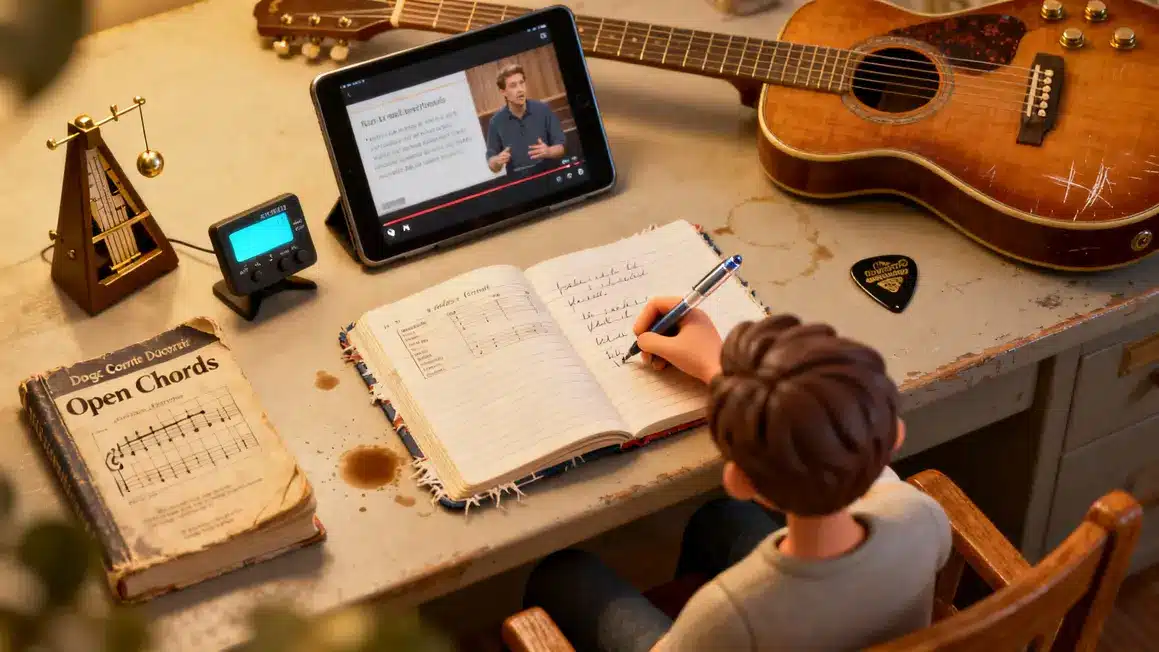
To progress, intelligently combines private lessons and online platforms. A teacher will bring a direct feedback on your posture and your mistakes, even if it represents a certain financial investment. The online courses (HGuitare, Ultimate-Guitar, Yousician) offer a structured progression, accessible at any time. Adapt these resources to your needs: exercise videos on YouTube, interactive methods or decrypting songs by experienced musicians.
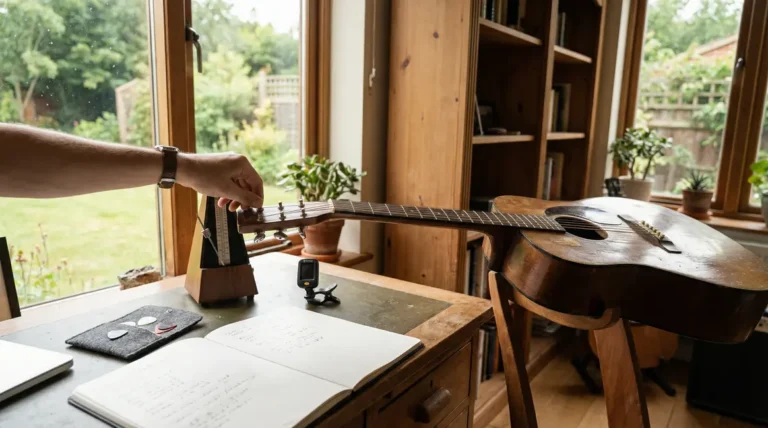
- One Digital tuner (app or physical accessory) to play just from the beginning.
- One Metronome (free online or app) to work regularity.
- One dictionary of agreements (paper or web) to vary positions without dispersing.
If you start with tools, start with free versions, then move to pay platforms or à la carte courses according to your specific needs.
How to choose a suitable guitar to start
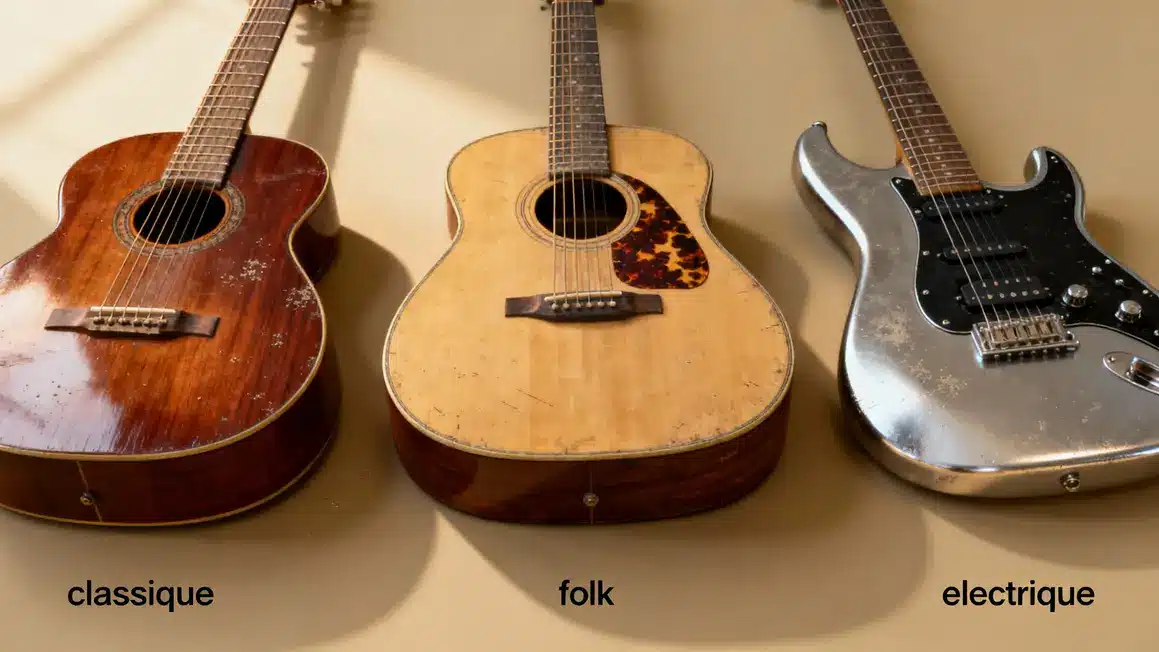
The choice of guitar determines motivation and learning quality. Here is the main point:
| Type of guitar | For whom / For what | Attention |
|---|---|---|
| Classic | Beginners, soft styles (classical, bossa nova) | Wide handle, soft strings, but sometimes limited sounds if you prefer rock |
| Folk | Pop/rock songs, powerful rhythmic | Finer sleeves, harder strings, fingers that warm the first weeks |
| Electrical | Rock, blues, metal, variety of sounds | Requires amp, higher investment, but ease of play and rich sound exploration |
- Test several models in store to determine comfort in hand.
- Prefers a guitar set by a professional, even on occasion.
- Do not let yourself be trapped by aesthetics: first of all, look for playability.
Accessories and tools that facilitate progress
- Fine mediators for a flexible game: choose a few standard models and refine your choice as you test.
- Electronic tuner (head or pedal): essential during each session.
- Cover (protection on the move), stand (guitar always accessible), strap (play standing safely).
- Beginner amp (for electric), compact and easy to use.
- Metronome for rhythmic work: starts slowly, progresses in stages of difficulty.
Practical exercises to accelerate progress
Forget the total impro: the routine of targeted exercises, even short, makes the difference.
- Chromatism exercise for left hand: boxes 1 to 4, synchronous with the mediator. Slow first, speed then.
- Return to the mediator: works precision on one then several strings until automating the gesture.
- Chain of agreements classic type C-G-Am-F, then gradual integration of rhythmic movements.
- Other technical exercises and pieces « pleasure » So you can't pick up.
Structure sessions for rapid progress
- Heating: simple movements, chromatic exercises to untie fingers.
- Technical: transitions of chords, arpeggios, use of metronome, in sessions of 10 minutes.
- Pleasure: piece tip or free improvisation to finish the session on a motivating note.
Install your workspace: guitar on stand, accessories within range, checklist of exercises of the week. Notes your blockages and successes, adjust your practice: this is the best way to become autonomous and efficient.
Overcoming frequent beginner blockages
- Finger pain: normal, the horn will come. Priority frequent and short training, release pressure if necessary.
- Difficult bars: approach them gradually, start with mini-bars and then expand.
- Sensation of stagnation: technical alternance and pleasure, varies styles and objectives.
- Famous every step: play a simple song = real victory.
Maintain motivation and progress over time
- Re-focus on your favourite songs: choose those that are adapted to the level and accessible.
- Share your progress (friends, specialized forums, video) to get feedback and break the routine.
- Opt for short sessions (15–20 min/day) instead of occasional long immersions.
- Explore a new style regularly to stimulate curiosity and learn new gestures.
- Focus on the accumulation of small technical and musical victories, they are the best source of motivation in the long term.
Common questions and advice to overcome doubts
- Classic, folk or electric?: selected according to the style, tested several models in hand and invested in a well-tuned instrument.
- Compulsory Solfège?: No, start with tablatures and then refine only if the need makes it felt.
- How long for a first piece?: with method, several simple songs are affordable within a few weeks.
- Pain, barred: normal at the startmuscle memory and regularity are your allies.
The resources proposed in this article are selected for their effectiveness in practice, validated by self-teaching and teachers. You will also find further advice in the sections "Educational resources" and "music projects" of the site.
You will understand, the essential is not to pile up hours of theory or compare to others, but to move forward step after step on realistic and motivating exercises. Blockages disappear when the method becomes routine: a visible progression, objectives achieved, and this unique satisfaction of playing for oneself.
Did you test a trick or method mentioned here? What made you progress faster? Tell your progress and questions in the comments. This sharing of experience allows the entire community to grow together!
To better play the guitar and recognize the chords in the ear, explore these techniques to refine your musical ear.
If you start the guitar, find out how to progress with this practical and motivational guide to learning music.
Like mastering guitar chords, learning visual arts can be facilitated by exploring the basics of drawing: concrete techniques and essential tools for beginners.
Do you know anyone who's messing around too? Share this article to help him jump or keep the motivation. And if the progression on the guitar t--inspires as much as the rest of your creative projects, what other field would you like to structure? Leave your suggestions, the next file might be dedicated.
To go further on instrumental learning, you can consult studies and resources such as those of the Philharmonie de Paris or the MAO's educational files on France Musique.
Article written by Guillaume Martin, creator of educational content (music, sound, video) and independent trainer, specialist in learning paths for passionate creators and beginners.
Published on June 17, 2024 – Annual update of recommended methods and tools to ensure the reliability of the advice offered.
Updated on 23 March 2026