
Published by: Élodie Maurel-Lescure — Editor specializing in music training
Updated on 23 March 2026
Choose a wooden wind instrument raises many questions, whether it is about matter, tradition or learning paths. This particularly affects adults in search of a new musical start, wishing to give themselves time to explore their sensitivity without putting any unnecessary pressure on themselves. In meetings with trainers, it is often understood that a living pedagogy, based on listening and experimentation, helps to better understand the subtleties between classifications, wood and materials, and finally to allow one to cross the course.
Thanks to the simplified rental and the accompaniment in conservatory, it becomes possible to express your creativity at your own pace in a secure atmosphere where everyone can take confidence.
Summary of key points
- ✅ The classification of wood wind instruments depends on the sound principle, not just the material.
- ✅ Individual rental and coaching facilitate learning at all ages.
- ✅ The choice of wood influences touch and comfort, but the shape of the instrument is essential for sound.
Contents
What is a wooden wind instrument? Distinguish musical classification and material
The term « wooden wind instrument » evokes an object shaped in this matter. However, musically, the « family of wood » refers above all to the sound emission technique, not only to the gasoline used. This subtlety may surprise: it is not uncommon to hear parents or even musicians losing themselves, especially in early contact with ensemble music.
In practice, the family « wood » It consists of wind instruments whose sound results from the passage of air over an aisle (simple, double) or bevel. This is why the saxophone, even if it is made of metal, is counted among the woods: what prevails is the acoustic principle. Vibration of the aisle or bevel, not the use of a copper mouth, defines this classification. Moreover, many amateurs are surprised to learn that the cross flute, often metallic, also belongs to this family.
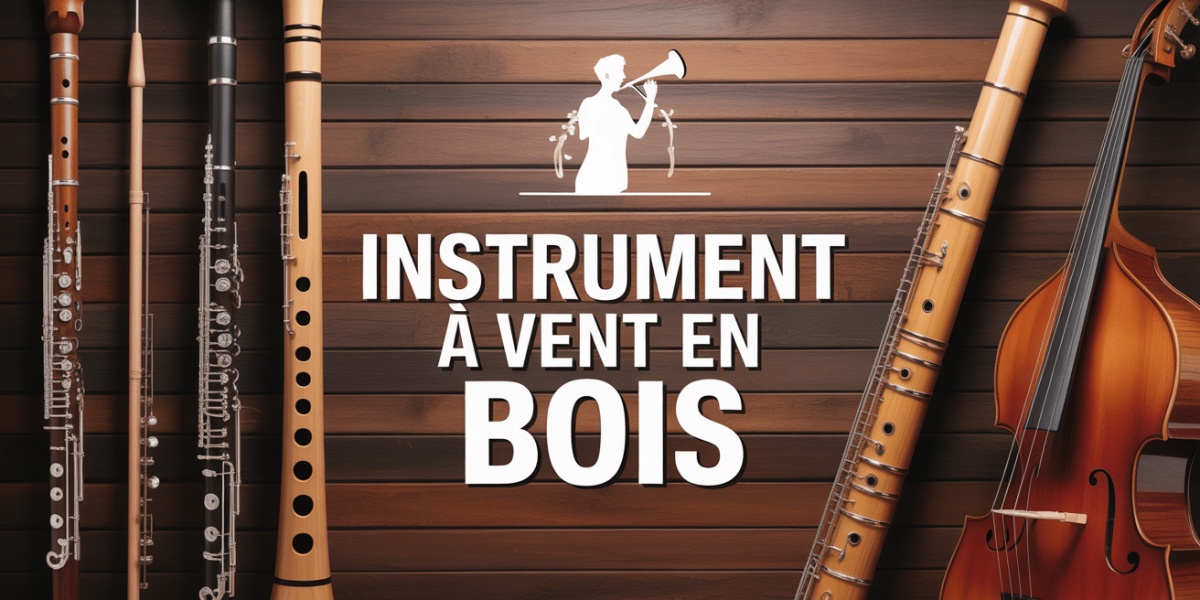
Here are some reputable instruments « wood » and traditionally manufactured in this material:
- Clarinet in box or ebony, for their stability and sound roundness
- Oboe in grenadilla, popular for its density and projection
- Maple bassoon, known for its rich harmonics
- Beaked strawberry or box, appreciated from initiation
Let us take a concrete example – most of the high-end clarinets remain made of wood, while the saxophones or the majority of the flutes are now made from metal or composite materials, without leaving the category of the « wood » musical sense. A bit curious, right? But, as one trainer points out, the universe of these instruments remains in nuances and often escapes absolute rules.
Wood family: an inherited and moving classification
In the orchestra or amateur ensembles, the wood family hosts instruments such as flute, clarinet, oboe, bassoon and saxophone. The evolution of the instrumental bill has regularly shifted the boundary between wood and copper: for example, the clarinet, born in the 18th century, has long been made of solid wood, even if we now find models of plastic study for the youngest (feather weight, about 800 g against 1.3 kg for a professional version).
According to several luthiers and reference sources, what counts in the classification is the method of sound production, not just the material used. This lighting explains how brass saxophones find themselves close to oboe or bassoons on the orchestra desk. A detail that sometimes challenges newcomers together!
Focus on some flagship instruments
If we were to mention three major representatives of the wooden winds, we could remember:
- Clarinet : most often in ebony or grenadilla, known for its modular stamp
- Oboe : carved in dense woods, manifests a pungent sound
- Beaked : light, accessible, regularly made of pear or box
In many conservatories, we propose to start with a rental or loan, the formula sometimes costs around 10-20 € per month for a study model, which removes some of the financial stress in the first trial. Some professionals report that this flexibility of access makes all the difference, sometimes more than the technical choice of the model itself.
So why not try the experiment? If you are sensitive to felt stamps or fine textures, you will find in these wooden instruments an amazing sound palette, often perceptible even to the uninitiated ear. A student recently said that he had « was bluffed by the living side of the sound », which makes you want to dig further.
Wood species in wind instruments: what varieties and what real influence?
Does the choice of wood essence have a decisive impact on sound? Many artisans debate this, but research and feedback show that the shape of the instrument would weigh more than the variety of wood chosen. Let's take a look at what we see in the studio, as in the orchestra.
Typology of wood used: know-how and nuances
Poir, box, maple, ebony or grenadille are often used to shape clarinets and recorders. Their density and stability are important in manufacturing, allowing an effective and balanced response. For oboe and bassoons, extremely hard wood such as grenadilla or sycamore is most often used: some factors expect more of the wood to be used. 30 years Age of trunks before transforming them, a guarantee of superior quality!
Some landmarks in order to find better:
- pear : appreciated for its lightness, it gives a light stamp, ideal to start
- Buis : dense, it offers a stable and soft sound, sought on ancient flutes
- Ebony : its hardness allows a beautiful projection, which pleases advanced clarinetists
- Grenadille : deep color, powerful stamp, ideal for high-end oboe and clarinets
During an internship in a Breton factor, two similar flutes were tested: one cut into the pear tree and the other in box. The feeling in the hand changed clearly, yet in the ear the shade was much more discreet – the craftsman insisted: the secret is often the internal geometry of each instrument. It gives you some thought, doesn't it?
Good to know
I recommend that you not focus solely on the essence of wood when choosing an instrument. The most important factor for sound quality is often the form and internal design of the instrument.
What science says: the influence of wood on sound
Recent studies (Forestopic, 2022) show that for wood, the influence on the patch remains modest in view of the importance of the shape and the air column. So why do we keep choosing natural wood? According to many professionals, tactile pleasure, the warmth of the material or the tradition weigh heavy: no less between 85 and 95 % competition clarinets remain made of wood, proof that the charm of the material remains irreplaceable.
To easily identify wood wind instruments and better understand their characteristics, see this musical instrument image: visual guide to recognize each family.
To deepen your understanding of wood wind instruments and their unique role in the musical world, explore this article dedicated to immerse yourself in chamber music: an art of intimate dialogue.
To deepen your exploration of the woods, discover music instruments starting with T: list, classification and listening secretsThese include surprising and inspiring choices.
It should be remembered that a plastic study instrument can be up to about 30% lighter. The acoustic subtlety of wood does exist, but for a novice ear, the difference is not always clear. This little soul supplement, it is sometimes the musician himself who feels it first. A conductor recently confided that he recognized his woods « the colour of the touch and not of the sound » An art!
Learning path and renting: dare to start and find support
Taking your first steps with a wooden wind instrument may seem intimidating. However, local networks – conservatories, associations, schools – offer a gradual reception, built to support each profile. We often find that it is possible, even as a beginner adult, to borrow or rent an instrument, to try quietly without having to invest from the outset. This mode of access facilitates the transition to action and allows to move at its pace without the pressure of the final choice.
Registration, rental and support: simplified access modes
Many conservatories focus on personalized follow-up, to guide each student according to their needs and desires. Collectively or individually? This depends on availability, but the formats are studied to adapt to each other's rhythm. For example, the schedule of the Secretariat at the Pontivy Conservatory is as follows:
| Day | Hours |
|---|---|
| Monday, Tuesday, Thursday, Friday | 9am-12am / 3pm-7pm |
| Wednesday | 9am-12am / 2pm-7pm |
As a general rule, access to an instrument is only a few days after pre-registration, which reduces the expectation of a first step. For more information, please contact the secretariat at +33 (0)2 97 25 00 49 or simply go to 5 Kristen Noguès Street – 56300 Pontivy. If a hesitation persists between several instruments, know that discovery workshops are set up: it is the ideal framework to hesitate, to be wrong and, why not, to start. As one structure manager says, « There is no bad start. What matters is to try ».
The importance of coaching in learning
The benevolent look and listening of an experienced teacher can change everything in the grip of a wooden wind instrument. Each specialty – clarinet, oboe, flute – has a reference contact and a dedicated reception: it reassures and facilitates the flow of information. By joining a set of clarinets, flutes, or a harmony orchestra, students integrate into groups that stimulate the desire to progress.
It is regularly reported that the emulation of a small set has allowed some to pass a fast course, a situation confirmed by many teachers in conservatory (which insist on the human contributions of collective practice).
Another example is often families who start by renting a box clarinet, just to see. In a few weeks, we find the teacher with whom the dialogue is best formed, and the group dynamics often allow the beginner to overcome the first difficulties. It is not always obvious, but the human experience sometimes leaves more beautiful memories than the strict technical journey.
Useful contacts and resources to get you started
| Contact | Detail |
|---|---|
| Address | 5 Kristen Noguès Street – 56300 Pontivy |
| Phone | +33 (0)2 97 25 00 49 |
| Hours | Monday, Tuesday, Thursday, Friday : 9am-12am / 3pm-7pm Wednesday : 9am-12am / 2pm-7pm |
| Pre-registration | Form and file accessible simply via the conservatory site, with a generally quick response. |
| Rental of instruments | Average price: from 10 to 20 € / month according to the instrument chosen |
Last point to note: the learning of a wooden wind instrument is based on a modular frame, the possibility to discover thanks to the rental, and an access designed to widen the circle of curious. If you want to start, you can just push a door or contact a teacher: the first breath is, in many cases, the beginning of an adventure that is not forgotten.
Updated on 23 March 2026