
Published by: Guillaume Martin — Editor in Chief
Updated on 2 August 2025
The DAW software revolution changed it musical production, offering flexibility and one accuracy Unprecedented. With these tools, it is now possible to capture, edit and mix performance with surgical accuracy. The Audio editing capabilities, the track management and collaborative features transformed the creative process, making it more accessible and efficient. Modern DAWs, incorporating technologies such asartificial intelligenceassist producers in complex tasks, opening up new perspectives for musical creation.
Contents
History and development of the DAW
Digital Audio Works (DAW) has revolutionized the way music is produced, recorded and mixed. They have become indispensable tools for musicians, producers and sound engineers.
Early years
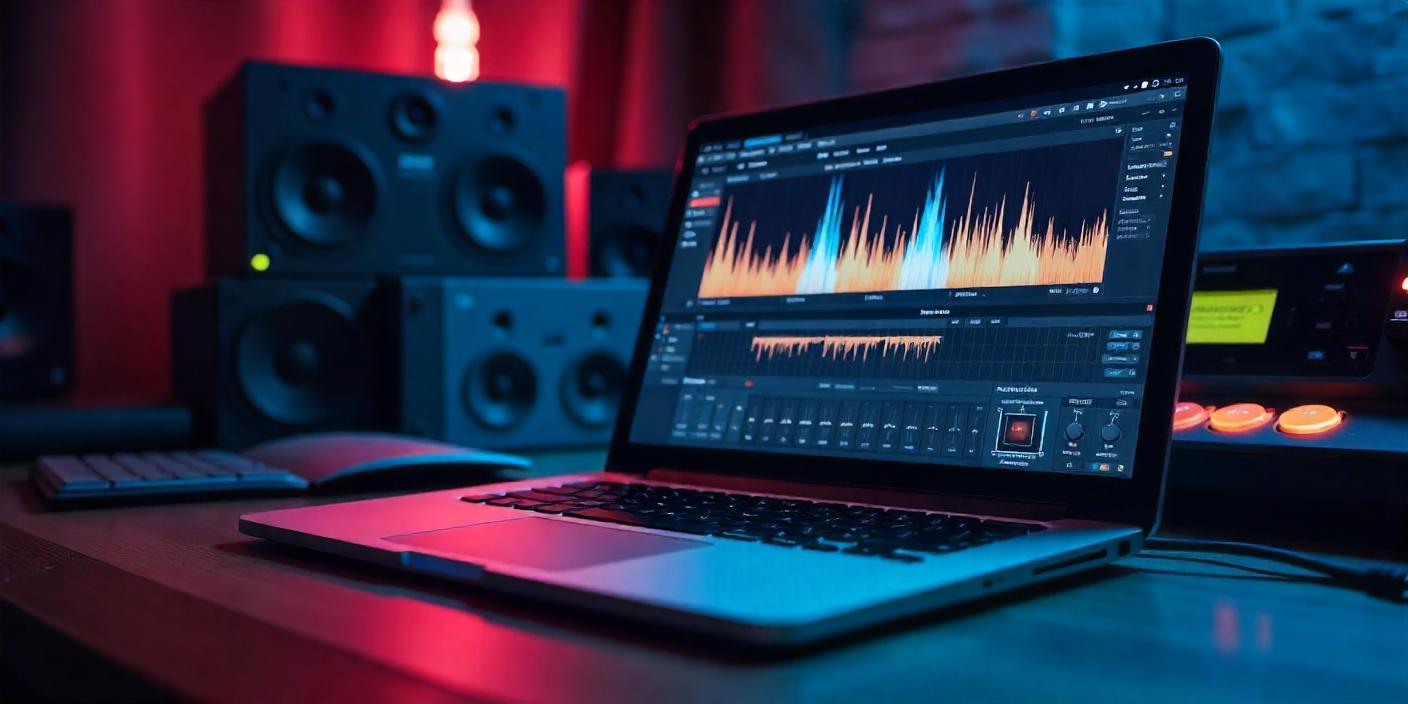
The first steps of the DAW date back to the late 1970s and early 1980s. At that time, computers were beginning to be used for recording and audio editing, but the tools were still rudimentary and limited. The first software were mainly used for MIDI sequencing, allowing musicians to program musical sequences without the need for physical instruments. The first DAWs were often associated with specific hardware. For example, the New England Digital Synclavier and the Fairlight CMI were very expensive systems, reserved for an elite of professional studios. These machines offered advanced sampling and sequencing capabilities for the time, but their use remained complex and not easily accessible.
Developments
With the rapid evolution of computer technology In the 1990s, DAWs began to democratize. Advances in computing power and storage have led to the development of more efficient and accessible software, such as Cubase de Steinberg and Pro Tools de Avid. Modern DAWs offer a multitude of features that have transformed the musical production process. Some notable advances include:
– Flexibility and Accuracy: DAWs capture, edit and mix performance with surgical accuracy.
– Track Management: They can manage an almost unlimited number of audio and MIDI tracks, allowing for complex and rich productions.
– Audio editing: The editing capabilities of the DAW allow to manipulate sound with precision to the sample, correcting imperfections or creating unique sound effects.
– Ease of collaboration: DAWs facilitate collaboration between musicians, even remotely, through standardized project formats and online sharing features.
– Artificial Intelligence: Modern DAWs integrate functionality based on artificial intelligence, helping producers in various tasks such as composition and post-production.
Today, software such as Ableton Live, FL Studio, Logic Pro X and Pro Tools are references in the music industry. Each of these DAWs offers unique features adapted to different musical genres and production styles. The evolution of DAW continues to influence how music is created and shared, making music production more accessible than ever before. With the steady advances in digital technology, the possibilities offered by DAWs continue to expand, opening up new opportunities for creators around the world.
Impact of DAW on musical production
Digital Audio Works (DAW) has transformed the way music is produced, recorded and mixed. By providing unprecedented flexibility and precision, these softwares have become essential tools for musicians and producers around the world. Let us analyse in more detail this technological revolution and the benefits it brings.
Technological revolution
The DAWs marked a decisive turning point in musical production. Before their appearance, the recordings were made mainly in studio with expensive and cumbersome equipment. It is now possible to create professional pieces directly from a personal computer.
Major benefits of DAW include:
- Flexibility and Accuracy: DAWs capture, edit and mix performance with surgical accuracy. Each detail can be adjusted to perfection.
- Track Management: An almost unlimited number of audio and MIDI tracks can be managed, allowing for complex and rich productions. No more analog hardware limitations!
- Audio Editing: The ability to manipulate sound at sample level allows for correcting imperfections or creating unique sound effects, giving great creative freedom.
- Ease collaboration: Thanks to standardized project formats and online sharing features, musicians can collaborate easily, even remotely.
- Artificial Intelligence: Modern DAWs integrate AI features, helping producers in various tasks such as composition and post-production. This simplifies many aspects of the creative process.
In short, the DAW not only democratized access to music production, but also increased creative opportunities. Every musician, from beginner to professional, can now experiment and perfect his art with accessible and powerful tools.
Improved access
Another crucial impact of DAW is their role in improving access to music production. Before the DAW era, producing music required considerable investment in time and money. Today, all we need is a computer, a DAW software and some know-how.
Here are a few ways DAW have improved access to music production:
- Reduced cost: DAW software is often available at affordable prices, or even free of charge in some basic versions. This allows more people to access professional tools.
- Portability: With the DAW, it is possible to produce music anywhere, whether at home, on the move or in the studio. This portability is a major asset for nomadic artists.
- Education and Training: Many online tutorials, courses and self-help communities allow users to learn quickly and efficiently. Learning music production has never been more accessible.
- Compatibility and Integration: DAWs are compatible with a multitude of plugins, hardware and other software, offering seamless integration with various production tools.
With these assets, DAW has opened the doors of music production to a new generation of creators, making music more diverse and accessible than ever before.
Features and use of DAWs
Digital Audio Station (DAW) software has become essential tools for music producers, offering a multitude of features that facilitate music creation and production. In this part, we will explore some of the key features of DAW and their practical use.
Recording and editing
Modern DAWs allow recording and editing audio with remarkable accuracy. You can capture real-time performances, whether they are acoustic instruments or voices, and then edit them to correct imperfections or add creative effects. The publication is often done at the level of sample, offering granularity that allows very fine adjustments.
Among the editing features are:
- Cutting, bonding and moving audio segments.
- The time-stretching and pitch-shifting to adjust the duration and height of the recordings.
- Height correction, often used to adjust voices with tools like Auto-Tune or Melodyne.
- MIDI edition, allowing to create and adjust note sequences for virtual instruments.
These tools make DAW incredibly flexible, allowing producers to turn raw recordings into polite and professional works.
Effects and instruments
DAWs are not limited to recording and publishing. They also incorporate a wide range of virtual effects and instruments that can enrich musical compositions. Audio effects include reverbs, delays, compressors, equalizers, and much more. These effects can be applied to individual tracks or to groups of tracks, providing complete control over mixing.
Virtual instruments cover a wide range of sounds:
- Synthesizers, for diverse electronic sounds.
- Orchestral samples to add strings, brass and percussion.
- Virtual batteries, often used in pop, rock and hip-hop music.
- Pianos and electric keyboards, for softer or more percussive textures.
These instruments are often modular, allowing to customize the sounds so that they fit perfectly into the mix. With these tools, the DAW offers a complete platform for musical creation, from the initial idea to the final production.
choice of DAW software
Digital Audio Works (DAW) are essential tools for any artist or producer. These softwares make it possible to compose, record, edit and mix music with unprecedented precision and flexibility. Here is an overview of the three most popular DAWs and their particularities.
pableton live
Ableton Live is often considered the best choice for electronic music artists. His main strength lies in his mode « Session », which allows to trigger loops in an intuitive and fluid way. This makes it an ideal tool for live performance and improvisation.
In addition, Ableton Live offers a multitude of Extended features and sound effects, making it extremely versatile. Whether you're creating beats, mixing tracks or adding effects, this DAW allows you to do everything with great efficiency.
pro tools
Pro Tools is often considered the industry standard for recording and audio mixing. Used in many professional studios, he excels in his accuracy and its publishing capabilities.
With Pro Tools, you can work on complex projects with almost unlimited audio and MIDI tracks. It also offers an intuitive interface that facilitates audio editing, MIDI and parameter automation. If you are looking for a robust tool for high-quality productions, Pro Tools is an essential option.
studio one
Studio One, developed by PreSonus, is a DAW that quickly gained popularity thanks to its intuitive user interface and its Advanced Features. It combines ease of use with powerful tools, making it an excellent choice for producers at all levels.
Here are some highlights of Studio One:
- Fast and efficient workflow
- Integrated Mastering Tools
- Online collaboration features
- Many plugins and effects included
Whether you're a beginner or a professional, Studio One offers a complete solution for your musical production needs.
In conclusion, choosing a DAW depends heavily on your specific needs and style of work. Whether you prefer Ableton Live for live performance, Pro Tools for studio accuracy, or Studio One for its intuitive interface, each software offers unique assets that can enrich your creative process.
Updated on 2 August 2025