
Published by: Élodie Maurel-Lescure — Editor specializing in music technology training
Updated on 23 March 2026
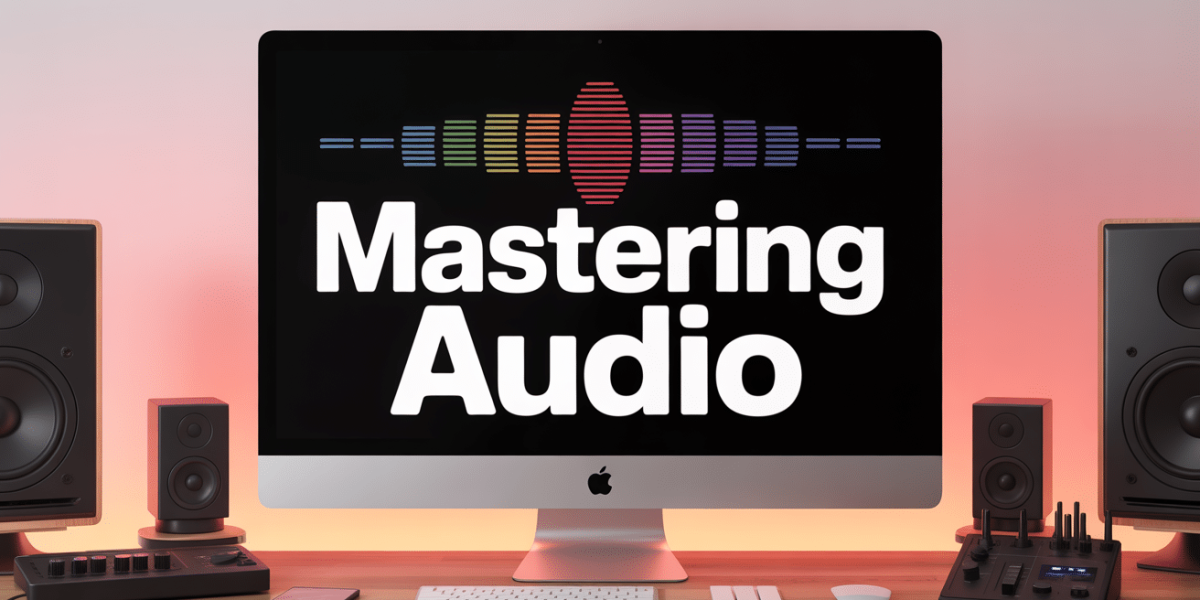
The mastering often intrigues creatives into conversion, because it is she who gives each musical project this professional relief, perceived instantly by listening. With a clear method, within everyone's reach, here's how to raise the number of technical doubts and see how this subtle finish sublimates an artistic work, even without high-end material. Between practical tips, reminders of prudence and feedback from trainers, this guide offers a practical approach to the mastering audio, useful to highlight your sensitivity and dare take action, whatever your musical journey or your starting tools.
Contents
What is mastering? Understanding the key step for a pro sound

Mastering is the final touch of musical production. It transforms an already sleek mix into a polished, coherent and directly usable version on all media, from streaming to CD. If the goal remains to get a professional rendering – the one that immediately seduces to listen – it is worth not neglecting this final phase.
In practice, mastering aims to optimize overall sound quality, correct the ultimate imperfections and adapt the track to the standards of the main market formats. It's not just a matter of "glossing": the idea is to make music universally enjoyable, solid on all media, whether it's a personal project or a commercial release.
Let us take a concrete example – the same well mastered track will prove to be clearer, more dynamic and much more homogenised from one title to the next, that it will be broadcast at -16 LUFS for streaming or -9 LUFS for a CD. Mastering creates this final consistency, if sought by professionals.
History and modern issues of mastering
In its early days (the late 1940s, marked by magnetic tape), mastering mainly allowed for the adjustment of a record for vinyl: this limited the defects of engraving. Since then, the main issue is digital compatibility on multiple platforms by maintaining fidelity to artistic intent and respecting the standards of comfort. Moreover, since 2015, mastering has been democratised with the growing offer of online services, making this passage accessible without professional equipment.
Some forget that mastering is also a really new, often more objective listening. The engineer detects subtleties completely passed to the background after hours of mixing. Sometimes when listening to a first master's degree on unknown headphones, the shock is total – in the right direction... or not! Many experts say that these « First revelations » are essential.
Mixing / mastering differences: two jobs, two moments
We often cross the confusion between mixing and mastering, yet these steps each have their own logic. Let us look at them side by side to clarify the distinction:
| Mixing | Mastering |
|---|---|
| Act track by track (bass, voice, guitar...) | Fitting to the whole, once all tracks are mixed |
| Add individual treatments, stereo placements, automations | General EQ use, global compression, final limiter |
| Highlights each instrument within the mix | Unify listening between several titles of the same project |
| Produces a stereo mixdown file | Prepares for streaming, CD or vinyl according to the criteria of loudness and formats |
The central idea: the blender "composes" together, while the mastering "perfume and balance". We could compare mixing with the cook's work; the mastering approaching the dressing of the dish, just before tasting.
Why distinguish? Concrete consequences...
Consolidating these two steps is a risk of losing objectivity and accentuating certain defects, or even reducing compatibility with listening platforms. Several professionals recommend leaving a headroom about -3 to -6 dB at the end of mixing, dedicated specifically to mastering work.
I am regularly asked the question: can mastering "save" fragile mixing? Honestly, it's improving, but it doesn't compensate a bank base. This is sometimes better than a long speech...
Practical steps of successful mastering: simple and progressive method
In order to get started without scattering, it is better to follow a step by step method. In each phase, free or integrated tools can be used in almost all current workstations.
1. Prepare for its mixing export (the famous "headroom")
First rule: export stereo track to -6 dB (maximum -3 dB), in 24 bit format, without limiter on the master bus. This headroom offers enough room to work serenely the mastering stage.
Regularly mentioned vigilance point: a file already saturated greatly limits the possibilities of correction. Some engineers remind him at every training.
2. Spectral correction and global equalization
Thanks to a broadband EQ, it involves subtly balancing low, medium and acute. The ideal is to obtain a coherent rendering on various listening systems (premises, helmets...). It is rarely advisable to go beyond +/- 2dB by tape.
A home studio trainer often suggested that an excess of bass only jumps to the ears on a small Bluetooth speaker: a reminder sting that you never master everything, hence the interest of increasing listening.
3. Compression, expansion and dynamic management
Light compression serves to tighten the dynamics without losing the vitality of the piece. Some add an expansioner to regain some air, especially on acoustic recordings. The essential thing remains to avoid over-uniforming, too much compression fatigue very quickly ear.
- Prioritise a "glue" compressor (ratio around 2:1, gain reduction generally less than 2dB)
- Abstaining from any pumping accentuated at this stage
Is it so obvious to find the right dosage? Many recommend comparison with a master of reference... and above all, to take regular breaks to rest his ears.
4. Limiter, Standardisation and Control of Loudness
The limiter allows to set the maximum level, preventing any saturation. We are moving towards a weldness proper to the desired support: around -16 LUFS for streaming, -9 LUFS for a CD, while making sure to leave a true Peak under -1 dB.
- Youlean Loudness Meter : a free LUFS Meter to mark your work
- Adjusting the Ceiling of the recommended limiter around -1 dB (to limit saturation after conversion)
It's at this stage that some people find, sometimes, that their song "is imposing" in a playlist... or the other way, seems erased. Do not let yourself be trapped: force is not law in mastering and sacrificing dynamics would be a mistake.
5. Formatting, Metadata and Final Export
Last point to note: export in target format(s) (16-bit WAV/44.1 kHz for CD, FLAC/MP3 for streaming...), while keeping a high definition version if vinyl. Metadata such as title, artist or ISRC are to be provided systematically.
- Minimum duration of a CD title: 4 s; Maximum number of tracks: 99
A sound engineer recalls: always do a low volume listening test and then on several media before concluding that your mastering is finished.
For optimal sound rendering during mastering, understand the basics of a analog to digital audio converter can make all the difference in the final quality of your songs.
For a faithful and accurate rendering when listening, it is crucial to master the basics of the analog digital audio converter for optimal listening.
To understand how to turn your pieces into real works ready for broadcast, discover the secrets of audio mastering: a key skill for independent artists.
Simple tools and plugins to start mastering
Today we find an impressive amount of plugins (free, often) to initiate without any substantial investment. One of the challenges is not to disperse. However, for a first try, a few tried and tested tools do a lot of work.
The essentials and free versions
The following are the recommended starting points:
- Parametric EQ as TDR Nova (reliable free version)
- Compressors: Molot, Rough Rider
- To limit: LoudMax, Limit No6
- LUFS meter: Youlean Loudness Meter Free
Several specialists note that many albums from home-studio convince with just this kind of plugins allied to a critical ear. As such, one should not systematically rely on the most expensive equipment.
Useful simulators, resources and guides
Would you like to go further? There are a number of media, such as softness simulators, download guides or video tutorials (such as LANDR Blog, Home Studio Project...). Many also offer access to audio examples before/after, allowing you to sharpen your listening.
Another small tip: keep a "self-control grille" or a check-list of steps at hand. Several users report that this has prevented them from going back and forth, especially in early attempts.
Quick FAQ and common mistakes (not to be committed!)
Before starting, it is best to review these recurring points. This bypasses the classic false steps of home-made mastering.
Frequently Asked Questions and Checklist
- VS Mastering Mixing : Mixing balances the sources, mastering refines the final output.
- Prepare his tracks: Always keep a headroom of -3 to -6 dB, prohibit any limiter before mastering.
- Free powerful tools? Yes, especially for the EQ and the limiter (example: Nova, LoudMax...)
- Tariff range of a mastering pro: Count between 30 and 150 € the title according to the studios.
- Major error: Master a saturated mix or a victim of excessive compression.
A rhetorical question that always comes back: "Is it possible to get a mastering ‘pro' at home?" The answer: absolutely, provided you take the time to learn, really listen and avoid too fast shortcuts. Want to make progress? Downloading a guide or asking your questions to a professional will save you years of practice – some do not hesitate to repeat it in the workshop.
User Testimony: a possible click
A self-taught man named Pierre had attempted home mastering adventure for his album. "The first time, it was really dangerous... But the contrast of the result was amazing!" Thanks to careful listening on different media, a few tests and free tools, even beginners can take an unexpected course. Why not try the experiment?
Practical resources to download
- Printable checklist "Preparing your mastering"
- List of free plugins recommended
- Audio examples before/after
Do you still hesitate? Don't hesitate to leave your question as a comment or download the proposed introductory guide. Each step will bring you closer to autonomy, and there is no shame in gradually initiating – even in some cases, the secret of solid paths (many teachers like to remind him at the beginning of the training).
Updated on 23 March 2026