Published by: Guillaume Martin — Editor in Chief
Updated on 23 March 2026
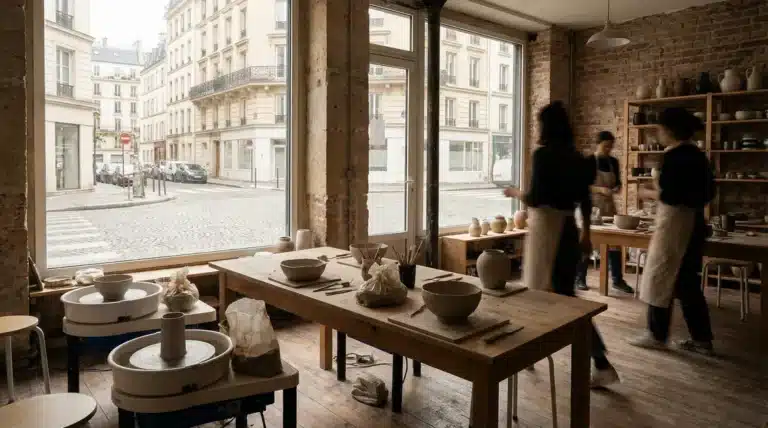
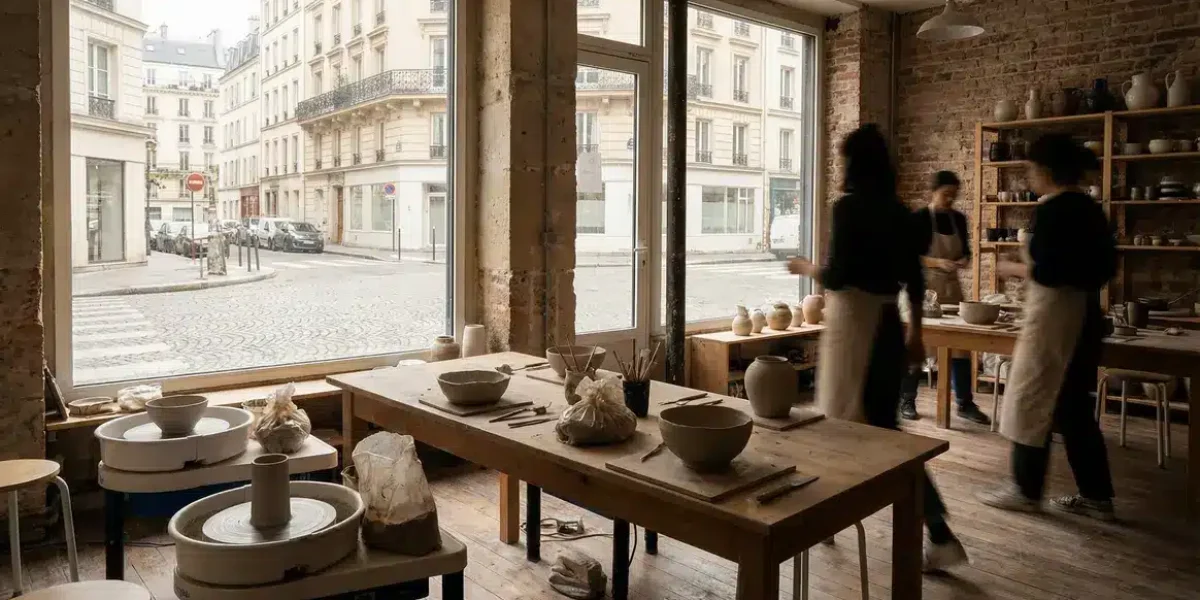
Looking to learn ceramics in Paris and finally master the art of modelling or shooting? Discover here the essentials to choose a suitable workshop, understand each technique and structure the progress of your creative projects, regardless of your starting level. The objective: to get out of the simple trial to go to regular and successful practice, while saving time on choice and classic traps.
Contents
Why ceramic attracts urban creators today
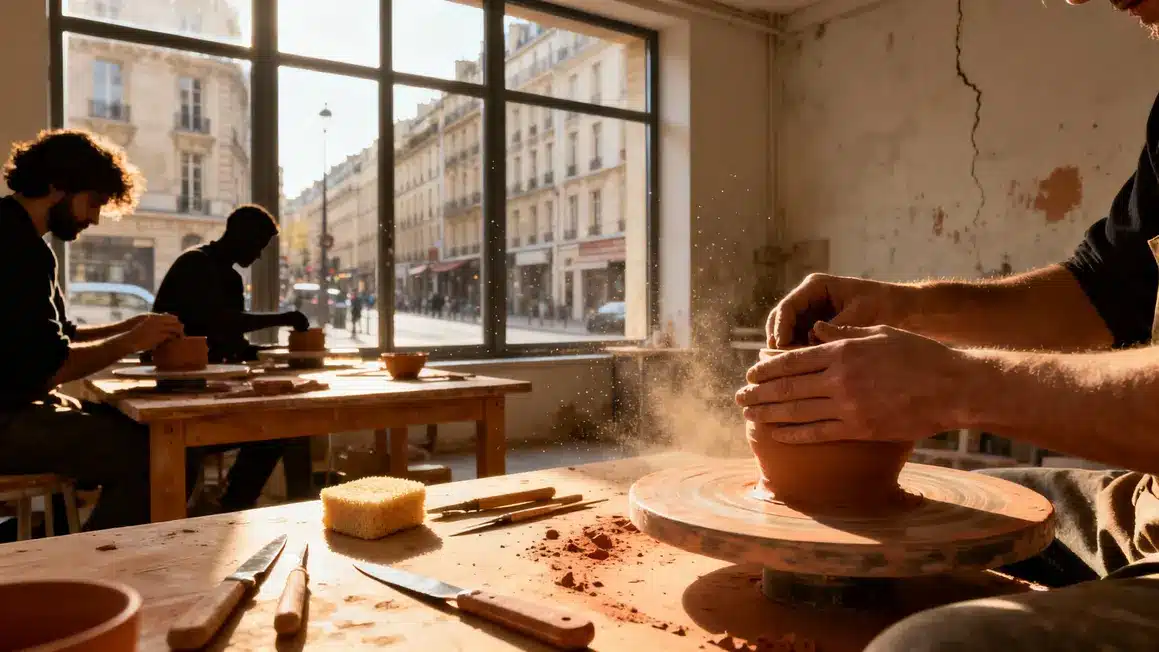
Ceramic today imposes itself as a concrete healing space for often saturated screen profiles. Manipulating clay brings a welcome break: you must take time, observe matter, repeat physical gestures to see an object emerge. This practice offers a strong contrast to digital work: each piece bears witness to a real, unique experience that can be touched and appropriated.
The popularity of ceramics on networks (#ceramics, #ceramicart) or in galleries reflects this need to regain authenticity, variation, imperfect but expressive object. For minds looking for meaning and a real progression curve, the slow and demanding process of a workshop makes the difference. It requires adaptation, listening and progress on visible and measurable bases.
Key types of workshop practices
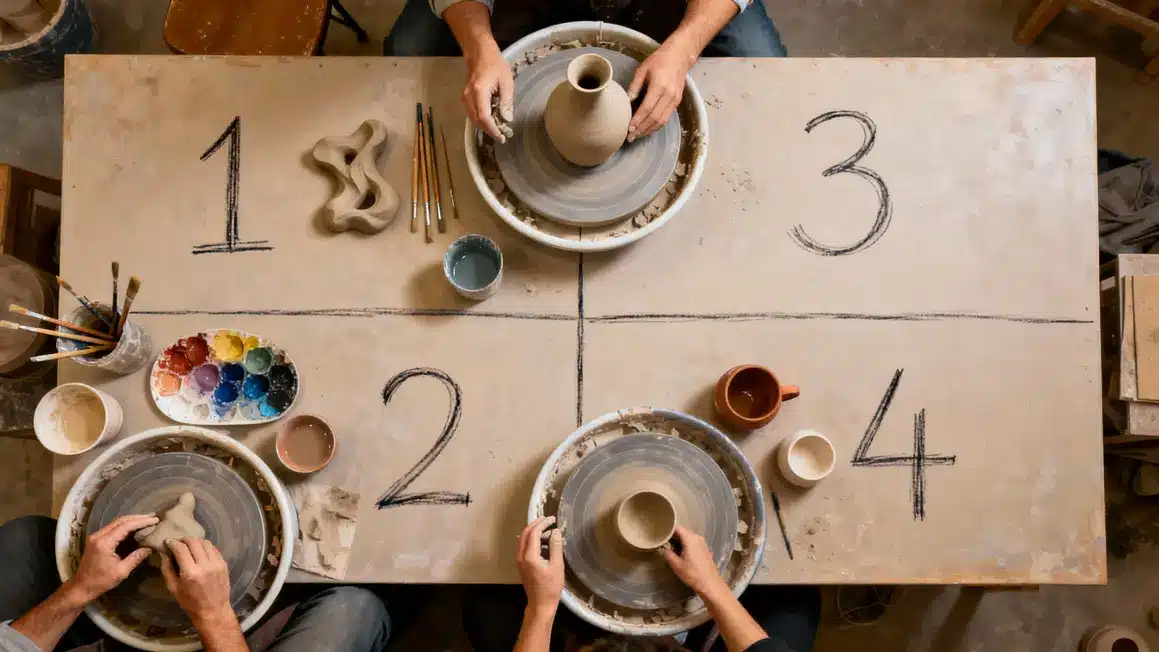
- Turning: Technical discipline, ideal to progress with method. Learning to center, climb, then shape: each step structures the gesture.
- Modeling and sculpture: Freer, they allow to explore shapes and volumes without mechanical stress of the tower. To develop creativity and manipulate matter more intuitively.
- Ceramic paint: Adapted if you prefer graphic precision or search for patterns before the shape. Ideal for exploring enamel, color layers, playing on surface effects.
- Glazing and finishing: Here we touch the « chemistry » creative. The bases are accessible, but deepen the demand for framed experimentation to develop its effects and finishes.
Each workshop in Paris often favours one or the other of these techniques. To avoid frustration, define what you want to work and check the specialization of the target location.
Essential criteria for choosing your ceramic workshop in Paris
- Location: Not negligible in Paris. Prefer a workshop near you or your work to facilitate regularity. (Ex: Montmartre for the ambiance or Canal Saint-Martin for the accessible side, see comparison table below.)
- Rates and equipment included: Beware of the hidden bill. A real good workshop provides clay, tools, cooking and even enamel for novices. Compare the content and not just the gross price.
- Level of access: Some really welcome beginners, others are thought to progress towards autonomy. Ask for follow-up and waiting level before booking.
- Educational framework: Duration of sessions, size of groups, flexibility of planning: all these factors weigh on the progress and comfort of learning, especially to build a rhythm over several weeks.
Comparative table of some recognized workshops in Paris
| Workshop | Disciplines | Courses | For whom | Estimated tariff | Rounding |
|---|---|---|---|---|---|
| Clay Workshop | Turning, Modeling | Hebdo, intensive | Intermediate, Advanced | 40€/Minimum session | 11th |
| La Fabrique du Canal | Modeling | Punctual | Débutant | 30€/session as from | 14th |
| Mesh | Ceramic paint | Free, thematic | Advanced special effects | ~45€/session | Montmartre |
| Agostina Weler Ceramics | Turning, Modeling | Intensive | Beginner, Advanced | 160€ at 1350€ | Centre Paris |
Optimizing your learning: field tips
- Clarify your goal on registration. Define a piece (bol, mug, flat), it gives meaning to every step, even chess.
- Ask questions regularly: The teachers are there to remove the technical blockages. Dare to ask, even in a group.
- Record your tests (turn speed, enamel recipe, shaping method) to capitalize on the medium term.
- Multiply exchangesLook at the others. Inspired by concrete solutions accelerates real learning.
- Practice out of workshop if possible: Even a few minutes at home unlock reflexes and facilitate progress over time.
- Find your pace over several weeks. A minimum regularity (2 sessions/month) anchors gestures and builds confidence.
Internships and events to watch to expand your experience
Intensive internships, trade shows, meetings: Paris multiplies opportunities to progress differently, in network or through specialization. Among the must-haves:
| Event/stage | What we do there | Where | Frequency |
|---|---|---|---|
| Saint Sulpice Ceramics | Meetings, exhibition | Place Saint-Sulpice | Annual |
| Restoration course | Repair, store | Manoterra workshop | 2j intensive |
| Advanced enamelled creation | Email, special effects | Asami Workshop | Regular sessions |
Don't neglect this: observing the work of pros, exchanging techniques or testing a short format significantly broadens your scope of expertise. Also watch the announcements of Parisian galleries and workshops that regularly offer innovative cycles.
Final benchmark for effective progress
To advance in ceramics in Paris goes through structured choices (workshop, regularity, method), but also through acceptance of imperfection and practical curiosity. Start small, document each step, ask for advice, open up to experimentation: progress is not linear, but it is concrete.
- How did you choose your first workshop? What changed your perception of practice?
- Share your feedback or feedback tips to advance the community.
If this content has been helpful, consider sharing it on your networks or recommending GuyomCorp to other creators looking for concrete benchmarks.
To deepen your knowledge and succeed in this meticulous art, discover this guide to discover and succeed in crafts dedicated to trades and crafts.
To structure your creative projects, discover how a certification training tailored to your ambitions can inspire your ceramic progression.
To succeed in your ceramic creations, it can be useful to master the basics of drawing: concrete techniques and essential tools for beginners, a valuable asset to design your projects accurately.
Would you like to explore something? On which learning formats or obstacles do you want a zoom soon? Your suggestions are expected to shape future articles.
To learn more about ceramic techniques or trade fair news, do not hesitate to visit the official sites of the Salon Saint-Sulpice Céramique, or to browse the advice of the Paris Ateliers network.
Article written and updated by Guillaume Martin, trainer and accompanying creative career on Guyomcorp.com (June 2024).
Updated on 23 March 2026