Published by: Guillaume Martin — Editor in Chief
Updated on 23 March 2026
Beginning the drawing always raises the same questions: « Which tools do you choose? How can we begin to progress simply? » This article brings together a direct and accessible method to enable any motivated learner to acquire a solid foundation of skills, without unnecessary material and by optimizing each practice session. Building on experience, structuring your learning and avoiding classic pitfalls: here is the detailed program.
Contents
Understand the basic tools for drawing
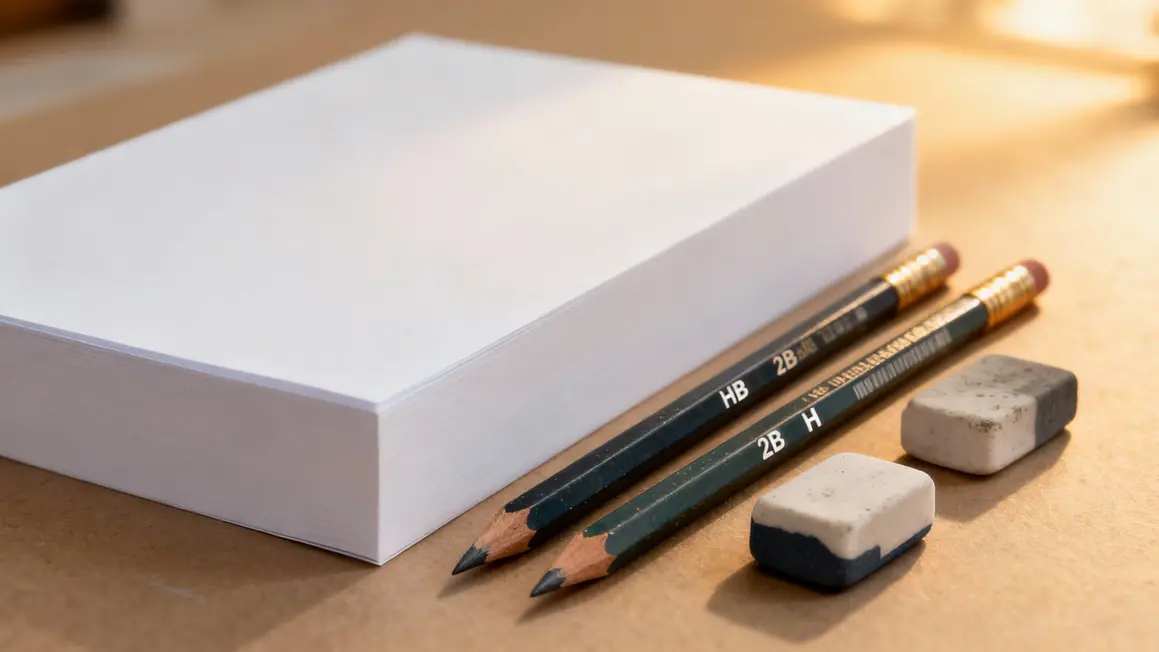
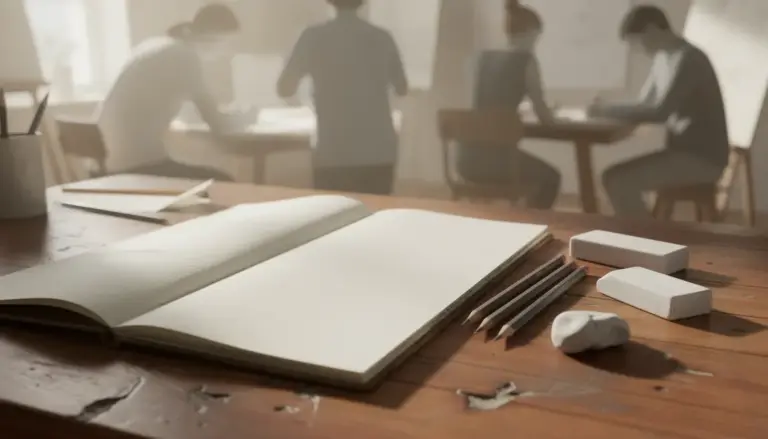
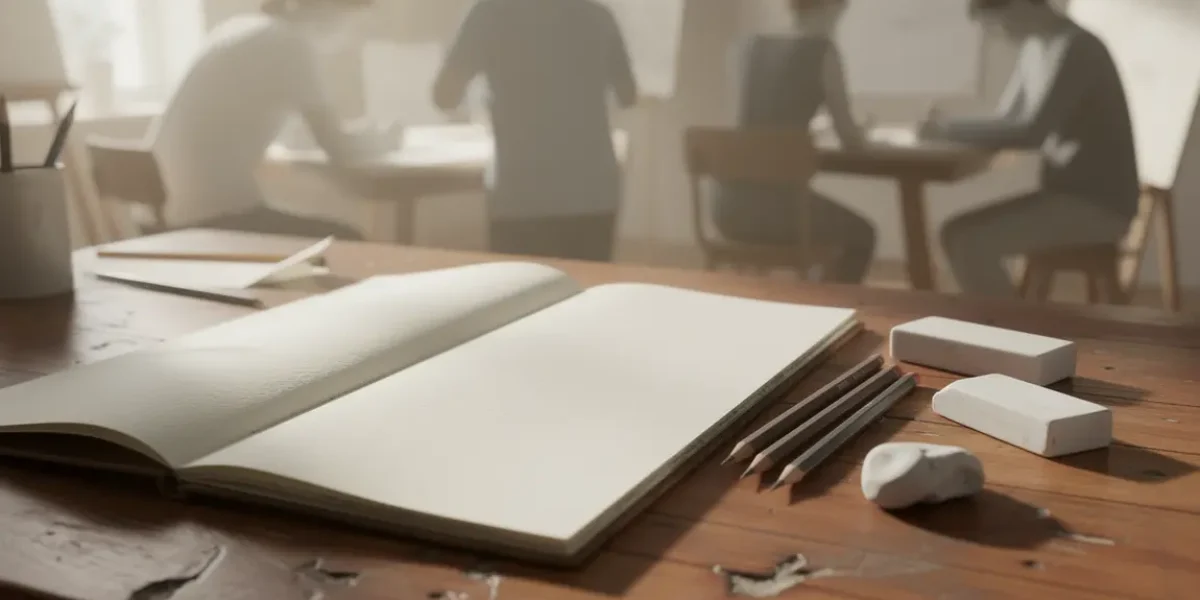
Starting with the right tools makes progression much smoother. Paper pencils, for example, differ according to their hardness. The HB pencil for the sketches thanks to its versatility, while a 2B or 4B Will further mark the shadow or deepen a line. To gain finesse, a H or 2H pencil delivers light lines, ideal for discreet structures or corrections. There is no need to equip too many: three well chosen pencils are enough.
On the gum side, Staedtler type white gum erases frankly: it is used to correct markers or to remove coarse errors. The more supple bread gum makes it possible to create subtle effects and correct without damaging the paper an essential tool for progress without frustration.
The choice of paper often acts as a sign of progress. Between 90 and 120 g/m2, most exercises pass without worry about hanging or premature wear. To prefer a smooth paper for the line, or textured for testing the charcoal, is already to structure its method of work.
| Tool | Recommended Make | Characteristics | Average price |
|---|---|---|---|
| Pencil HB | Faber-Castell | Ideal for sketches | 1,50 € |
| Pencil 2B | Staedtler | For shades and bold strokes | 2,00 € |
| Classic gum | Staedtler Mars Plastic | Cleans errors | 1,20 € |
| Bread gum | Faber-Castell | To blur and subtly correct | 1,00 € |
| Paper block 100 g/m2 | Clairefontaine | Multipurpose paper, smooth or grained | 5,50 € |
Focusing on a small set, tested on the first exercises, allows you to quickly learn what's right and avoid kits « magic » Too much marketing. There is nothing like practical use and corrected error in the field.
To initiate the fundamental gestures of drawing
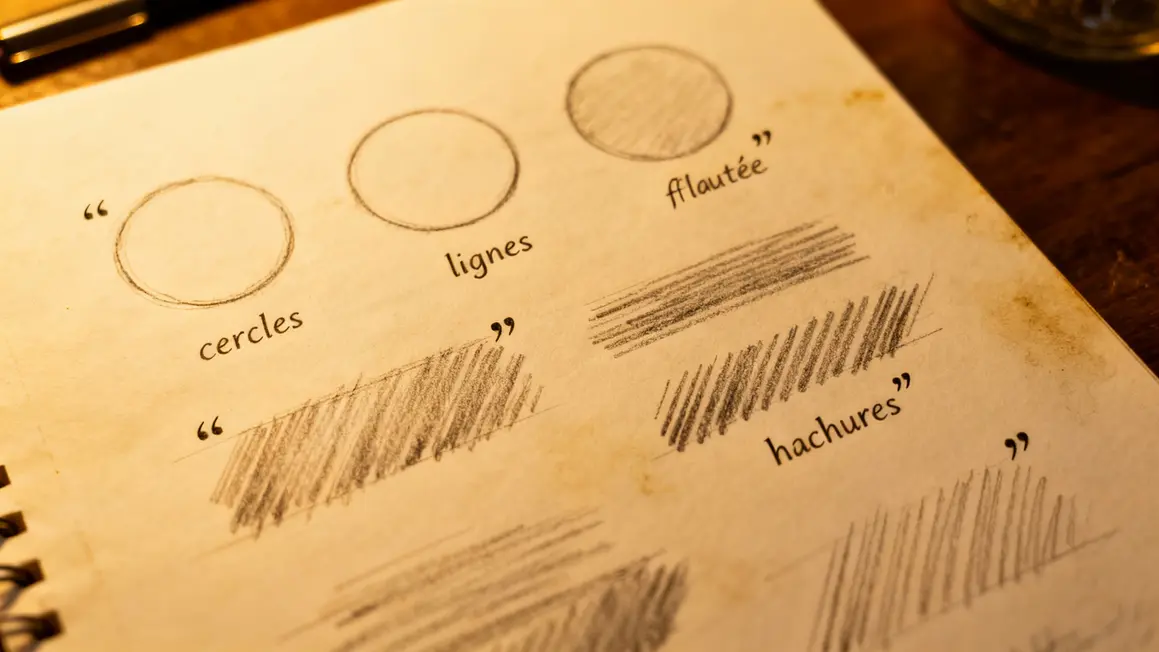
Building a safe gesture involves the daily repetition of simple exercises. Draw circles, of various sizes, develops the coordination eye-hand. The parallel lines by hand lift the pressure control and the stability of the wrist. Practice Hashures refines the ability to measure shadows and enriches the graphic palette. Ten minutes a day dedicated to these routines multiply the speed of acquisition.
Learning to observe and simplify forms
Active observation remains the foundation of any good drawing. Faced with a complex object, turning its mental image into a basic geometrical assembly makes the construction more accessible: cylinder for a cup, oval for an apple or cube for a box. Start with volumes before detailing secures the structure and avoids many failures. To exercise to vary the angles of view on the same model also allows to progress in perspective.
Understanding Shadows and Light
Shadow brings relief, light balance. Identifying the light source on its sheet, anticipating the direction in which it acts, is already guaranteeing a credible rendering. The gradation of light grey values with a powerful shadowed H pencil of 4B is learned in stages. A useful test: draw a simple circle by modulating shadow and light according to the orientation. Beware of too soft contrasts or, conversely, too dark flats that would damage the shape.
Create a regular drawing habit
Regularity makes all the difference over time. Taking the habit of warming up with quick strokes, and then sticking to technical exercises, leaves room for a more creative phase at the end of the session. Keeping a training notebook allows you to measure your progress, track mistakes and successes and, above all, structure your progress. Sharing your essays in a group or online multiplies concrete returns. An outside look can redirect faster than any static tutorial.
Explore advanced techniques accessible to beginners
From the moment the routine settles, varying the medium stimulates and anchors the gains. The charcoal, more expressive but less controllable than a pencil, invites to explore contrast. The waterproof black pen imposes assumed contours; Attention will therefore be drawn to the decision before each line. Dare the mix of techniques accelerates the discovery of the creative terrain: a background in the charcoal, details in ink, and exercise takes on a new dimension.
Making use of free and paid resources
Structured learning involves selecting some reference resources. YouTube and other platforms offer series of video exercises, provided you choose experienced and educational creators (with progressive exercises and explanations about building a drawing). On the book side, Drawing with the right brain (B. Edwards) or Easy perspective (Norling) are recommended by number of arts teachers. Finally, fee-based online courses offer a significant evolving framework. The essential remains to cross theory, practical training and regular feedback on its evolution.
Correcting mistakes and assessing progress
The critical analysis of a drawing counts as much as its realization. Taking a step back by observing the drawing in a mirror, remotely or comparing it to its reference develops the eye and avoids reproducing the same errors. Keeping the old sketches to observe objective progression is a powerful incentive lever. Seeking external returns accelerates the identification of improvement axes, provided that constructive feedback rather than mere judgement is preferred.
To learn how to integrate creative materials into your artistic projects, explore our guide to Fimo paste: 7 practical steps to progress from beginner to confirmed.
As for learn guitar more easily: practical methods, tools and tricks, progress in drawing requires adapted techniques and well chosen tools.
To enrich your drawing skills, it is useful to draw inspiration from the basics discussed in The evolution of painting styles and techniques.
Building your own style through learning
The appropriation of the bases naturally leads to personal experimentation. Copying to understand, then adapting to his intuitions and mixing the influences identified during his research is a necessary passage. The exploration of new media, mediums and styles nourishes the singularity of each creator, provided that the practice remains regular and curious.
Exercises to expand comfort area
- Merge two different artist styles to create a hybrid sketch;
- Change main tool (crayon → charcoal, pen, felt, etc.), even on a simple subject;
- Let the hand run without predicting in advance, to develop the graphic intuition;
- Draw the same object in three different styles to identify the one that fits you.
As the technical acquis consolidates, personal style emerges without forcing, from essays, hesitations and cross-influences. The drawing then imposes itself as an open and living workshop: each session nourishes the following.
Mastering the basics of drawing is therefore based on a balance: simple material well chosen, a method of progressive training, concrete exercises and regular returns. By testing, correcting and sharing their trials, each one builds a clean approach. What routine will you put in place to anchor your progress? Share your plan or your tips in the comments, learn from our other guides on guyomcorp.com, and disseminates this article to a person around you who also wants to structure his progress. What practices would you like to explore in your next sessions? Don't hesitate to suggest your ideas to enrich the community.
To go further: Betty Edwards and N. Norling's works offer solid references, while artistic training platforms structure progress in stages. The important thing is not to achieve perfect mastery at once, but to move forward with method and curiosity. Every way, a new learning!
Written by Guillaume Martin, teacher, trainer in applied arts, independent creative since 2008.
Updated on 23 March 2026