
Published by: Élodie Maurel-Lescure — Editor specializing in music training
Updated on 23 March 2026
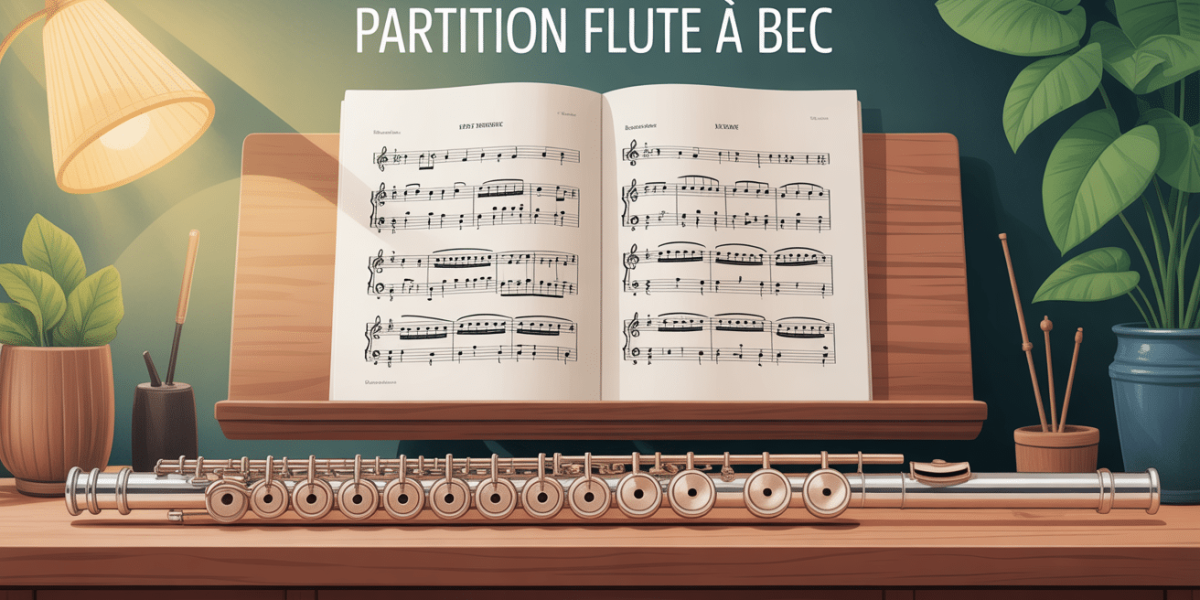
Find a Partition for recorder truly adapted can transform the way you approach musical practice, whether at the beginning of your learning or in a phase of progression. Some find that a good educational tool, advanced filters by instrument or level, and selection tested by adults in training save time in the jungle of online resources. A well-targeted score, with an audio overview and a clear indication of the difficulty, helps overcome hesitations and gain confidence in accessible works, while keeping intact the pleasure of learning.
Summary of key points
- ✅ An adapted score facilitates progress and fun to learn.
- ✅ Features such as audio previews and filters help to choose better.
- ✅ The opinions of professionals and users support decision-making.
Contents
Where and how to find the best score for recorder?

You need a score for recorder, but you don't want to lose long hours comparing platforms? Here is what musicians and teachers plebiscite in 2024: Tomplay (interactive experience, all genres), Free-scores.com (free, easy printing) and Paul Beuscher (classical directory, fast shipping). Each site offers one level organization, accurate filters and generally an audio or PDF overview, which simplifies the choice when you want to increase efficiency.
The most popular sites are distinguished by their ability to quickly orient themselves to educational pieces, bestsellers or playful works, depending on the level: beginner, intermediate or advanced. There is a regular and precise notation of the difficulty ( 1/6 to 6/6 or Cycle I to III), the subdivision by type of flute (soprano, alto), and the classification by various styles (classical, pop, jazz...). According to the catalogue, scores for recorders can be found from 2 € (Free-scores, Tomplay) and until 48,90 € for professional collections (Paul Beuscher). This is also why the advice of a teacher or professional sometimes helps to avoid impulsive shopping.
A beginner student like Antoine (31 years old, discover the flute last year) mentioned that with Tomplay, he had been able to spot his mistakes faster thanks to audio accompaniments. Some professionals believe that viewing and listening before purchasing can really speed up learning. Do you want to cross this course without waiting? Better use the thematic segmentation and the "audio preview" function to check, in practice, that the song really suits you.
Compare free and paid platforms: the real assets
Many hesitate between free-scores.com and more innovative pay offers (Tomplay, Paul Beuscher). According to a trainer, here are the elements that make the real difference to move forward effectively:
- Free-scores.com gives access to more than 1000 free partitions, sorted by level and instrument, downloadable in PDF.
- Tomplay is distinguished by its accompanying audio tracks, its sharp filters (study cycle, style, etc.) and a particularly pleasant mobile navigation.
- Paul Beuscher offers superior institutional quality, ships in physics and advises by phone or email, which reassures many beginners.
For example, a Trio Mozart for recorders costs about 6,70 € on Paul Beuscher, while a Duo Satie returns to 5,70 € on Tomplay. Google notes revolve around 4,9/5 This benchmark weighs in the balance and encourages confidence. Sometimes a user chooses according to this criterion, especially for a first purchase.
How to select the partition adapted to your level or project?
Before ordering or downloading, it is best to take a few minutes to analyze what really suits your situation. Many self-taught, poorly pointed students sometimes end up discouraged: it is often recommended to look at cycle segmentation (I to III), difficulty (1/6 to 6/6), and sometimes age via a dedicated filter. Are you targeting a progression or a review work? The CMF label or "Cycle I recommended" are points to check.
The usage context plays a central role. For an audition or a contest, a labeled score will be preferred. For leisure, a simplified arrangement or a Baroque fantasy does the job. The sheets usually present the difficulty, sometimes an audio or video preview. This fairly simple detail allowed Sacha (14 years old) not to be mistaken in her choices. An anecdote comes back frequently: a student advances faster by consulting the audio extract before deciding. It is therefore better to look at this tool, even if the gesture seems obvious.
Distinction between soprano, alto and tenor recorder: stay vigilant
In the beginning, we rarely think of distinguishing instruments, but most partitions are well classified (soprano, alto, tenor). At Tomplay and Free-scores, a filter makes tracking immediate. At Paul Beuscher, the "instrument" sheet is placed at the top, which limits the common shopping errors.
- Soprano remains the most popular, especially in early childhood.
- The aim is to increase the number of adults or students in advanced education.
Some novices confide that by hesitating between two models, listen to an audio clip or read a customer review (average 4.9/5 on the main sites) avoids investing in a work out of reach. Is that really enough? It can be assumed that this limits disappointments, especially when buying without direct advice.
The strengths of specialised platforms
We note that what makes a platform attractive today are audio/visual insights, educational badges (CMF for example) and customization modules. The main interest is not only to save time – it is also about making sure to choose a stimulating work, a source of real progress. One teacher mentioned how much the "audio preview" function on Tomplay or the direct download on Free-scores really facilitated selection. At Paul Beuscher, the focus is on novelties and works validated by conservatories.
If, like me, you sometimes explore the jazz or pop repertoire (also present on Tomplay!), the "Wishlist" and the teaching FAQ make the difference: save, compare and ask for a personalized advice before deciding is convenient.
Audio/visual overview and educational labels: the winning duo
Listening to or flicking the score before buying, it's really a guarantee of tranquillity. At Tomplay, each work offers a professional audio track; At Free-scores, the MP3 version saves you time (some users use it to compare multiple styles online). Institutional labels, such as CMFare particularly reassuring when preparing for exams.
To enrich your practice of the recorder, also explore this selection dedicated to music instruments starting with T: list, classification and listening secrets.
To deepen your understanding of the recorder, it is essential to know the specificities of each wooden wind instrument: understanding the wood family and their secrets.
To enrich your repertoire of recorder scores and progress effectively, explore dedicated tools such as convert music to free partition: fast solutions for all.
- Tomplay and Paul Beuscher systematically indicate the difficulty, the CMF badge and customer reviews on their cards.
- The most popular scores are easily marked by "new" or "most played" inserts – which pleases those looking for inspiration.
This set of educational guarantees now seems indispensable. According to some experts, this is one of the reasons why there are between 80,000 and 85,000 web-accessible scores for the recorder. Those seeking a specific score for their examination often refer to this criterion of reinsurance.
Which tools facilitate the selection and use of partitions?
Success in purchasing or downloading sometimes depends on a finely thought-out ergonomic detail: multi-criteria filters, wish list, specialized FAQ or teacher contact. One teacher said she helped many students with these modules, which are now systematized on Free-scores or Tomplay. It can be seen that this fast sorting allows you to orientate within seconds in an extremely large offer.
Lateral navigation on Free-scores or Tomplay offers filtering by style, time, difficulty, instrument and type of project (solo, duo, trio...). Depending on the product, you can find audio/visual overview, price (2 € to 7 € in general), and delivery or download options à la carte. To find it better, here is a representative UX table:
| Platform | Notes of difficulty | Audio/video preview | Educational label | Average price |
|---|---|---|---|---|
| Tomplay | Number, Cycle | Yes | CMF, news | 3 – 7 € |
| Free-scores.com | Number | Yes (MP3) | Optional institutional | Wondershare Filmora – Best Cheap Video Editing Software |
| Paul Beuscher | Cycle, difficulty | Visual | CMF | 5 – 48,90 € |
Last point to note: a good tool is also an effective and responsive FAQ. If you still hesitate before making your choice, the section "Need help" or the teacher contact allow to make the approach more serene and avoid an inappropriate purchase for the end-of-cycle exam.
Wishlist, filters, FAQ : fluidify the course
This trio – "list of desires", advanced filters, FAQ – changes the daily life of the amateur musician or advances. We add his favourite works, we sort according to the progress, we rely on the opinions of the clients or on a fast response from a teacher. Several platforms, such as Tomplay, highlight the "Cycle I confirmed" badge or "Best-seller 2024" to guide the choice. At Paul Beuscher, phone or email accompaniment is often popular with new registrants.
- Multi-criteria filter: level, age, style, difficulty 1/6 to 6/6, period...
- Pedagogical FAQ dedicated to the choice of repertoire or the use of interactive partitions.
- Confidence inserts: customer reviews (Google 4.9/5), educational labels, original gift ideas.
Finally, to be able to progress calmly is also to be able to get out of the beaten path: those who dare are in some cases the first to discover unexpected works... even if it is not always obvious to be there at first!
Updated on 23 March 2026