Published by: Guillaume Martin — Editor in Chief
Updated on 23 March 2026
Reproducing a famous art work with everyday objects may seem inaccessible, yet the challenge #TussenKunstEnQuarantaine upset this received idea. Launched by three friends in Amsterdam during the first confinement in 2020, he proposes to everyone to prove that inventiveness prevails over means and that art, even misappropriated, creates a true collective emulation. This article presents the history, operation and impact of this movement, while detailing how to appropriate the method. Objective: to make you want to dare and build your own interpretations, even without sophisticated material.
Contents
Origins and genesis of the challenge
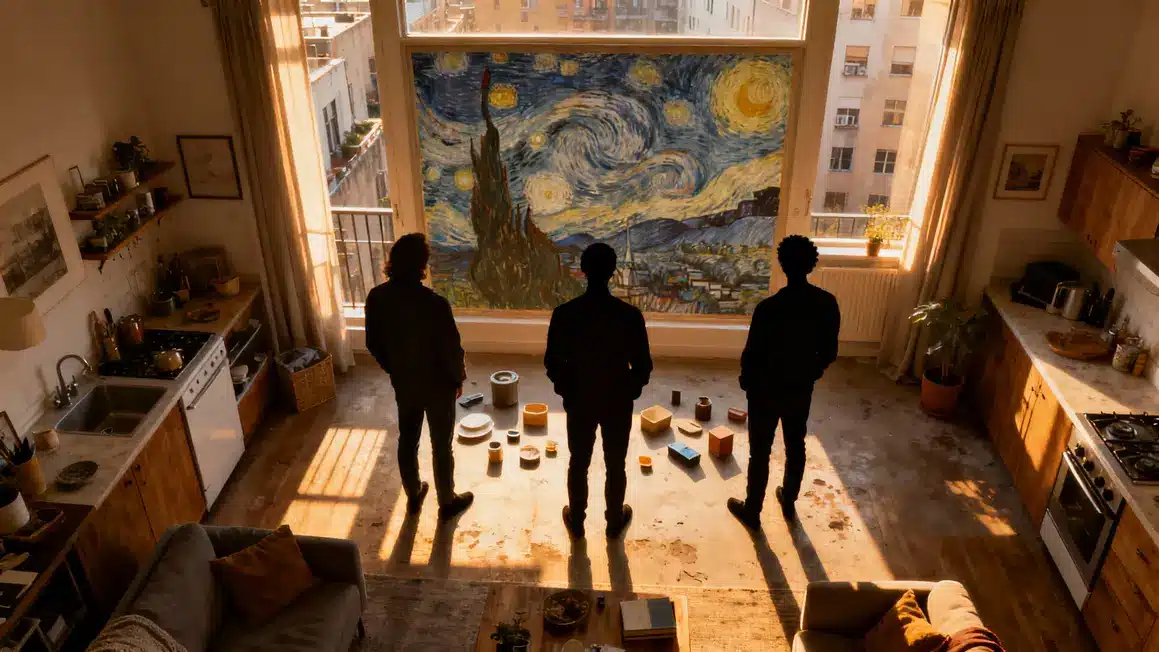
The #TussenKunstEnQuarantine challenge begins in Amsterdam in March 2020, as museums close and cultural outings disappear. Three roommates, including Anneloes Officer, decide to integrate art into their daily lives by reinterpreting monumental paintings with what they find at home. Their principle: divert the daily life to bring art home, share the result on Instagram with the eponymous hashtag. Very quickly, the game wins the planet, each rivaling inventiveness in funny or unexpected stages. There are up to 450,000 subscribers in April 2020 on the official page dedicated to the movement, and a participatory archive that still inspires in 2026.
The approach works because it turns a constraint (containment) into a creative springboard. Using a pile of linen or a vegetable to evoke a democratized masterpiece access to artistic practice: art is no longer reserved for an elite, creativity becomes a shared reflex.
The rules of the game
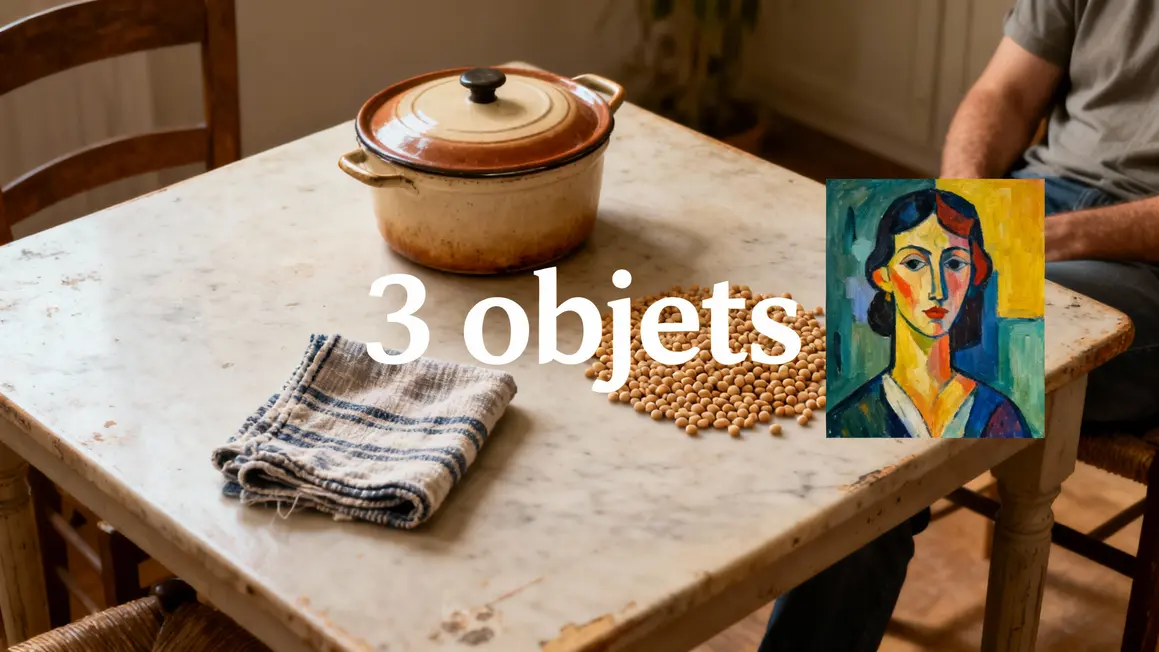
- Choose an iconic or simply striking work (The Starry Night, The Mona Lisa... or any other painting that speaks).
- Realize its version with three maximum daily objects.
- Photograph the re-creation next to the original.
- Publish on Instagram by mentioning #TussenKunstEnQuarantine (+ secondary hashtags to expand impact).
This limited choice of accessories focuses attention on what counts: the spirit of adaptation, the ability to shift your eyes to your environment and improvise with sobriety. There is no need to aim for perfection: each result highlights inventiveness, not pure technique.
Inspiring examples: what really works
- « The Starry Night » revisited with pots and garbage bags cut to simulate the swirling sky;
- « The Kiss » Klimt consisting of gold sheets, cushions, and aluminium foil for material effects;
- « The Mona Lisa » homogenized with a brown sweatshirt, a towel as a cap and a smile of circumstance;
- Sculptures like « Lunch on the grass » or « Self-portrait » played by a whole family or with the complicity of a domestic animal.
No need for specific material: a simple shawl, a decorative ball, or an apartment plant is enough to decline the essence of a work. The examples show that observation and lag are more important than model fidelity.
Practical steps to start
- Select a work that has one or two strong visual elements: color, posture, detail.
- Identify objects at home that can echo it: textiles, dishes, unusual accessories, even animals...
- Install your scene by curing the framing (favouring daylight, giving yourself time to repeat).
- Photograph, then adjust the photo quickly (contrast, sharpness, simple cropping is enough).
At each stage, favour a minimalist approach: go to the essential, play on the suggestion. Too many accessories affect impact; It is the contrast between the simplicity of the material and the power of the model that attracts attention.
A lasting impact on collaborative creation
Museums like the Rijksmuseum and the New York MET quickly seized the phenomenon. They relayed it to their own accounts by valuing the ability of these occasions to create a link and desecrate their collections. The success of the movement depends on active participation: every online posting resituates art in ordinary life, makes it malleable and subject to personal interpretations. This change of posture reinvigorates artistic practice, legitimates any attempt, and gives confidence to those who dare not take the step of creation.
Testimonials and feedback
- A recomposed Lyon family « The Starry Night » with boxes of cereals and golden paper, sharing enthusiasm and laughter: « Our children understood that one can do art, even without a brush, just with the desire to play together. »
- A graphic student adapts « The Kiss » Klimt from coloured cushions: « It was liberating to see that with little one expresses much. »
- A senior in Provence discovers Instagram by imitating Frida Kahlo: « My interpretation wasn't perfect, but I felt the pride of daring! »
These examples show that the approach counts more than the result, each creation brings immediate satisfaction and the desire to share its own essays.
Frequently Asked Questions
- Where does the name come from? : it means « between art and quarantine », an affirmation of the strength of ordinary creativity.
- How to choose a suitable work? : to favour those whose main elements are recognizable and accessible, especially for the first tests.
- Does the challenge still exist? : initial craze has passed, but the hashtag still supports regular participations, and several institutions continue to exploit it in times online.
- What difference with the Getty Challenge survey? : Getty Challenge, launched at the same time, admits more accessories and less constraints; #TussenKunstEnQuarantine imposes the strict rule of the three objects, which sharpens creativity.
- Latest practical advice : refine natural lighting (sun, indirect lamp), avoid congested background, test several angles before choosing your photo.
The main part of the movement lies in the transmission and pride of sharing: every creator, even amateur, joins a global dynamic driven by humor and creative solidarity. If you're inspired or want to progress through easy-to-replicate exercises, you'll find other methodological leads on guyomcorp.com.
To find inspiration and enrich your creative approach, explore these museums and virtual exhibitions: innovations and methods to create the cultural future.
This creative challenge illustrates how artists, both amateur and experienced, adapt to maintain their visibility, a topic explored in detail in Cultural life: understanding the crisis and artists' strategies to stay visible.
Making art in its own way offers much more than entertainment: it is a way to question its practice, to turn a blockage into a project, to approach its environment differently. Have you ever tried to meet this kind of challenge? Which tools or approaches do you think are most effective in moving an idea from image to concrete realization? Tell your experience or that of your entourage in comment. If the article has given rise to envy, share it: your essay could generate new vocations. And if a problem of method, organization or inspiration blocks you, what topics would you like to explore? The discussion is up to you to play.
Sources: MET New York, Rijksmuseum, Le Monde (2020), artnet.com.
Article written by Guillaume Martin, creator and trainer at GuyomCorp. Passionate about creative progression methods, he draws on his experience of interdisciplinary workshops to guide amateur profiles who want to move on to concrete artistic projects.
Updated on 23 March 2026