Published by: Guillaume Martin — Editor in Chief
Updated on 23 March 2026
Virtual exhibitions transform the relationship between artistic creation and the public. Is this really a progress accessible to everyone? This article examines methods, technological innovations and practical responses for creators, organizers and artists who question the future of museums and online cultural practices.
Contents
A revolutionary turning point for museums
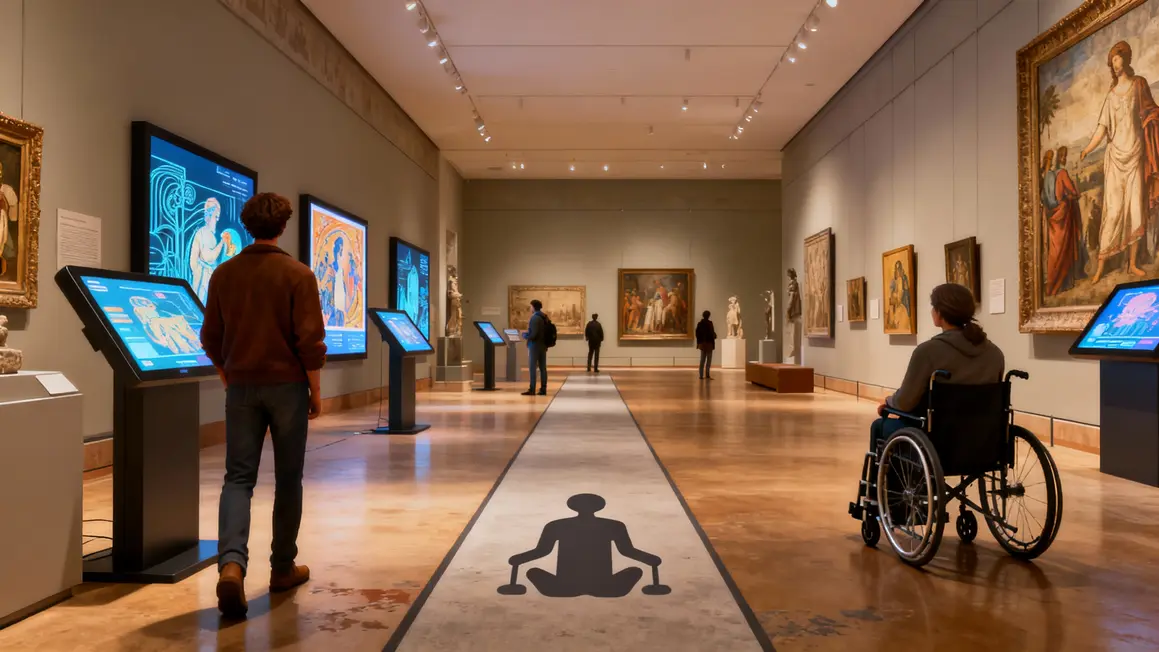
Museums are entering an unprecedented dynamic: physical reception is no longer enough to meet the diversity of audiences. Connected formats have become indispensable, depriving the possibilities for content creators and enthusiasts. During the closing periods, the online visit allowed the works to continue to live. The removal of geographical barriers is a direct benefit: it is now possible to explore a collection or follow a route without any constraints of place, schedule or mobility.
For visitors, flexibility is not just a logistical advantage: you progress at your own pace, you can go back to a work or ignore others according to your creative needs. At this point, the visit is no longer a simple walk, but a real space for research or training, suitable for those who want to build their method and deepen their practice.
Technology has also removed major barriers. High-definition digitisations offer unprecedented access to invisible gallery details, encouraging learning for artists who are inspired by original techniques or textures. Museums thus open up to previously absent audiences: people with reduced mobility, remote audiences, self-taught creators... All can appropriate a part of the heritage they could never have studied on the spot.
Immersive technologies at the heart of the experience
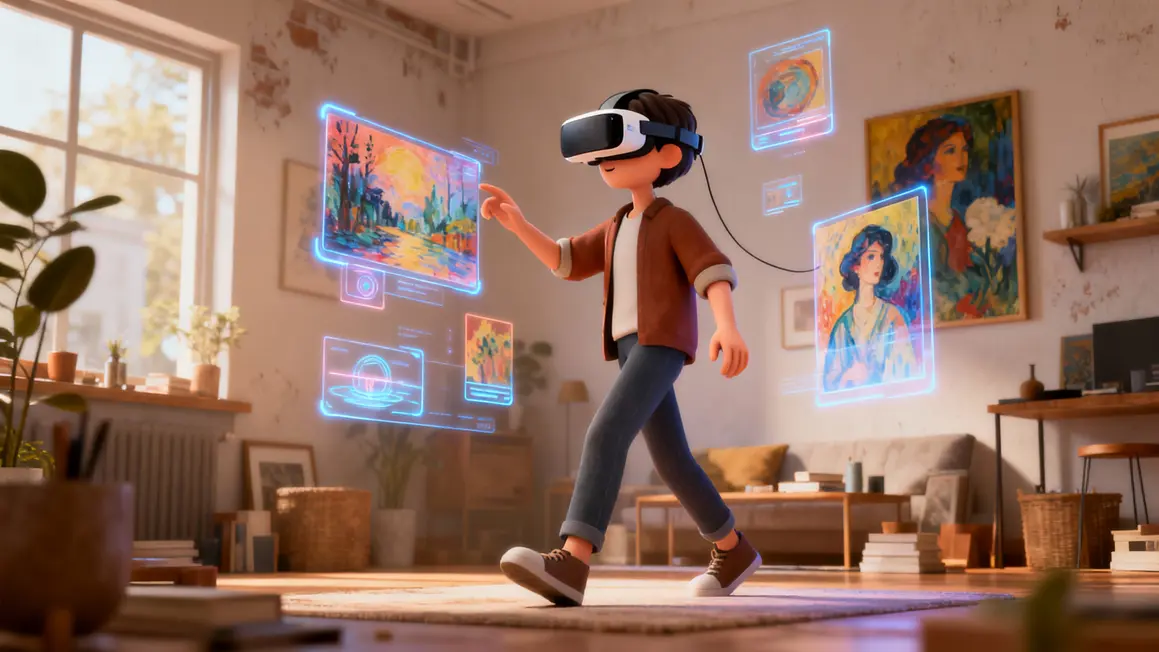
Virtual reality (VR), augmented reality (AR) and extended reality (XR) have become structuring tools to rethink the mediation of art and knowledge. For example, Art Media Studio has designed experiments where the work The Wave d explored by the user, as if he was navigating in the table.
- Holograms make scenography more interactive. At Malbrouck Castle, Monolithe Studio offers historical animation through projected characters.
- The artificial conversational intelligences open up the dialogue with the works – the Ghent Museum of Fine Arts uses Lean Mean Learning Machine to orchestrate unprecedented exchanges with painted figures.»
This type of animation makes the visit active: we are no longer in a passive exhibition, but in an exploration that mobilizes understanding and leads to experimentation. For a creator, this means that the visit can become a stage of training, reflection or applied research, with very concrete examples and materials.
Accessibility and inclusiveness, both engines
Virtual tours open up access to audiences that classical museumography could not reach. Some museums have developed formats for people with visual impairments (immersive audio texts, tactile and haptic devices).
- Sign language guides and scenography adapted for deaf and hard of hearing enrich the access panel for everyone.
- The remote visit becomes possible thanks to collections accessible on the sites of major museums, but also via simplified formats offered by local institutions.
In this context, inclusivity is not a slogan: it is a practical approach to offer each profile an adjustable experience, either through technical adaptation or modular content.
Phygital models: towards a complete and flexible experience
The complementarity between physical visit and digital extension structure cultural offers. For example, the Herbal Museum merges traditional scenography and digital exhibitions through its project Digital Abysses : some of the content explores on site, the other online, allowing a young audience or distant visitors to participate.
- The Louvre offers the continuation of the visit via a post-visit interactive digital platform.
- Podcasts, videos and AR/VR devices extend the pedagogy initiated in the rooms by an a la carte expertise after the fact.
For creators and organizers, it is an opportunity to build cultural projects that exist in several formats, or to iterate an idea without depending on a fixed set.
Immersive Narration and Emotion Management
Video mapping and motion design techniques renew museum narrative: producing an interactive exhibition becomes possible even for limited budgets. Collaborations with specialized studios such as Phygital Studio illustrate the practical benefits of scenography where emotion prevails, where each creation can be increased, tested and presented in innovative formats.
For a project leader, this offers a new freedom: choose the story to tell and the emotions to work on, then measure the impact directly from the spectators, whether they are in the room or online.
Evidence and concrete trends
Bernadine Wieder analyses the long-term structure of connected museums: it is no longer a matter of doubling the physical model, but of inventing new forms of mediation. Collaborations between institutions (Louvre, Google Arts & Culture, Moyosa, National Gallery) advance accessibility, with VR or AR formats for specific audiences.
High-interactivity exposures such as Digital Abysses or Christian Dior: Designer of Dreams illustrate the mutation. Phygital and digital are not gadgets, but components of the medium- and long-term artistic journey, on which every creative project can build.
Brakes, controversies and practical balance
Physical and technical investment remains a challenge, responsible for the delay or difficulty of access for some museums, especially small structures. There is still tension between supporters of the physical visit and promoters of virtual immersion: some audiences remain attached to direct contact with the object, to the emotion of the place. Conservatives are reluctant to delegate mediation to technology, but the analysis of attendance and satisfaction figures demonstrates the growing interest in hybrid formats (source: Google Arts & Culture, France Culture).
- Equilibrium requires a clear digital pedagogy (scenic journey, interactive options, accessibility on all media).
- The phygital models offer a soil to experiment, extend the offer without sacrificing the fundamentals of the museum.
Implementation: how to take advantage of virtual exhibitions?
To choose:
In a context where virtual exhibitions redefine cultural interactions, it is essential to explore how the cultural life: understanding the crisis and artists' strategies to stay visible can inspire innovative solutions for online museums.
To better understand how art and diversity can be expressed online, explore the three most beautiful museums in Baltimore, which combine innovation and cultural immersion.
The Challenge #TussenKunstEnQuarantine: how to reinterpret famous art works with creativity An excellent example of how online initiatives can bring audiences closer to art, even at a distance.
- Get started on the main platforms: Google Arts & Culture, digital collections of museums (Louvre, Centre Pompidou), or VR Explore.
- Test compatibility: a tablet or computer is enough for 360° formats, a VR/AR headset optimizes the experience (Meta Quest, HTC Vive, PlayStation VR2).
- Compare: some visits are free, others offer premium content for small budgets.
- Adjust your journey: first focus on simple formats, then move towards interaction and experimentation (IA dialogs, detailed zoom, motion design, video mapping).
Don't hesitate to document your approach, integrate these resources into your creative process or organize a restitution to test the impact with your target audience.
| Platforms | Experience format | Level of equipment required |
|---|---|---|
| Google Arts & Culture | 360° tour / interactive video | Computer/mobile |
| Museum VR Explore | Complete VR immersion | Recommended VR helmet |
| Louvre Online | Interactive course / podcast | Computer/mobile |
| Centre Pompidou digital | Live sessions and archives | Mobile/computer |
To go further, discover the creative resources and guides to organize and structure your practice on GuyomCorp.
Key points are clear: The rise of virtual exhibitions opens up concrete methods for all, promotes inclusiveness and offers each creator the opportunity to broaden its scope of action, while testing, adjusting and sharing its results.
What technical or methodological obstacles have you encountered in your own creative visits? Share your feedback in the comments to help other members progress and build their cultural project. If this content has helped you structure an approach, consider sharing it in a network.
What uses do you want to explore among digital innovations in culture and creation? The conversation remains open to enrich the method and move forward together.
Sources: France Culture, Google Arts & Culture, museum podcasts, future Moyosa publications and collaborations between VR/AR studios and museums.
Guillaume Martin – founder guyomcorp.com, multidisciplinary creator, specialized in accompaniment of artistic and digital practices. Updated: June 2024.
Updated on 23 March 2026