
Published by: Guillaume Martin — Editor in Chief
Updated on 23 March 2026
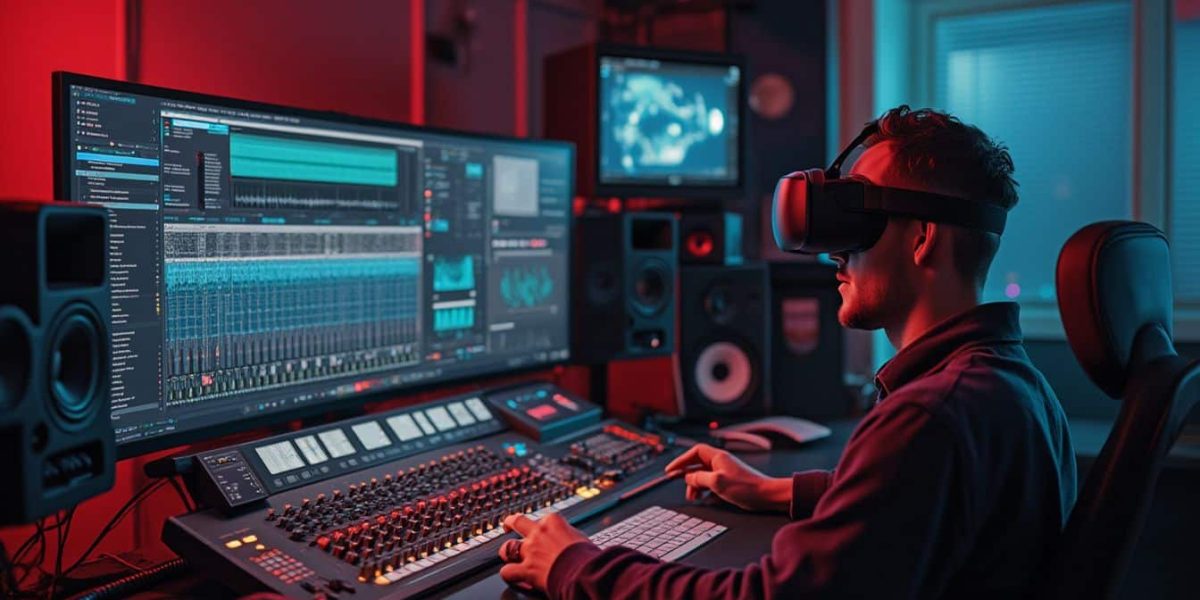
I am fascinated by the universe of virtual reality and challenges, including Audio mixing. Mixing for VR imposes precise and complex technical requirements. It's not just about combining sounds, it's about creating an immersive experience where every sound detail is perfectly synchronized with visuals. The omnidirectional microphones, specialized assembly software as First Pro and Kolor Autopano, as well as VR controllers as SPACE CONNECT are all essential tools. Meeting these challenges ensures an exceptional immersion quality, essential for virtual reality to reach its full potential.
Contents
The fundamentals of VR mixing
Audio mixing for virtual reality (VR) is a fascinating discipline that combines cutting-edge technical skills with artistic sensitivity. To create an immersive experience, it is crucial to understand the basics and tools needed to mix effectively in this three-dimensional environment. Let's dive into this universe to explore the key elements of VR mixing.
History and evolution of VR mixing
Audio mixing for VR has evolved rapidly in recent years. Initially, virtual reality productions used traditional stereo mixing techniques. However, these methods have proved insufficient to provide a true immersion. The need for new approaches and technologies.
The first steps in audio mixing for VR were marked by the use of omnidirectional microphones, allowing to capture sound at 360 degrees. This advance paved the way for more realistic experiments, where sounds seem to come from all directions, depending on the movements of the viewer's head.
Over time, specialized software and tools have been developed to meet the specific requirements of VR. For example, applications such as Cubase, combined with software VR controllers such as DearVR SPACE CONNECT, allow sound engineers to mix immersive audio productions with increased accuracy, taking into account head location and gesture control.
Technology and equipment required
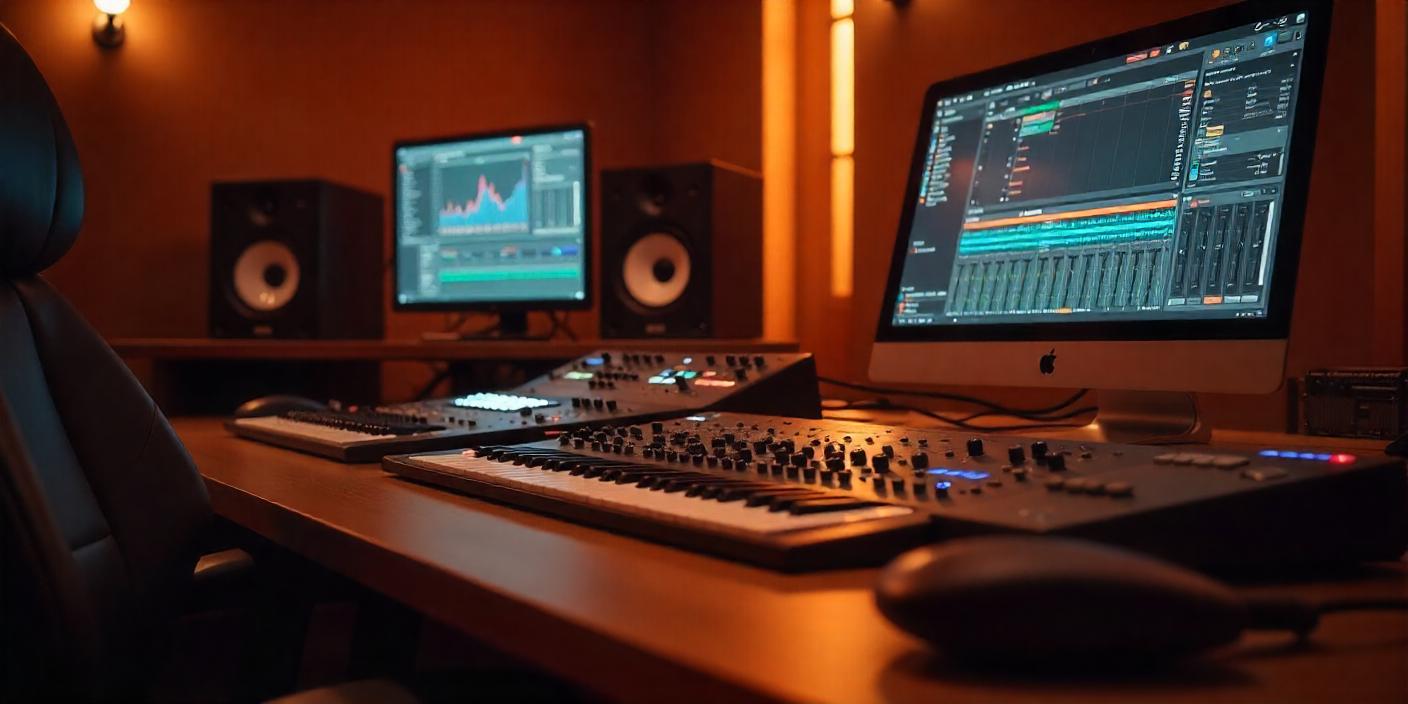
To get started in VR mixing, it is essential to have the right equipment and software. Here is an overview of the essential elements:
- omnidirectional microphones : They capture sound at 360 degrees, which is crucial for an immersive experience.
- Software Mixing : Tools such as Cubase, Premiere Pro, Vahana VR and Kolor Autopano are commonly used to assemble 360° video streams and mix audio.
- Software VR controllers : DearVR SPACE CONNECT, for example, offers advanced features for mixing with head location and gesture control.
- High quality VR helmets : To test and refine your mixing, a high-performance VR helmet is essential. It ensures that sound is properly spatialized and that experience is realistic.
- Specialized audio recorders : They allow to capture the sound with exceptional precision, taking into account the orientations and movements of the head.
By combining these tools with advanced mixing techniques, it is possible to create immersive hearing experiences that transport users to another universe. The VR mix does not simply reproduce the sounds: it places them around the viewer, thus offering a total immersion.
Technical challenges of VR mixing
Mixing for virtual reality (VR) presents unique challenges that professionals must overcome in order to provide an immersive and realistic experience. This process requires a thorough understanding of specific technologies and methods. Let's explore the technical aspects essential to successful VR mixing.
Assembling 360° videos
The assembly of 360° videos is a crucial step in creating VR content. 360° cameras capture multiple video streams simultaneously, which must then be assembled to create a single spherical video.
For this purpose, assembly software Like Adobe Premiere Pro, Vahana VR, and Kolor Autopano are used. These tools combine the various video sources, but they are not without challenges. Visual artifacts and overlap problems may occur, altering the quality of the immersive experience.
Customizing and synchronizing images
Once the videos are assembled, it is crucial to ensure that the images are perfectly sewn and synchronized. Sewing videos from multiple cameras is a delicate task that can cause problems if it is not done properly.
It is essential to use powerful software to minimize artifacts and obtain smooth transitions between different shots. Synchronization of images is also crucial, as desynchronization can create an unpleasant experience for the viewer.
Refreshment rate and image quality
Image quality and refresh rate are key elements to ensure a realistic VR experience. VR content must be recorded at refreshment rate Very high, usually at least 90 frames per second. This reduces nausea and improves movement fluidity.
A high refresh rate requires a large amount of data, which can pose challenges in terms of storage and processing. Moreover, the quality of the images must be irreproachable to completely immerse the viewer in the virtual universe. This implies the use of high definition cameras and advanced post-production techniques.
- Use of high definition cameras
- Advanced post-production techniques
- Powerful software for synchronization
- Record 90 images per second or more
- Minimization of visual artifacts
Audio mixing for virtual reality
Audio mixing for virtual reality (VR) is a fascinating field that combines art and technology. It requires a unique approach to create an authentic immersive experience. There are many technical challenges, but with the right tools and techniques, it is possible to produce sounds that really transport the listener to another world.
Specialized stereo sound recording
The sound recording for VR and 360° videos is crucial for successful immersion. Unlike a classic stereo recording, a stereo recording specializing in VR uses omnidirectional microphones. These microphones capture sounds from all directions, which is essential for the viewer to feel the sound environment as if it were actually there.
One of the main challenges is to ensure that sound remains coherent and realistic even when the user turns his head. Indeed, in a VR experiment, the sound must change according to the orientation of the user's head. This requires careful mixing and often a studio configuration different from that used for traditional recordings.
Audio device configuration
To succeed in immersive audio mixing, an adequate configuration of audio devices is required. Key elements to consider include:
To guarantee an immersive sound experience in virtual reality, master the secrets of audio mastering is essential to refine each acoustic detail.
- omnidirectional microphones: They are essential to capture all sounds equally, regardless of their point of origin.
- Specialized mixing software: Tools like Cubase with specific VR plugins, allow to mix audio by taking into account head movements and gestures.
- VR helmets: Used to test and adjust mixing in real-life situations, these helmets must offer exceptional sound quality so as not to compromise immersion.
It is also important to use software controllers like DearVR SPACE CONNECT. This type of controller allows you to play 360° videos and mix audio with extreme accuracy, taking into account the location of the head and the user's gestures.
By combining these technologies, it is possible to create immersive sound experiences that perfectly complement the visuals of virtual reality. Audio mixing for VR is a constantly evolving field, offering endless possibilities to content creators. The key is to remain curious and continue to explore emerging new technologies and methods.
solutions and best practices for technical challenges
Navigating the technical challenges of recording and mixing audio in virtual reality can be complex, but there are practical solutions and good practices to improve the quality of your work. Here are some tips and tricks to help you overcome these obstacles.
practical tips for recording and editing
In order to achieve a quality audio recording in virtual reality, it is crucial to choose your equipment and follow specific steps. Using omnidirectional microphones captures a more immersive sound, essential for VR and 360° videos. Here are some steps to follow:
- Prepare your recording environment by minimizing background noise.
- Use omnidirectional microphones for optimal sound recording.
- Configure your space according to the viewer's position for a realistic sound rendering.
- Do tests to adjust levels and avoid saturation.
With regard to editing, the use of software such as Adobe Premiere Pro, Vahana VR, and Kolor Autopano facilitates the assembly of different video sources into a single spherical video. Take care to check artifacts and overlaps to ensure maximum image quality.
resolution of sound problems
Sound problems are common in audio production for virtual reality, but can be solved with particular attention to detail. Here are some solutions for common problems:
- Background: Use low pass and high pass filters to eliminate unwanted sounds.
- Echoes and Reverberations: Install acoustic panels to absorb reflected sounds.
- Sound distortion: Set input and output levels to avoid saturation.
- Synchronization Issues: Use visual and audio markers to align audio and video tracks.
For outdoor recordings, prefer microphones with windproof caps and make multiple sockets to have several mounting options.
continuous improvement and training
Technology is changing rapidly, and it is important to keep up to date with the latest innovations and techniques. Participating in training and workshops can greatly improve your skills. Here are some suggestions:
- Take online courses on platforms like Racera or Udemy to learn basics and advanced techniques.
- Take part in webinars and seminars to discover the latest trends and innovations.
- Join online communities to chat with other professionals.
- Experience with new tools and software to stay at the cutting edge of technology.
Continuous improvement and training are essential to remain competitive and offer high quality production. Be curious, experiment, and never stop learning.
Updated on 23 March 2026