
Published by: Guillaume Martin — Editor in Chief
Updated on 23 March 2026
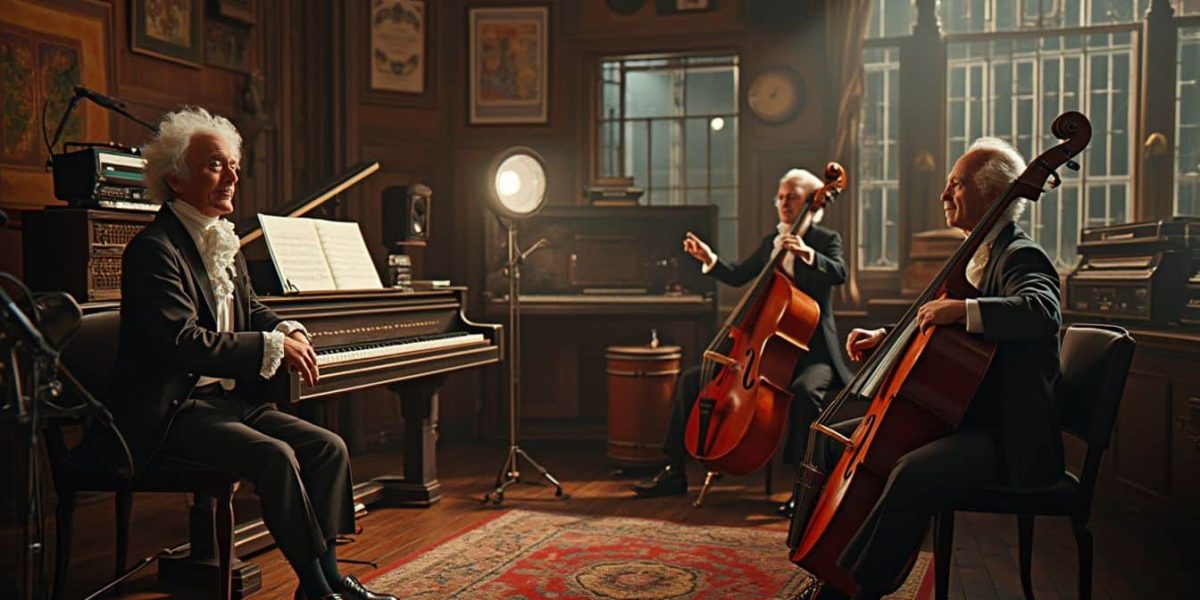
The composers of classical music constantly push the limits of their art by integrating the innovative technologies in their works. The example of Alexandre Scriabine, with its light keyboard, shows how the alliance of the music and light games can transform performance into an immersive multimedia experience. Today, tools like sound 3D (binaural), the Analog synthesizers and algorithms create complex sound textures and customize listening. These technological advances open up new creative perspectives, allowing composers to reinvent classical rules and offer increasingly bold and captivating works.
Contents
The innovative legacy of Alexandre Scriabine
Alexander Scriabine, a Russian composer from the early 20th century, marked the history of music by his audacity and vanguardism. He not only composed masterful works, but he also sought to push the limits of artistic expression by incorporating technological elements into his creations. His unique approach has had a profound impact on the evolution of modern harmonic language and continues to inspire today's artists and technologists.
The fusion of music and light
Scriabine was convinced that music could transcend the senses and create a multisensory experience. He thus explored synesthesia, a phenomenon where stimulation of one sense leads to experiments in another. For Scriabine, music and light were closely related, each note being associated with a specific color.
This belief led to the Light keyboard, an innovative instrument that synchronized music with light games. This keyboard did not produce sounds, but projected colors corresponding to the notes played. The aim was to create a visual and sound symphony, offering the public an immersive and unprecedented experience.
Prometheus: The Fire Poem
His most emblematic work, « Prometheus: The Fire Poem » (Op. 60), embodies this fusion of music and light. Composed in 1910, this piece for orchestra, piano and keyboard with lights is a true multimedia creation. The colors projected by the keyboard were supposed to be synchronized with the music, transforming each performance into a dazzling visual spectacle.
In « Prometheus »Scriabine sought to evoke intense emotional states and to transport the spectator into a mystical and transcendent universe. The score includes precise indications for luminous projections, although these aspects are often omitted in modern representations due to technical challenges.
Scriabine's innovations have paved the way for new forms of artistic expression and continue to resonate in the world of music and visual arts. Today, artists and technologists are inspired by his work to explore the possibilities offered by interactive and immersive technologies.
The impact of modern technologies on classical music
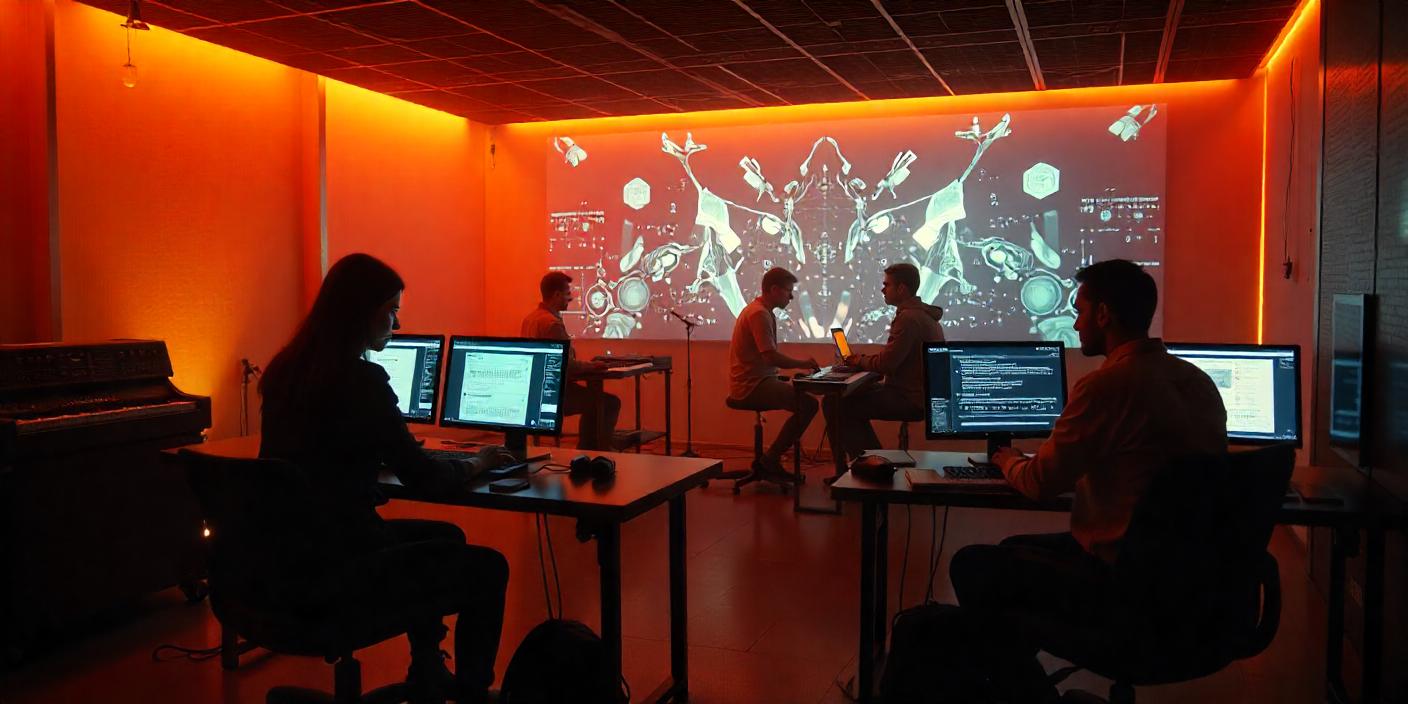
Classical music, often perceived as frozen in time, actually evolves in parallel with technological advances. Composers and musicians exploit these innovations to push the boundaries of creation and performance.
3D sound and digital tools
The sound 3D or binaural is one of the most fascinating innovations of recent years. By creating an immersive listening experience, it allows listeners to feel as if they were at the heart of the orchestra. Concerts and recordings using this technology offer a new dimension to classical music, making each note and instrument distinct and alive.
The digital tools also play a crucial role. Music production software allows to isolate each instrument, modify stamps and even create sounds that do not exist in the real world. Composers can customize listening according to individual preferences, making each performance unique.
Examples of advanced technology
Several classical composers and musicians have adopted these technologies to innovate. Alexander Scriabine, for example, was a pioneer in merging music with light games. He created the keyboard with lights, a device synchronizing luminous projections with music, as in his work « Prometheus: The Fire Poem ».
Today, algorithms play an important role in classical concerts. Soundtracks generated by algorithms can accompany live performance, creating a dynamic interaction between human and machine. These innovations not only enhance performance, but also democratize access to classical music.
- Use of Analog synthesizers and electronic batteries to create complex sound textures.
- Experimentations with bold harmonies thanks to MIDI tools and computers.
- Possibility to customize each listener with custom settings, offering a unique experience for each listener.
These advanced technologies allow composers to push the traditional limits of classical music. They offer new creative perspectives, allowing us to explore new sound territories and redefine what classical music is today.
The use of artificial intelligence in composition
Technology has always influenced the evolution of music and today artificial intelligence (AI) is transforming the way musicians and composers create their works. It is fascinating to see how the AI can not only assist, but also inspire artists in their creative processes.
Music creation with the AI
Artificial intelligence offers endless possibilities to music creators. AIA algorithms can analyze hundreds of years of music, identify patterns, and create original compositions in record time. You can think of the AI as a composition partner, which offers new and often surprising ideas.
For example, programs such as OpenAI的s MuseNet or AIVA (Artifical Intelligence Virtual Artist) use neural networks to generate compositions in a variety of styles, from classical to jazz, to electronic music. These tools create pieces that can be used as such or serve as a basis for more complex compositions.
Imagine having at your disposal a virtual music library capable of providing harmonies, melodies, even complete arrangements, while integrating your own musical style. The AI helps push the limits of musical creativity, opening new paths for sound experimentation and fusion of genres.
Popular AI tools
There are several popular d musical composition. Some of them are distinguished by their effectiveness and innovation:
Modern artists exploit the AI and digital tools to create immersive experiences, in the image of technology revolutionizing interactive performance.
- MuseNet : An openAI project capable of generating compositions in a variety of musical styles thanks to its neural networks.
- AIVA : This tool is especially used for film and video game music. He creates impressive orchestral compositions.
- Amper Music : Designed for content creators, this tool allows you to create personalized music tracks based on the emotions or mood you want.
- Jukedeck : Although it is no longer available, Jukedeck was one of the first tools to offer compositions generated by AI, influencing many other similar projects.
These tools do not replace the talent and ingenuity of human composers, but act as tools for Creative assistants which enrich the process of composition. They allow us to explore new ideas and experiment without traditional constraints, thus providing a more free and innovative creative space.
Technology and art are no longer separate worlds. With its learning and analysis capabilities, L
new technological possibilities for composers
With the rapid evolution of technology, today's composers have innovative tools to radically transform their creative process. These new possibilities offer unprecedented freedom, allowing us to explore and push the boundaries of traditional music.
breaking with the classical rules of composition
The classical rules of composition have long dictated the structures and harmonies of music. However, technological advances now allow composers to free themselves from these constraints. With tools such as synthesizers analogues, computers and MIDI toolsIt is possible to experiment with complex sound textures and bold harmonies. The composers can thus create unique and original works, completely rethinking the traditional principles of counterpoint and harmony.
examples of musical creation with technological tools
Many composers have already incorporated these technologies into their creations, paving the way for new forms of musical expression. Highlights include:
- Alexandre Scriabine : Pioneer in the fusion of music and light games, he created the keyboard with lights, an innovation that profoundly influenced modern harmonic language.
- Concerts with algorithmic soundtracks : Using algorithms to create custom soundtracks, allowing a unique listening experience for each listener.
- 3D sound (binaural) : Concerts where the sound is broadcast in three dimensions, immersing the listener in an enveloping sound experience.
These examples show how technology can transform musical creation, offering composers new opportunities to express their creativity and reach their audiences in an innovative way.
The future of musical composition in the digital age
The digital age opens up exciting perspectives for musical composition. Technological tools do not simply improve sound quality or facilitate the creation process; They also redefine the boundaries of what is possible in music. Composers can now explore concepts such as augmented and virtual reality, where music interacts with immersive visual environments, creating multisensory experiences.
Moreover, advances in artificial intelligence generate complex musical compositions in real time, thus providing new forms of collaboration between humans and machines. Composers can use these technologies to explore unprecedented sound territories, while maintaining a human touch essential to artistic creation.
In conclusion, new technologies offer composers powerful tools to revolutionize music. By breaking the classical rules of composition and integrating technological innovations, they can create captivating and inspiring works that push the limits of musical art. The future of composition in the digital age is promising, opening up an infinite field of creative possibilities.
Updated on 23 March 2026