
Published by: Guillaume Martin — Editor in Chief
Updated on 2 August 2025
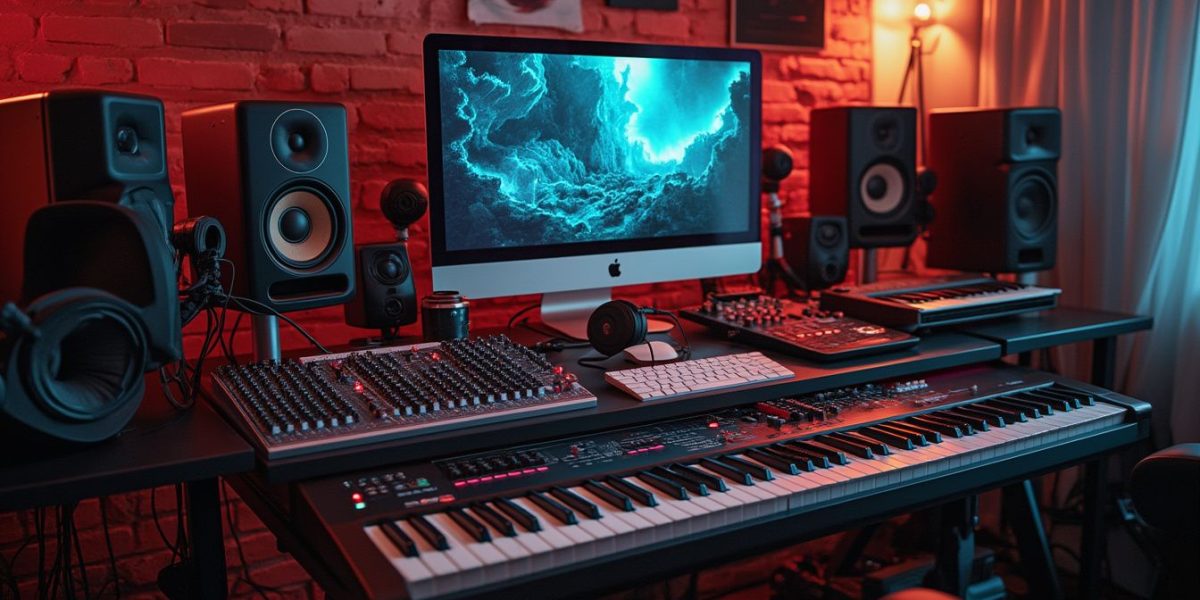
Getting into the musical production It may seem intimidating, but with the right tools, it's an exciting and accessible adventure. In this article, I will introduce you to the essential hardware and software to start in this area. Fromaudio interface to music production software, passing through MIDI keyboard and monitoring helmet, you will discover everything you need to turn your ideas into pieces of music. Prepare to dive into the world of musical creation with confidence and creativity!
Contents
Musical production tools
In the world of musical production, having the right tools is essential to create quality pieces. Whether you are a beginner or experienced producer, knowing the software and tools available can greatly improve your workflow and creativity.
Popular software
Music production software, also called DAW (Digital Audio Workstation), are at the heart of the musical creation process. Here are some of the most popular:
- Ableton Live : Particularly appreciated by electronic music producers, this software is known for its real-time closure function and its use in live performance.
- FL Studio : Popular for its ease of use, it is often the choice of beginners but also beatmaking professionals.
- Logic Pro X : A reference for Mac users, this software offers advanced features for composition, recording, mixing and mastering.
- Pro Tools : Used in many professional studios, it is renowned for its precise audio editing capabilities and robust interface.
Free tools
For those who start or have a limited budget, there are free and efficient tools to get involved in music production:
- Audacity : Open-source software that lets you save and edit audio files with great ease.
- GarageBand Available for free on Apple devices, it offers an intuitive interface and many features for composition and recording.
- T7 Tracktion : A free DAW that offers professional features without track limitations, ideal for beginners.
- LMMS (Linux MultiMedia Studio) : Open-source software that allows you to compose, mix and edit music, compatible with Windows, Mac and Linux.
Audio equipment
For music enthusiasts and sound professionals, having the right equipment is crucial. It is thanks to these tools that you can give life to your creations, capturing and manipulating each tone accurately. Here is an exploration of the main essential audio equipment.
Audio interfaces
The audio interfaces are essential elements for any studio, whether at home or professionally. They serve as a bridge between your instruments or microphones and your computer, thus transforming analog signals into digital signals. This allows you to record audio tracks with great fidelity.
Here are some popular audio interfaces:
- Focusrite Scarlett 2: Ideal for beginners, it is simple to use and offers remarkable sound quality.
- Universal Audio Apollo Twin: Plebiscite by professionals for its high quality preamps and UAD plugins.
- PreSonus AudioBox USB 96: An affordable and reliable option for those looking for a versatile solution.
Instruments and accessories
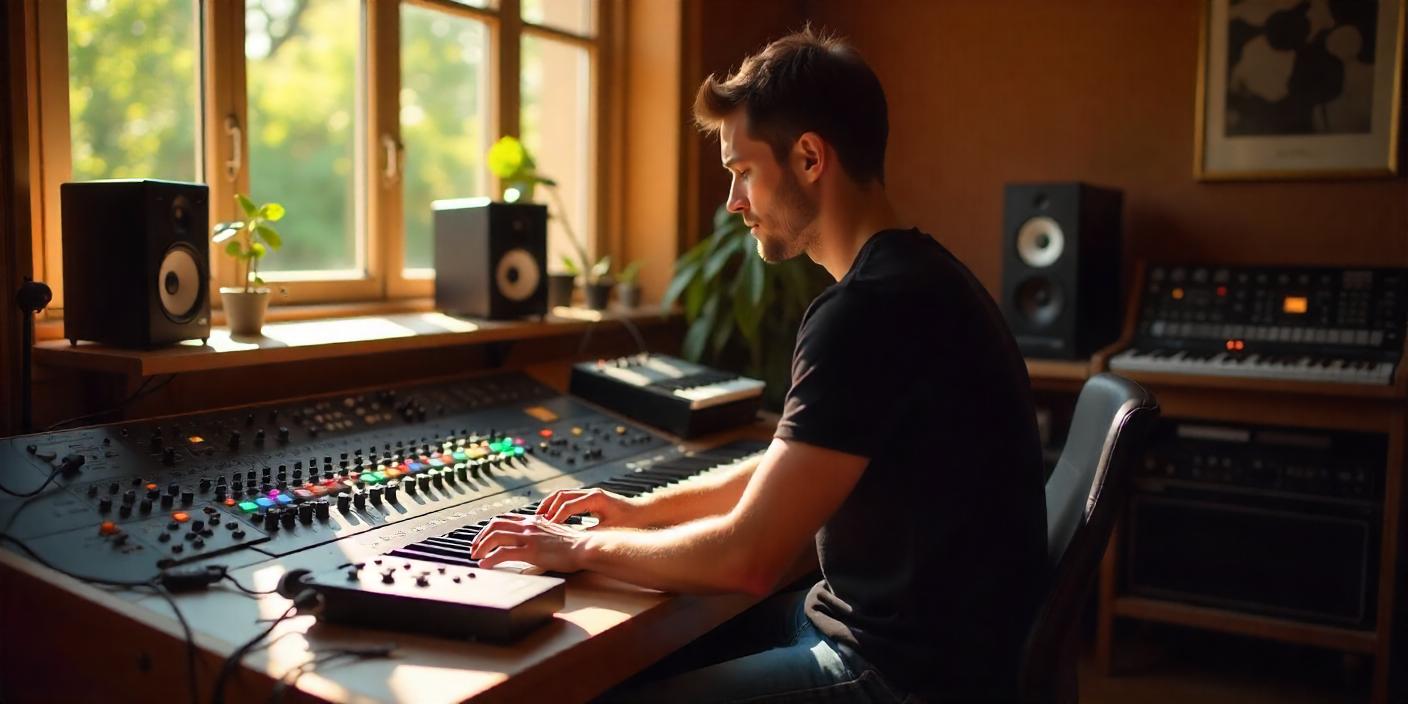
Instruments and accessories play a key role in musical production. Whether you are an experienced musician or a beginner producer, having the right tools can greatly improve your workflow and the quality of your music.
Here are some essentials:
- MIDI Keyboard: An indispensable tool to play virtual instruments and compose melodies. The Novation Launchkey is particularly appreciated for its compatibility with Ableton Live.
- Monitoring helmet: For a precise listening, the Audio-Technica ATH-M50x is often recommended for its excellent value for money.
- Studio monitors: The Yamaha HS7 are renowned for their clarity and balanced frequency response, perfect for mixing and mastering.
- Microphones: A good microphone is essential to capture acoustic voices and instruments. The Shure SM7B is a popular choice for voices thanks to its ability to reduce ambient noise.
By investing in these equipment, you ensure a solid foundation for producing quality music. Whether to record a demo or to produce a full album, these tools are designed to help you achieve your creative goals.
Production techniques
The art of producing music combines creativity and technology. To give life to your compositions, it is essential to understand the different stages of musical production. Here is an overview of production techniques, from pre-production to recording.
Pre-production
Pre-production is a crucial phase that prepares the ground for recording. This is when you define the artistic direction of your project.
Here are some aspects to consider:
- Development of models : Create preliminary versions of your songs to get a clear idea of their structure.
- Choice of instruments Select the instruments and sounds that match the desired atmosphere.
- Session planning Organize recording sessions according to the availability of musicians and technical needs.
This phase allows to refine compositions and anticipate technical challenges. Careful preparation ensures that the registration process will proceed smoothly.
Registration
Recording is the heart of the musical production process. This is where your ideas take shape and become tangible works.
For successful registration, it is essential to have the right tools:
- Audio interface : Connect your instruments, microphones and speakers to your computer to record quality audio tracks.
- DAW (Digital Audio Workstation) : Use software like Ableton Live, FL Studio or Logic Pro X to record, edit and mix your tracks.
- Monitoring helmet : Listen precisely to every detail of your music.
- Studio monitors : Make sure your music sounds good on different audio systems.
- Microphones : Record acoustic voices and instruments with exceptional clarity.
Each step of recording requires special attention. From the installation of the equipment to the capture of performance, each detail counts to achieve a professional result.
By mastering these production techniques, you will be able to create quality pieces, ready to be shared with the world.
Opportunities offered by new technologies in music
New technologies radically change the way we create, produce and consume music. They offer powerful tools for artists and producers, and open up new perspectives for the music industry.
Music production software
Music production software, also called Digital Audio Works (DAW), is now at the heart of music creation. They make it possible to compose, record, edit and mix songs with impressive precision and flexibility. Here are some popular examples:
- Ableton Live : Ideal for electronic music and live performance.
- Logic Pro X : Appreciated for its full functionality on Mac.
- FL Studio : Known for its intuitive interface and wide sound library.
These tools have become indispensable for any modern musician or producer seeking to optimize their workflow and fully exploit their creative potential.
Digital instruments and equipment
Technology has not only improved the software, but also the instruments and equipment used in music. MIDI keyboards, audio interfaces and MIDI controllers have become essential elements for any production studio.
– MIDI keyboards: To play and control virtual instruments.
– Audio Interfaces: To connect instruments and microphones to the computer.
– MIDI Controllers: For intuitive and tactile manipulation of software parameters.
These facilities allow a smooth integration between live performance and studio production, thus giving musicians unprecedented creative freedom.
Online distribution and promotion
Streaming platforms and social networks have revolutionized how music is distributed and promoted. Services such as Spotify, Apple Music, and SoundCloud allow artists to reach a global audience without the need for traditional labels. To maximize their online presence, musicians can use website builders such as:
- Squarespace : For aesthetic and professional designs.
- Wix : Ideal for managing all aspects of his musical career.
- Shopify : To sell music and derivatives online.
These tools enable artists to create a coherent and effective online presence, essential in the current musical landscape.
Conclusion
By integrating these modern technologies and tools, artists and producers can not only improve their creative process, but also reach a wider and diverse audience. The key is to explore and master these innovations to remain competitive and relevant in a constantly changing market. By embracing these technologies, each musician has the opportunity to open new doors and reach new heights in his career. It is an exciting time to be a creator in the world of music.
Updated on 2 August 2025